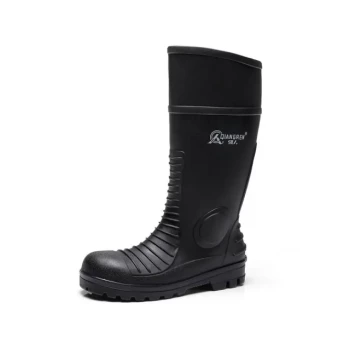
Evaluating industrial safety footwear requirements is a fundamental step in preoperative planning because it directly correlates to the patient's ability to return to their specific job. This assessment allows the surgeon to tailor the procedure to the rigid constraints of professional gear, ensuring the post-surgical foot can withstand and fit into necessary protective equipment.
The ability to successfully return to wearing standard-compliant safety shoes is a definitive indicator of surgical success for industrial workers. Failing to account for this requirement can render an anatomically correct surgery a functional failure regarding the patient's livelihood.
The Intersection of Anatomy and Equipment
Accounting for Professional Challenges
Standard footwear often allows for some flexibility, but industrial environments do not.
Industrial safety shoes are rigid by design to protect the wearer.
A preoperative assessment must identify these specific environmental challenges to ensure the surgical plan addresses them effectively.
Ensuring Sufficient Space
The surgical design must preserve or create enough space within the foot's architecture to fit inside restrictive footwear.
If the corrected foot volume exceeds the capacity of a standard safety shoe, the patient cannot work.
The surgeon uses this assessment to plan a reduction or realignment that accommodates the specific dimensions of the required shoe.
Prioritizing Functional Stability
Beyond simple fit, the foot must be stable enough to operate in a hazardous environment.
The assessment helps the surgeon aim for a result that offers functional stability under the stress of heavy gear.
This ensures the patient is safe and effective once they return to the job site.
Managing Recovery and Expectations
Defining Success Indicators
For a general patient, success might mean pain-free walking in sneakers.
For an industrial worker, success is defined by the return to safety shoes.
Establishing this metric early prevents ambiguity regarding the outcome of the procedure.
Setting Realistic Timelines
Recovery protocols differ when the end goal is a steel-toed boot versus a dress shoe.
This evaluation helps establish realistic expectations for the patient regarding their return-to-work timeline.
It prevents frustration by clarifying that the healing process must accommodate the demands of heavy footwear.
Understanding the Risks and Trade-offs
The Risk of Omission
If this assessment is skipped, a surgeon might perform a technically perfect procedure that fails the patient's lifestyle needs.
A foot that is pain-free but cannot fit into a work boot results in prolonged disability and loss of income.
Balancing Anatomy with Utility
There is often a trade-off between the "ideal" cosmetic correction and the "functional" correction needed for work.
The surgeon may need to prioritize a foot shape that is compatible with safety gear over other aesthetic considerations.
Functional utility must take precedence for patients whose livelihoods depend on specific equipment.
Making the Right Choice for Your Goal
To ensure the surgical outcome supports your professional life, consider these specific focus areas:
- If your primary focus is Return to Work: Ensure your surgeon specifically reviews the make and model of your required safety footwear to plan for volume and pressure points.
- If your primary focus is Long-Term Stability: Ask how the surgical design will withstand the weight and rigidity of industrial gear over time.
Ultimately, a successful surgery for an industrial worker is one that fits the foot to the boot, not just the bone to the chart.
Summary Table:
| Factor | Impact on Surgical Planning | Goal for Industrial Workers |
|---|---|---|
| Foot Volume | Planning bone alignment/reduction | Ensure fit within rigid steel-toe caps |
| Rigidity | Addressing lack of shoe flexibility | Maintain stability under heavy gear stress |
| Success Metric | Defining post-op outcomes | Full return to standard-compliant safety footwear |
| Recovery Timeline | Protocol adjustments for heavy boots | Clear expectations for return to job site |
Partner with 3515 for Professional-Grade Footwear Solutions
As a large-scale manufacturer serving distributors and brand owners, 3515 offers comprehensive production capabilities for all footwear types, anchored by our flagship Safety Shoes series. Our extensive portfolio covers work and tactical boots, outdoor shoes, training shoes, and sneakers, as well as Dress & Formal shoes to meet diverse bulk requirements.
Whether you are managing industrial health requirements or expanding your brand's safety line, we provide the technical expertise and manufacturing scale to ensure every pair meets the highest standards of functional stability and durability.
Ready to elevate your inventory with industry-leading safety footwear?
Contact us today to discuss your bulk manufacturing needs!
References
- Cédric Blouin, Antoine Perrier. Development of a preoperative questionnaire to improve satisfaction with hallux valgus repair: A Delphi study. DOI: 10.1371/journal.pone.0276303
This article is also based on technical information from 3515 Knowledge Base .
Related Products
- Wholesale Mesh Steel Toe Safety Shoes with Dial Closure Factory Production
- Wholesale Anti-Smash & Puncture-Proof Safety Shoes Custom Manufacturing for Brands
- Premium Wheat Nubuck Safety Shoes for Bulk Distribution
- Durable Steel Toe Safety Boots Wholesale & Custom Manufacturing
- Premium Waterproof High-Cut Industrial Safety Boots for Wholesale and Bulk Orders
People Also Ask
- What type of safety shoe is recommended for workers exposed to heavy machinery? Steel Toe Boots for Ultimate Protection
- Why is it mandatory to wear safety shoes with steel toe protection during metal loading? Prevent Crushing Injuries
- What are the main materials used in steel toe safety shoes? A Guide to Protective Footwear Construction
- Is the myth about steel toe shoes cutting off toes true? Debunking the Safety Footwear Myth
- What are the recommended uses for steel toe safety shoes? Essential Protection for High-Risk Industries