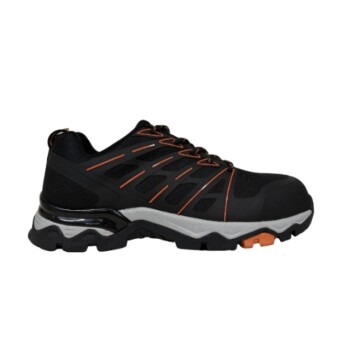
Industrial-grade foot protection acts as a fundamental engineering control within Civil, Mechanical, and Electrical (CME) maintenance environments. It provides an essential physical barrier against three distinct categories of risk: mechanical impact from heavy components like battery units, slippage on oily machine room floors, and lethal shock hazards during work on rectifiers and distribution boards.
Core Takeaway: In CME operations, safety footwear is not merely clothing; it is a critical safety device that isolates the worker from mechanical crushing, electrical currents, and environmental hazards like slippery floors or cross-contamination.
Mitigating Mechanical and Physical Hazards
Protection Against Impact and Crushing
In mechanical and civil maintenance, the risk of heavy objects falling is a constant threat. Steel-toe structures are essential in these environments to protect the foot from crushing injuries.
This is particularly critical when handling heavy components such as battery units during maintenance. Furthermore, in metallurgical workshops housing heavy processing equipment like jaw crushers and roll crushers, sturdy footwear mitigates the risks of mechanical crushing and punctures from sharp objects.
Stability on Compromised Surfaces
Machine rooms and maintenance areas are frequently contaminated with fluids, creating a high risk of slip-and-fall accidents.
Industrial-grade shoes address this through enhanced anti-slip outsoles. These specialized soles provide the necessary traction to navigate oily or slick surfaces safely, preventing falls that could lead to secondary injuries or contact with moving machinery.
Managing Electrical and Environmental Risks
Insulation as a Safety Barrier
For electrical maintenance personnel, the primary threat is accidental contact with live circuits.
Footwear designed for this sector incorporates electrical insulation materials. This feature significantly mitigates shock risks when technicians are working on critical infrastructure, such as rectifiers and distribution boards, by breaking the path of the current to the ground.
Controlling Contamination and Dust
Beyond immediate physical safety, footwear plays a vital role in maintaining the hygiene of the work environment.
High-quality upper materials on industrial shoes are designed to be easy to clean. This feature is crucial for reducing the secondary resuspension of dust and preventing the cross-regional transmission of pollutants as personnel move from dust-laden work areas to clean zones.
Understanding the Limitations
Maintenance and Wear
While industrial footwear provides robust protection, it is not a "set and forget" solution. The protective qualities—specifically anti-slip treads and electrical insulation—can degrade over time.
Wear and tear on the outsole can compromise traction on oily surfaces. similarly, cracks or damage to the sole can reduce the dielectric properties of the shoe, rendering the electrical insulation ineffective. Regular inspection is required to ensure the "physical barrier" remains intact.
Making the Right Choice for Your Goal
To select the correct protection, you must identify the primary hazard in your specific operational zone.
- If your primary focus is heavy mechanical maintenance: Prioritize shoes with reinforced steel-toe structures and puncture resistance to handle risks from battery units and crushers.
- If your primary focus is electrical infrastructure: Ensure the footwear is rated for electrical insulation to protect against shock while working on distribution boards.
- If your primary focus is facility hygiene: Select shoes with smooth, high-quality uppers that are easy to clean to prevent the spread of dust and pollutants.
Ultimately, the correct safety footwear acts as the final line of defense, bridging the gap between a hazardous environment and a safe operator.
Summary Table:
| Hazard Category | Specific Risk Factors | Key Footwear Feature |
|---|---|---|
| Mechanical | Falling battery units, heavy jaw/roll crushers | Steel-toe structures & Puncture resistance |
| Electrical | Work on rectifiers and distribution boards | Certified electrical insulation (dielectric) |
| Environmental | Oily machine room floors, fluid spills | Enhanced anti-slip outsoles |
| Hygiene | Dust resuspension, pollutant transmission | Easy-to-clean high-quality uppers |
Secure Your Workforce with 3515 High-Performance Safety Footwear
In the demanding fields of Civil, Mechanical, and Electrical (CME) maintenance, the right footwear is a vital engineering control that saves lives. 3515 specializes in manufacturing industrial-grade safety shoes designed to withstand mechanical crushing, provide critical electrical insulation, and ensure stability on oily surfaces.
As a large-scale manufacturer serving distributors and brand owners, 3515 offers comprehensive production capabilities for all footwear types. Our flagship Safety Shoes series is engineered for maximum protection, complemented by our extensive portfolio of work and tactical boots, outdoor shoes, training shoes, and sneakers. We provide bulk solutions and professional customization to meet your specific safety standards.
Equip your team with the ultimate line of defense. Contact us today to discuss your bulk requirements!
References
- M. Jainul Amri Lubis, Andika Bayu Hasta Yanto. Analisis Resiko Kecelakaan Kerja Menggunakan Metode HIRARC Pada PT. Telkom Indonesia Jakarta Utara. DOI: 10.31294/imtechno.v5i1.2414
This article is also based on technical information from 3515 Knowledge Base .
Related Products
- Premium Suede Sport Safety Shoes for Wholesale & Bulk Orders
- Premium Lightweight Safety Shoes for Wholesale & Bulk Orders
- Wholesale Anti-Smash & Puncture-Proof Safety Shoes Custom Manufacturing for Brands
- Premium KPU Injection Athletic Style Safety Shoes
- Premium Safety Shoes with Rotating Buckle Safety Sneakers
People Also Ask
- What industries have specific OSHA footwear requirements? Ensure Compliance & Protect Your Workforce
- What are the primary functions of professional safety shoes? Maximize Safety in Water Supply Confined Spaces
- What role do specialized safety shoes play in preventing falls? Engineering Stability in Industrial Environments
- Why is barefoot walking used as a baseline in gait safety research? Unlocking Natural Biomechanics for Shoe Design
- Why are customized foot sensors or professional safety shoes incorporated into biomechanical testing? Precision Insights