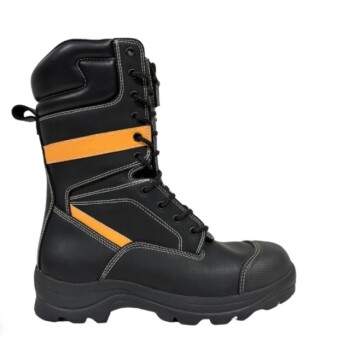
When comparing firefighting boots, leather primarily offers superior ergonomic benefits, including lighter weight, better ankle support, and a more anatomical fit that reduces fatigue over long durations. While rubber boots are traditionally valued for their lower cost and superior water resistance, leather's advantages are centered on firefighter comfort and mobility.
The choice between leather and rubber fire boots is not about which is "better," but about prioritizing operational needs. Leather excels in comfort and mobility for long-duration events and challenging terrain, while rubber offers superior water protection and cost-effectiveness for specific structural firefighting roles.
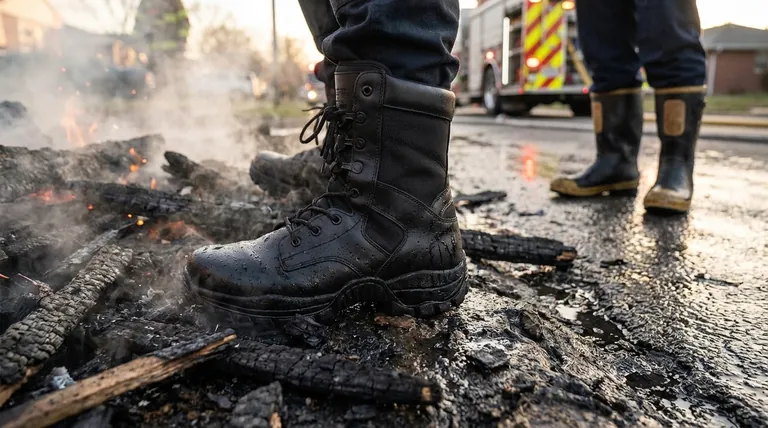
The Ergonomic Advantage of Leather
Leather boots are engineered around the shape of the human foot, providing distinct advantages that become more apparent the longer they are worn. This focus on ergonomics directly impacts a firefighter's endurance and stability.
Reduced Weight and Fatigue
A significant benefit of leather is its lighter weight. Leather boots can be up to three pounds lighter than a comparable pair of rubber boots.
This weight reduction translates directly into less energy expended with every step, a critical factor that can significantly reduce overall fatigue during a long and physically demanding incident.
Superior Ankle and Foot Support
Leather boots are constructed to provide a more rigid and supportive structure around the ankle. This is crucial for navigating uneven terrain, debris-filled structures, or any situation where a twisted ankle is a risk.
Over time, leather also molds to the unique shape of the wearer's foot, creating a personalized fit that enhances both comfort and stability.
Enhanced Breathability and Comfort
As a natural material, leather offers a degree of breathability that rubber cannot match. This allows heat and moisture to escape, keeping the foot cooler and drier.
For firefighters who spend many intense hours on their feet, this increased comfort can make a substantial difference in focus and performance.
The Practical Strengths of Rubber
Rubber boots have long been a staple in the fire service for good reason. Their strengths lie in their simplicity, durability, and resilience in specific, harsh conditions.
Unmatched Water Resistance
The primary advantage of rubber is its inherent waterproof nature. It provides a reliable barrier against water, which is a constant presence on the fireground.
This makes them an excellent choice for departments that frequently operate in wet conditions.
Durability and Ease of Decontamination
Rubber is exceptionally durable and resistant to many chemicals and contaminants found in hazardous environments.
Its smooth, non-porous surface generally makes the decontamination process simpler and more straightforward compared to the textured surface of leather.
Cost-Effectiveness
There is a clear financial difference between the two materials. Rubber boots are typically 25% to 100% less expensive than their leather counterparts.
This lower initial cost makes them a practical and accessible option for many departments, especially those with tight budget constraints.
Understanding the Trade-offs
Neither boot is without its compromises. Acknowledging these trade-offs is key to making an informed decision that balances performance with practicality.
The Myth of Non-Compliance
It is critical to understand that both leather and rubber boots can be fully compliant with NFPA 1971, the standard for protective ensembles for structural fire fighting. The choice of material is one of design and philosophy, not safety compliance.
Maintenance and Break-in Period
Leather requires a break-in period to achieve its signature comfort and molded fit. It also requires regular cleaning and conditioning to maintain its water resistance and prevent the material from drying out and cracking.
Rubber boots require minimal maintenance and are ready for use immediately, offering consistent performance without a break-in period.
Slip Resistance and Traction
While both boot types can offer excellent slip resistance, the sole design is the most critical factor. High-quality rubber soles provide superior traction, especially on wet surfaces, and are used on both leather and rubber boot models.
Making the Right Choice for Your Goal
Your decision should align directly with your most common operational demands, personnel preferences, and budget realities.
- If your primary focus is firefighter endurance and mobility: Choose leather boots for their lighter weight and superior ergonomic support, which are ideal for long incidents, technical rescue, or operations on challenging terrain.
- If your primary focus is cost-effectiveness and absolute water protection: Opt for rubber boots, which offer excellent durability and water resistance at a more accessible price point, making them a highly practical choice for many structural departments.
Ultimately, the best boot is the one that protects the firefighter while minimizing fatigue and allowing them to perform their duties safely and effectively.
Summary Table:
| Feature | Leather Fire Boots | Rubber Fire Boots |
|---|---|---|
| Primary Advantage | Superior Ergonomics & Comfort | Superior Waterproofing & Cost |
| Weight | Lighter (up to 3 lbs less) | Heavier |
| Ankle/Foot Support | Excellent, molds to foot | Good |
| Breathability | Better | Limited |
| Water Resistance | Good (with maintenance) | Excellent |
| Durability/Decon | Good (requires care) | Excellent, easy to decon |
| Cost | Higher | 25-100% less expensive |
| Break-in Period | Required | Minimal to none |
Equip Your Team with the Right Boots for the Job
As a large-scale manufacturer, 3515 produces a comprehensive range of NFPA-compliant footwear for distributors, brand owners, and bulk clients. Our production capabilities encompass all types of safety boots, including both high-comfort leather and durable rubber models designed for firefighting and industrial use.
We help you make the best choice by providing:
- Expert Guidance: Navigate the trade-offs between materials based on your specific operational needs.
- Superior Quality: Durable, compliant boots built for performance and firefighter safety.
- Bulk Order Efficiency: Reliable supply and competitive pricing for departments and large clients.
Ready to equip your team? Let's discuss your requirements and find the perfect boot solution.
Contact our expert team today for a consultation
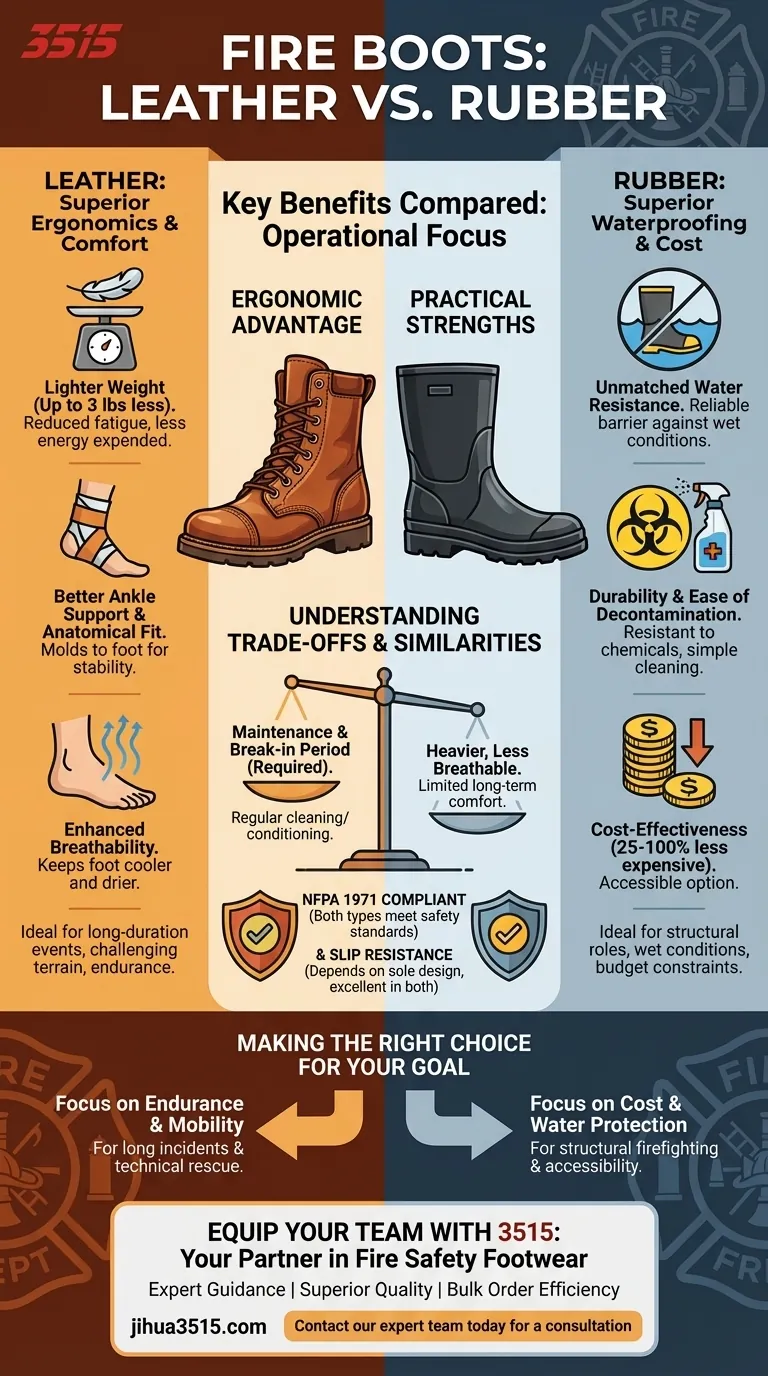
Visual Guide
Related Products
- Durable Leather Tactical Boots Wholesale & Custom Manufacturing for Brands
- Durable Leather Work Boots for Wholesale & Custom Manufacturing
- Durable Leather High-Ankle Tactical Boots for Wholesale & Custom Manufacturing
- Premium Grain Leather Safety Boots for Bulk Supply
- Durable Leather Work Boots Wholesale Manufacturer & Custom Factory
People Also Ask
- What specialized protections do tactical boots offer? Maximize Endurance with High-Performance Footwear
- What features should law enforcement officers look for in tactical boots? Essential Guide for Safety & Performance
- Importance of Professional Tactical Boots in Loess Gully Regions: Ensure Safety and Precision for Field Monitoring
- What is rucking, and why are tactical boots suitable for it? Discover the Ultimate Footwear for Heavy Loads
- What makes the traction of tactical boots superior? Unlock the Science of Unbeatable Grip