
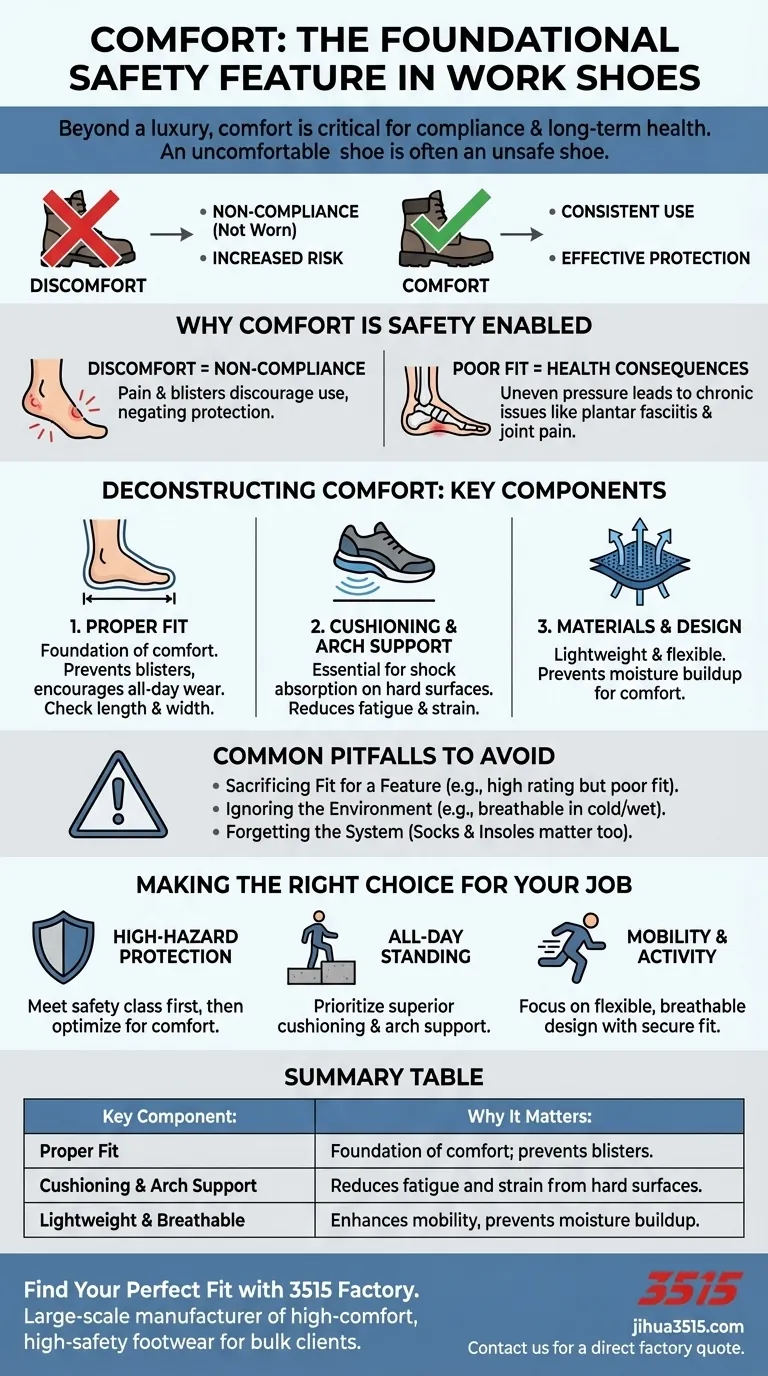
Beyond a simple luxury, comfort in work shoes is a critical component of personal safety and long-term health. Because they are worn for extended periods every day, shoes that cause discomfort are not just an annoyance; they can lead to serious foot injuries, discourage proper use, and ultimately undermine the very protection they are meant to provide.
The primary role of comfort in work footwear is to ensure the shoes are worn consistently and correctly throughout the entire workday. An uncomfortable shoe is an unsafe shoe because it is often the one left in the locker.
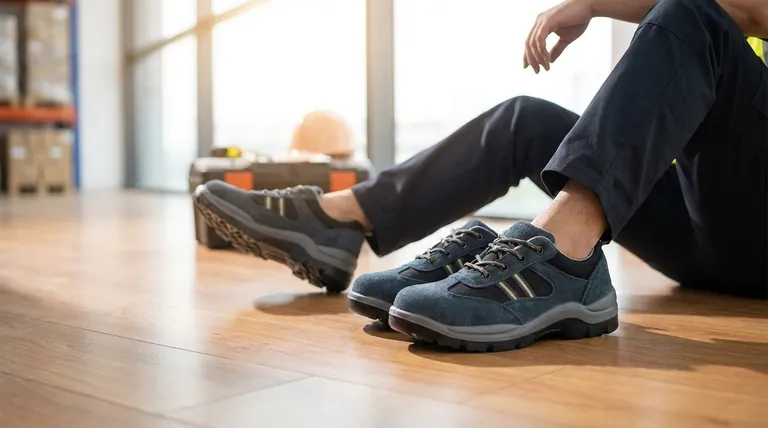
Why Comfort is a Foundational Safety Feature
Most people view safety features like steel toes and slip-resistant soles as separate from comfort. This is a mistake. Comfort is the enabling factor that allows those features to do their job effectively.
The Direct Link Between Discomfort and Non-Compliance
If a shoe is painful, too tight, or causes blisters, the wearer is less likely to use it. This simple fact is the biggest risk.
Discomfort directly discourages regular use, which completely negates a shoe's protective qualities and increases the risk of an accident.
The Long-Term Health Consequences
Poorly fitting or unsupportive shoes distribute pressure unevenly across your feet.
Over weeks, months, and years, this can lead to chronic issues like plantar fasciitis, bunions, and joint pain. It can also negatively affect your gait and posture, causing stress on your knees, hips, and back.
Deconstructing "Comfort": The Key Components to Evaluate
"Comfort" is not a single feature but the result of several design elements working together. When selecting a shoe, you must assess each of these components.
1. The Critical Importance of Proper Fit
Fit is the foundation of comfort. A shoe that is the wrong size or shape for your foot will never be comfortable, regardless of its other features.
The shoe must be the correct length and width, providing enough space for your toes to move without being too loose. Always try on shoes in the afternoon, as your feet naturally swell throughout the day.
2. Cushioning and Arch Support
Cushioning, often found in the midsole, is essential for shock absorption, especially when working on hard surfaces like concrete.
Proper arch support helps maintain the natural alignment of your foot, reducing strain and fatigue. Look for shoes with quality insoles or designs that can accommodate orthopedic inserts if needed.
3. Materials and Overall Design
The materials used in a work shoe dictate its flexibility, weight, and ability to manage heat and moisture.
A lightweight and flexible design reduces the energy needed for each step, combating fatigue. Breathable materials are crucial for preventing sweat and moisture buildup, which can lead to blisters and discomfort.
Common Pitfalls to Avoid
Choosing the right shoe involves understanding the potential trade-offs and common mistakes people make.
Sacrificing Fit for a Specific Feature
A common error is choosing a shoe solely for its high safety rating or a single feature while ignoring that it doesn't fit properly. An ill-fitting shoe is an unsafe shoe, no matter its rating.
Ignoring the Environment
A shoe that is highly breathable might be comfortable in a warm warehouse but will be a source of major discomfort in a cold or wet environment. Always match the shoe's properties, like water or heat resistance, to your specific workplace.
Forgetting the Complete System
Your shoes do not work in isolation. The type of socks you wear can drastically affect comfort and moisture management. Furthermore, if you need custom insoles, you must ensure the shoe has enough volume to accommodate them without becoming too tight.
Making the Right Choice for Your Job
Your specific work environment and daily tasks should guide your final decision.
- If your primary focus is protection in a high-hazard area: Do not treat comfort as an afterthought. Select a shoe that meets the required safety class first, then compare qualifying options for the best fit, cushioning, and support to ensure you can wear it for a full shift.
- If your primary focus is standing all day on hard surfaces: Prioritize superior cushioning, robust arch support, and lightweight materials. These features will work together to reduce fatigue and prevent long-term strain on your feet and joints.
- If your primary focus is mobility and general activity: Look for a flexible design with breathable materials and a secure, precise fit. This combination will prevent blisters and discomfort during constant movement.
Ultimately, the safest and most effective work shoe is the one you will actually wear, and true comfort is what guarantees it.
Summary Table:
| Key Component | Why It Matters |
|---|---|
| Proper Fit | Foundation of comfort; prevents blisters and encourages all-day wear. |
| Cushioning & Arch Support | Reduces fatigue and strain from standing on hard surfaces. |
| Lightweight & Breathable Materials | Enhances mobility and prevents moisture buildup for all-day comfort. |
Find Your Perfect Fit with 3515 Factory
As a large-scale manufacturer, 3515 produces a comprehensive range of high-comfort, high-safety footwear for distributors, brand owners, and bulk clients. Our production capabilities encompass all types of safety shoes and boots, engineered with the precise fit, superior cushioning, and durable materials your workforce needs to stay safe and productive.
Contact us today for a direct factory quote and discover how we can support your business with reliable, comfortable footwear solutions.
Visual Guide
Related Products
- Durable Canvas Work Shoes with Rubber Lug Sole | Wholesale Manufacturer
- Durable Goodyear Welt Leather Work Boots for Wholesale & Private Label
- Durable Leather Work Boots for Wholesale & Custom OEM Manufacturing
- Durable Leather Work Boots for Wholesale & Custom Manufacturing
- Durable Leather Safety Boots for Wholesale & Custom OEM Manufacturing
People Also Ask
- What are the properties of canvas as a shoe material? A Guide to Lightweight Comfort & Style
- Why is the selection of high-strength fabric materials necessary in the production of canvas shoes and training shoes?
- What types of jobs are canvas work boots suitable for? Ideal for Light-Duty, High-Mobility Roles
- Can canvas shoes be worn in rainy conditions? The Truth About Water Resistance
- What are the functional advantages of choosing rubber soles over leather soles for work boots? Superior Safety & Durability
















