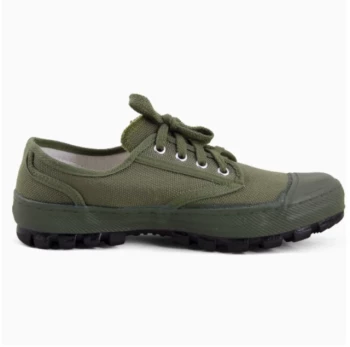
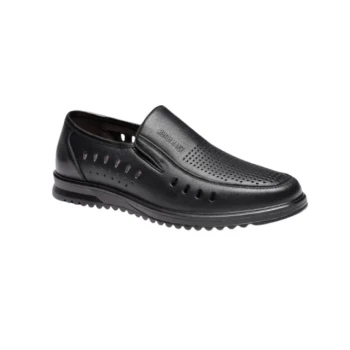
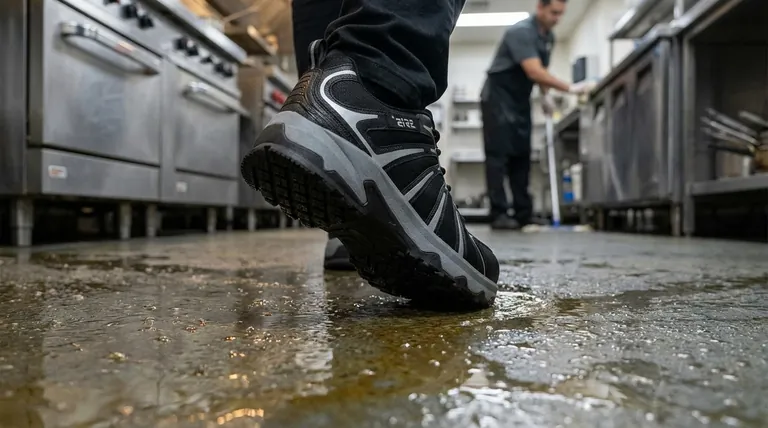
At its core, high-grade rubber is used in slip-resistant shoe soles because its inherent material properties provide superior traction. It excels at gripping surfaces, particularly those contaminated with grease or water, by creating a higher coefficient of friction than most other materials.
The choice of high-grade rubber is the first step, but true slip resistance is a system. It emerges from the combination of the right material, an intelligent outsole design, and its specific application to counter workplace hazards.
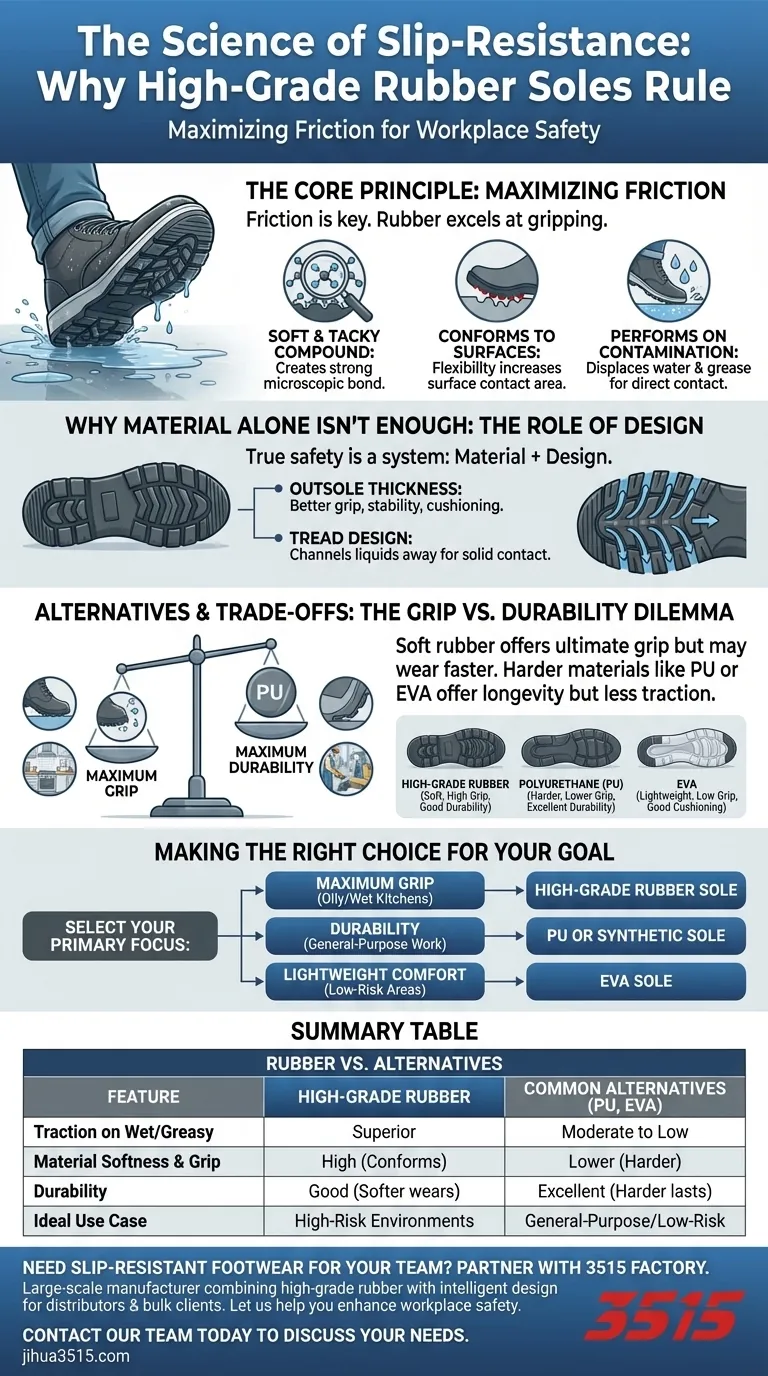
The Core Principle: Maximizing Friction
A slip occurs when there is not enough friction between your shoe and the walking surface. The entire purpose of a slip-resistant sole is to maximize this friction under a variety of conditions.
How Rubber Creates Grip
High-grade rubber compounds are formulated to be relatively soft and tacky. This allows the material to establish a stronger bond at a microscopic level with the floor, creating the resistance needed to prevent sliding.
Conforming to the Surface
The flexibility of rubber enables it to conform to the tiny, invisible imperfections present on almost any floor. This increases the total surface area in contact with the ground, which directly translates to a more secure grip.
Performance on Contaminated Surfaces
This is where high-grade rubber truly excels. Its composition is effective at displacing thin layers of liquids like water and grease, allowing the sole to make direct contact with the solid surface underneath and maintain traction where other materials would hydroplane.
Why Material Alone Isn't Enough
Simply using rubber is not a guarantee of safety. The physical design of the outsole plays an equally critical role in how that material performs.
The Role of Outsole Thickness
Thicker outsoles often contribute to better grip and stability. The added material provides more cushioning and a more substantial platform, which can improve the sole's ability to maintain even contact with the ground on slippery surfaces.
The Importance of Tread Design
An effective tread pattern is essential for channeling liquids away from the bottom of the shoe. Well-designed channels and grooves move water, oil, and other contaminants out from under the sole, ensuring the rubber makes solid contact with the floor.
Understanding the Alternatives and Trade-offs
While rubber is a top performer for grip, it is not the only option. Understanding the alternatives highlights the specific reasons rubber is often chosen for high-risk environments.
Common Alternative Materials
Other materials used for shoe soles include Polyurethane (PU), EVA (ethylene vinyl acetate), and various synthetic compounds. Each offers a different balance of properties.
The Durability vs. Grip Dilemma
There is often a direct trade-off between maximum grip and long-term durability. The softest, grippiest rubber compounds can wear down more quickly than harder materials like polyurethane. The choice of material becomes a balance between the need for ultimate safety and the desire for a longer-lasting shoe.
Making the Right Choice for Your Goal
The ideal sole material depends entirely on the specific hazards of your environment.
- If your primary focus is maximum grip in oily or wet kitchens: A sole made from a high-grade, soft rubber compound is the definitive choice for safety.
- If your primary focus is durability for general-purpose work: A polyurethane or a harder synthetic compound may provide a better balance of longevity and adequate slip resistance.
- If your primary focus is lightweight comfort for low-risk areas: An EVA sole offers excellent cushioning but typically sacrifices the high-level grip needed for hazardous surfaces.
Ultimately, choosing the right footwear requires you to match the sole's material and design to the specific challenges you will face.
Summary Table:
| Feature | High-Grade Rubber | Common Alternatives (e.g., PU, EVA) |
|---|---|---|
| Traction on Wet/Greasy Surfaces | Superior | Moderate to Low |
| Material Softness & Grip | High (Conforms to surfaces) | Lower (Harder compounds) |
| Durability | Good (Softer compounds wear faster) | Excellent (Harder materials last longer) |
| Ideal Use Case | High-risk environments (e.g., kitchens) | General-purpose or low-risk areas |
Need Slip-Resistant Footwear for Your Team? Partner with 3515 Factory.
As a large-scale manufacturer, 3515 produces a comprehensive range of safety footwear for distributors, brand owners, and bulk clients. We expertly combine high-grade rubber compounds with intelligent tread designs to create soles that deliver maximum traction and durability for your specific workplace hazards.
Let us help you enhance workplace safety. Contact our team today to discuss your custom footwear needs and receive a quote.
Visual Guide
Related Products
- Durable High-Traction Canvas Sneakers Wholesale & Custom Manufacturing
- Durable Leather Moc Toe Work Boots for Wholesale & Custom Manufacturing
- Heavy-Duty Waterproof Nubuck Safety Boots Safety Shoes for Bulk Supply
- Premium Suede Sport Safety Shoes for Wholesale & Bulk Orders
- Advanced KPU Athletic Safety Shoe with Steel Toe Cap Anti-Slip Rotary Lacing System
People Also Ask
- What are some examples of vulcanized shoes? Discover the Flexibility and Board Feel of Classic Sneakers
- What are the characteristics of canvas as a shoe material? A Guide to Lightweight, Breathable Footwear
- Can canvas shoes be worn in rainy conditions? The Truth About Water Resistance
- Why is the selection of high-strength fabric materials necessary in the production of canvas shoes and training shoes?
- What are the properties of canvas as a shoe material? A Guide to Lightweight Comfort & Style