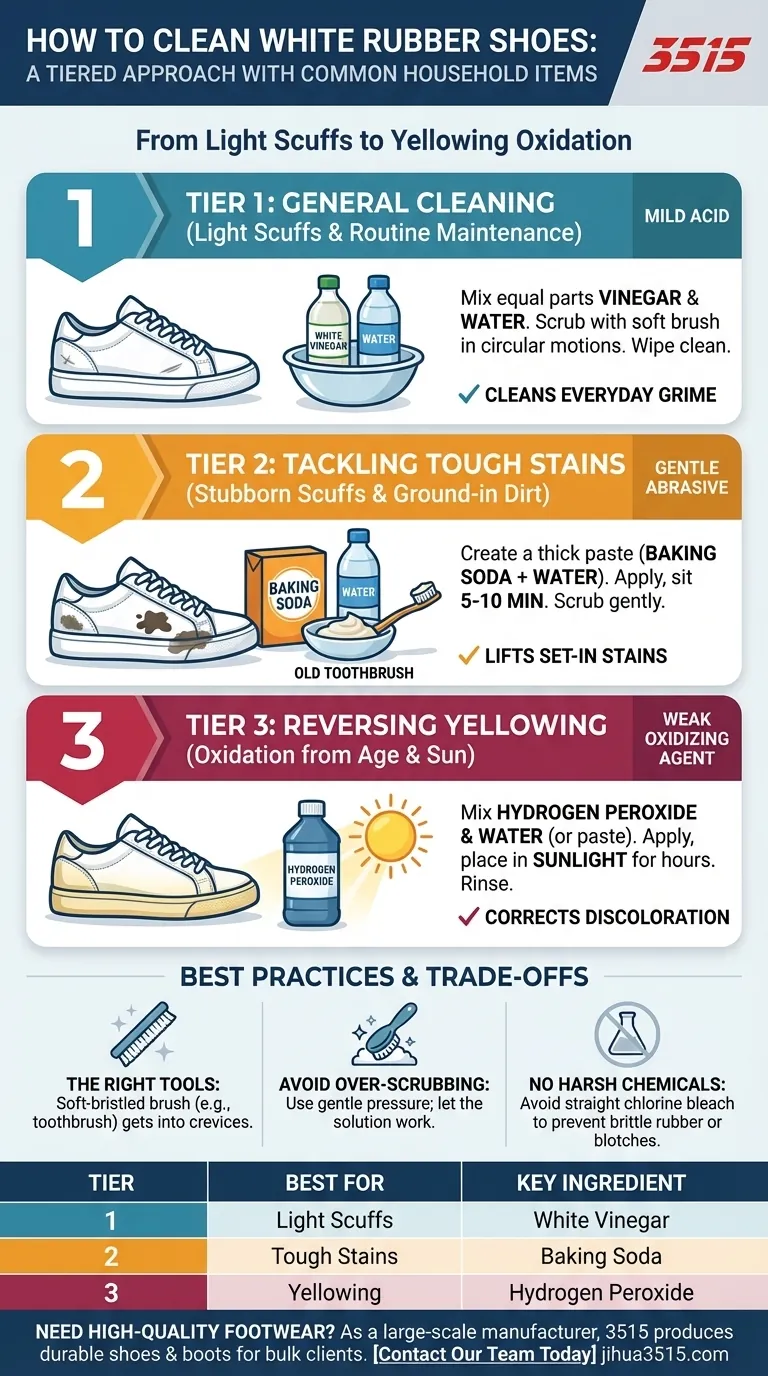
To effectively clean the white rubber on your shoes, you don't need expensive specialty products. The best approach uses a tiered system of common household items: a simple vinegar solution for light scuffs, a baking soda paste for tougher stains, and a hydrogen peroxide mix to reverse yellowing.
The key to restoring white rubber is to match the cleaning method to the type of problem. A mild acid handles daily grime, a gentle abrasive lifts set-in stains, and a weak oxidizing agent is required to correct discoloration from age and sun exposure.
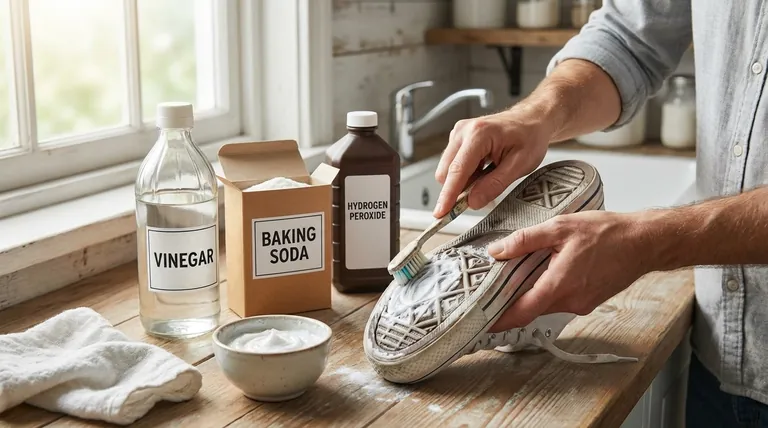
A Tiered Approach to Cleaning White Rubber
Think of cleaning your shoes not as a single task, but as a series of escalating solutions. Always start with the gentlest method first and only proceed to stronger options if necessary.
Tier 1: General Cleaning for Light Scuffs
For routine maintenance and removing surface-level dirt, a simple acidic solution is your best tool.
Mix equal parts white vinegar and water in a small bowl. The mild acetic acid in the vinegar is excellent at breaking down everyday grime without being harsh on the rubber.
Dip a cloth or a soft brush into the solution and scrub the rubber in small, circular motions. Wipe clean with a damp cloth afterward.
Tier 2: Tackling Tough Stains and Grime
When you encounter more stubborn scuffs or ground-in dirt, you need a mild abrasive to physically lift the stain.
Create a thick paste by mixing baking soda with a small amount of water. Baking soda is a perfect gentle abrasive that scrubs away stains without scratching the rubber surface.
Apply the paste directly to the stained area and let it sit for 5-10 minutes. Then, use an old toothbrush to scrub the paste into the stain. The combination of the abrasive particles and scrubbing action will lift the grime effectively.
Tier 3: Reversing Oxidation and Yellowing
Over time, white rubber can turn yellow due to a process called oxidation, often accelerated by sunlight. To reverse this, you need a mild bleaching agent.
Mix a solution of hydrogen peroxide and water. While the reference doesn't specify a ratio, a 1:1 mixture is a safe and effective starting point. For an even more powerful effect, you can mix the hydrogen peroxide with baking soda to form a paste.
Apply the solution or paste to the yellowed rubber, being careful to avoid the shoe's upper fabric. For best results, place the shoes in direct sunlight for a few hours, as UV light helps activate the hydrogen peroxide. Rinse thoroughly afterward.
Understanding the Trade-offs and Best Practices
Using the right technique is just as important as using the right solution. A flawed process can lead to poor results or even damage to your shoes.
The Right Tools Matter
A soft-bristled brush, like an old toothbrush, is far more effective than a cloth. Its bristles can get into the small crevices and textures common on shoe soles and toe caps, removing dirt that a flat cloth would miss.
The Risk of Over-Scrubbing
While rubber is durable, using overly aggressive brushes or applying excessive force can wear down the material's texture over time. Always start with gentle pressure and increase it only as needed. Let the cleaning solution do most of the work.
Why Avoid Harsh Chemicals
Avoid using straight chlorine bleach. It can be too aggressive, potentially causing the rubber to become brittle or even leading to uneven, blotchy yellowing over the long term. The household solutions outlined here are safer and more reliable.
Making the Right Choice for Your Goal
Select your method based on the specific issue you are trying to solve.
- If your primary focus is routine maintenance after daily wear: Use the simple water and white vinegar solution for a quick and effective clean.
- If your primary focus is removing a specific, stubborn stain or scuff mark: Apply the baking soda paste directly to the spot and scrub gently.
- If your primary focus is restoring a bright white color to yellowed rubber: Use the hydrogen peroxide solution, enhanced by the power of direct sunlight.
With the right approach, you can consistently restore the clean, bright appearance of your shoe's rubber components.
Summary Table:
| Cleaning Tier | Best For | Key Ingredient |
|---|---|---|
| Tier 1 | Light scuffs & routine cleaning | White Vinegar & Water |
| Tier 2 | Tough stains & ground-in dirt | Baking Soda Paste |
| Tier 3 | Yellowing from oxidation | Hydrogen Peroxide |
Need a reliable source for high-quality footwear? As a large-scale manufacturer, 3515 produces a comprehensive range of durable shoes and boots for distributors, brand owners, and bulk clients. Let us provide the quality and consistency your business needs. Contact our team today to discuss your requirements!
Visual Guide
Related Products
- Durable Rubber-Soled Utility Shoes for Wholesale & Custom Brand Manufacturing
- Durable Rubber Sole Outdoor Shoes Wholesale & Custom Manufacturing
- Wholesale Durable Camouflage Canvas Shoes with High-Traction Cleated Rubber Sole
- Durable Canvas Work Shoes with Rubber Lug Sole | Wholesale Manufacturer
- Wholesale Durable Camo Canvas Shoes with High-Traction Rubber Soles
People Also Ask
- Why are rubber-soled shoes considered multi-weather footwear? Unlock All-Season Traction & Protection
- Why should we wear rubber soled shoes? Unlock Superior Safety and Durability
- How do rubber soles affect a shoe's appearance? Defining Your Shoe's Style and Formality
- What are the types of rubber sole shoes available? Choose the Right Sole for Durability & Comfort
- When were rubber sole shoes invented? From 1800s Concept to Modern Mainstay