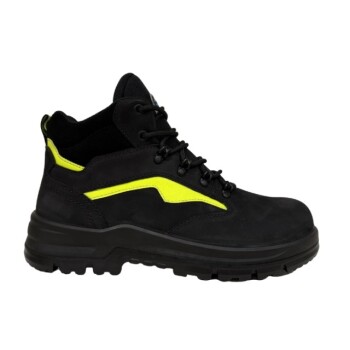
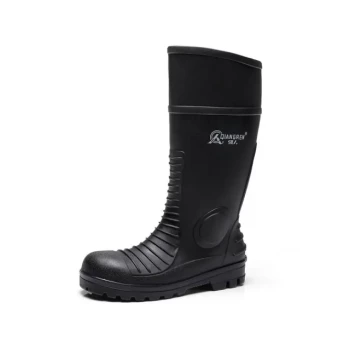
High-performance slip-resistant outsoles are the foundation of lower back safety because they prevent dangerous foot instability during heavy exertion. By maintaining a high friction coefficient, these outsoles stop "micro-displacements" of the feet, ensuring that the physical load is supported by the legs rather than shocking the spine.
Stability is the prerequisite for safe lifting. Without slip-resistant soles, even minor foot slippage interrupts the smooth transfer of power from the legs to the torso, directly exposing the lumbar region to acute strains and spinal misalignment.
The Biomechanics of Stability
Preventing Micro-Displacements
When lifting heavy loads, your safety depends on a static base. High-performance boots provide maximum ground traction to "lock" the feet in place.
This traction prevents micro-displacements—tiny, often imperceptible shifts in foot position. While seemingly minor, these shifts under heavy load force the body to rapidly compensate, placing sudden, asymmetric stress on the lower back.
The Power Transfer Chain
To protect the back, lifting force must generate from the legs and transfer smoothly through the torso. This kinetic chain requires a point of fixed resistance at the ground level.
Slip-resistant outsoles ensure this firm grip. They allow the legs to drive the lift completely, preventing the lower back from absorbing the recoil or torque that occurs when a foot slips.
How Traction Technology Works
Friction Coefficients and Materials
The effectiveness of these outsoles relies on a high friction coefficient. This is typically achieved through high-quality rubber compounds designed to interact with the ground at a microscopic level.
These rubber outsoles utilize surface irregularities to maintain a high "normal force" against the floor. This interaction is critical for converting kinetic energy (movement) into resistance (grip).
Overcoming Industrial Hazards
In environments with smooth or wet floors, a fluid film can separate the boot from the ground. High-performance outsoles are engineered to penetrate this film.
By maintaining contact through these microscopic irregularities, the outsole prevents the dangerous transition from static friction (holding still) to sliding friction (slipping), which is the primary mechanical cause of fall-related back injuries.
Understanding the Risks and Limitations
The Consequence of Traction Failure
If the friction coefficient is insufficient, the result is not just a fall, but a biomechanical shock. A slip under load causes an immediate loss of balance and leverage.
The primary reference indicates that this specific failure leads to acute lumbar muscle strains and spinal misalignments. The back muscles instinctively spasm to protect the spine during a slip, often causing injury even if the worker does not hit the ground.
Durability and Wear
It is important to note that traction is not permanent. As noted in military applications, outsoles must be extremely durable to withstand wear and tear.
As the rubber tread wears down, the surface irregularities that provide grip diminish. A boot that protected your back six months ago may not provide the necessary coefficient of friction today.
Making the Right Choice for Your Goal
To select the right footwear for preventing LBP, you must match the outsole technology to your specific work environment.
- If your primary focus is Heavy Lifting: Prioritize outsoles with the highest possible friction coefficient to prevent micro-displacements and ensure efficient power transfer from the legs.
- If your primary focus is Wet or Oily Environments: Select high-quality rubber outsoles specifically engineered with microscopic surface irregularities to maintain traction through fluid films.
The right boot does more than protect your feet; it anchors your entire skeletal structure to ensure safe, sustainable movement.
Summary Table:
| Feature | Mechanical Benefit | Impact on Lower Back (LBP) |
|---|---|---|
| High Friction Coefficient | Prevents micro-displacements | Reduces asymmetric stress and sudden spinal shocks |
| Microscopic Irregularities | Penetrates fluid films (oil/water) | Maintains static friction to prevent balance loss |
| Power Transfer Chain | Ensures fixed ground resistance | Shifts lifting load to legs instead of the lumbar spine |
| Durable Rubber Compound | Maintains tread integrity | Sustains long-term traction to prevent muscle spasms |
Partner with 3515 for Professional Grade Safety Footwear
As a premier large-scale manufacturer serving global distributors and brand owners, 3515 delivers the engineering excellence required to protect workers' physical health. Our flagship Safety Shoes series features high-performance slip-resistant outsoles designed to eliminate the biomechanical risks of lower back pain.
Our Value to You:
- Comprehensive Production: From tactical boots and sneakers to formal dress shoes, we meet all bulk requirements.
- Technical Precision: Outsoles engineered for maximum friction coefficients and durability.
- Scalable Solutions: Dedicated support for distributors and brand owners to enhance their product portfolios.
Protect your customers' health and elevate your brand—Contact us today to discuss your bulk manufacturing needs!
References
- Martha Sri Astuti. ANALISIS PREVALENSI LOW BACK PAIN PADA PERAWAT DI DUNIA : LITERATURE REVIEW. DOI: 10.54040/jpk.v12i1.230
This article is also based on technical information from 3515 Knowledge Base .
Related Products
- Durable Leather Moc Toe Work Boots for Wholesale & Custom Manufacturing
- Wholesale Durable 6-Inch Work Boots | Custom & Private Label Manufacturer
- Factory-Direct Wholesale Canvas Boots with High-Traction Rubber Soles
- Durable Goodyear Welt Leather Work Boots for Wholesale & Private Label
- Durable Leather Work Boots Wholesale Manufacturer & Custom Factory
People Also Ask
- What are moc toe work boots designed for? Superior Comfort and Mobility for Tradespeople
- What are the key features to look for when purchasing moc toe boots? A Guide to Durability & Fit
- How did moc toe boots originate? A Legacy of Workwear Durability and Style
- What clothing items complement the Outdoorsman/Heritage Look with moc toe boots? Build a Timeless, Rugged Wardrobe
- What types of outfits can moc toe boots be worn with? Versatile Style Guide