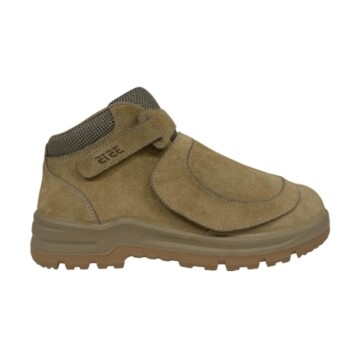
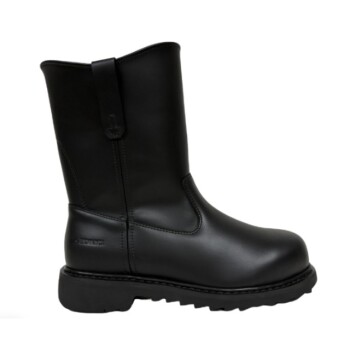
TPU and rubber function as complementary opposites within functional footwear sole systems. Thermoplastic Polyurethane (TPU) is primarily utilized in the midsole to provide energy return and cushioning, while rubber forms the outsole to deliver traction and abrasion resistance.
Core Takeaway The effectiveness of a functional sole lies in the synergy between materials: Rubber manages external interaction with the terrain, while TPU manages internal biomechanics. This combination creates a "mechanical buffering" system that reduces musculoskeletal stress while ensuring dynamic stability.
The Role of the Outsole: External Interaction
The outsole is the footwear's first line of defense. Its primary function is to manage the interaction between the wearer and the ground.
Grip and Traction
Rubber is the material of choice for the outsole due to its high friction coefficient. This ensures dynamic stability, preventing slips during movement across various surface textures.
Wear Resistance
Functional footwear endures significant abrasive forces. Rubber provides the necessary durability to withstand constant friction against asphalt, concrete, or trails without rapid degradation.
The Role of the Midsole: Internal Biomechanics
The midsole acts as the engine of the shoe. Here, TPU is the dominant material, selected for its ability to manipulate kinetic energy.
Energy Return
TPU leverages superior elastic properties to return energy to the wearer. This "spring-like" effect creates a responsive feel that aids in propulsion.
Impact Minimization
The cushioning properties of TPU absorb the shock generated when the foot strikes the ground. This mechanical buffering minimizes the impact forces transmitted up the kinetic chain to the joints.
Specialized TPU Applications: Structural Reinforcement
Beyond simple cushioning, TPU is versatile enough to serve as rigid structural components within the sole system.
Torsional Control
TPU is frequently engineered into anti-torsion sheets embedded within the midsole. These sheets utilize the material's high mechanical strength to establish controlled resistance between the forefoot and hindfoot.
Stability During Directional Changes
By providing necessary rigidity, these TPU inserts prevent the shoe from twisting excessively. This protects the wearer from injury during rapid stops or lateral movements.
Component Encapsulation
In modern smart footwear, TPU is used to encapsulate electronic modules. Its flexibility and waterproof nature protect precision components from moisture intrusion and vibration damage.
Understanding the Trade-offs: Comfort vs. Control
Creating a functional sole system requires balancing opposing physical needs. A shoe cannot rely on a single attribute to perform effectively.
The Softness Paradox
While TPU provides excellent cushioning, a sole that is only soft lacks stability. Without the inclusion of rigid TPU anti-torsion sheets or a stable rubber base, excessive softness can lead to joint misalignment.
The Weight Factor
Rubber is durable but heavy; TPU is responsive but can be complex to mold. Manufacturers must carefully ratio these materials to ensure the shoe remains protective without becoming burdensome to the wearer.
Making the Right Choice for Your Goal
The ideal balance of TPU and rubber depends entirely on the intended activity of the user.
- If your primary focus is high-impact endurance (e.g., Running): Prioritize a substantial TPU midsole to maximize energy return and reduce stress on the musculoskeletal system.
- If your primary focus is agility and court sports: Look for footwear featuring embedded TPU anti-torsion sheets to ensure rigidity during rapid directional changes.
- If your primary focus is outdoor longevity: Ensure the outsole utilizes a high-coverage rubber compound for maximum wear resistance and grip.
The most effective footwear treats TPU and rubber not as separate parts, but as a unified system designed to preserve your kinetic chain.
Summary Table:
| Component | Material | Primary Function | Key Benefit |
|---|---|---|---|
| Outsole | Rubber | Traction & Abrasion Resistance | Prevents slips and ensures long-term durability. |
| Midsole | TPU | Energy Return & Cushioning | Absorbs impact shock and aids in propulsion. |
| Support | TPU Rigid Sheets | Torsional Control | Prevents excessive twisting and protects joints. |
| Protection | TPU Shell | Component Encapsulation | Shields smart modules from moisture and vibration. |
Partner with 3515 for High-Performance Footwear Manufacturing
As a large-scale manufacturer serving global distributors and brand owners, 3515 leverages advanced material science to deliver superior footwear solutions. Our production capabilities integrate high-grade TPU and rubber systems to ensure every pair meets the rigorous demands of the modern market.
Our value to your brand:
- Specialized Expertise: Anchored by our flagship Safety Shoes series for maximum protection.
- Diverse Portfolio: From tactical boots and training shoes to sneakers and Dress & Formal footwear.
- Bulk Scalability: Reliable high-volume production tailored to your specific technical requirements.
Ready to elevate your product line? Contact us today to discuss your wholesale or custom manufacturing needs.
References
- Alireza Nasirzadeh, Giuk Lee. The Effects of a Custom−Designed High−Collar Shoe on Muscular Activity, Dynamic Stability, and Leg Stiffness: A Biomimetic Approach Study. DOI: 10.3390/biomimetics8030274
This article is also based on technical information from 3515 Knowledge Base .
Related Products
- Durable Rubber Sole Outdoor Shoes Wholesale & Custom Manufacturing
- Wholesale Durable Camouflage Canvas Shoes with High-Traction Cleated Rubber Sole
- Durable High-Traction Canvas Sneakers Wholesale & Custom Manufacturing
- Premium Wholesale Waterproof Safety Boots High Performance Protection for Industrial Markets
- Wholesale Waterproof Tactical Boots Custom Suede & High-Traction Soles
People Also Ask
- What is the function of the sole in outdoor shoes? Find the Perfect Grip and Support
- What role do outdoor shoes and sneakers play in navigating external terrains? Engineered Stability for Every Surface
- How is AI utilized in the design of outdoor and safety footwear? Harnessing Big Data for Market-Driven Shoe Innovation
- Why is durability important when selecting outdoor shoes? A Guide to Safety & Long-Term Value
- What are the key components of outdoor shoes that affect comfort and sturdiness? A Guide to Durable, High-Performance Footwear