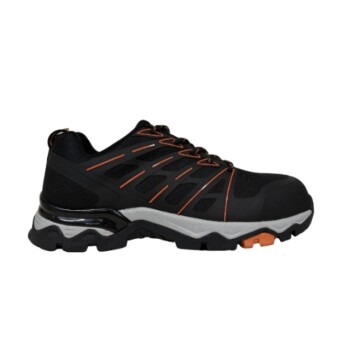
Hemp fiber stands out as a reinforcement material because it uniquely resolves the tension between structural durability and lightweight agility. By offering a low density of 1.248 g/cm³ combined with a high specific modulus, hemp allows manufacturers to significantly reduce the weight of safety and tactical boots without compromising the integrity of components like structural supports and liners.
Hemp fibers provide a dual advantage for high-performance footwear: they mechanically lighten the load through exceptional stiffness-to-weight ratios while simultaneously enhancing wearer comfort through natural moisture regulation and antimicrobial properties.
Achieving Structural Integrity Without the Weight
In high-performance safety shoes and tactical boots, every gram matters. Hemp offers a mechanical profile that supports rigorous use without the heaviness associated with traditional reinforcements.
The Density Advantage
The specific density of hemp fiber is 1.248 g/cm³, which is notably low for a structural material.
This allows for the production of composite components that provide necessary protection but feel significantly lighter on the foot.
High Specific Modulus
Hemp fibers possess a high specific modulus, meaning they are incredibly stiff relative to their weight.
This property is essential for structural supports in footwear, where the material must resist deformation under load but cannot add unnecessary bulk.
Enhancing Biocompatibility and User Comfort
Beyond mechanical strength, hemp fibers address the "internal environment" of the shoe. This is critical for tactical and safety boots worn for extended shifts in harsh conditions.
superior Moisture Management
Hemp fibers are naturally moisture-wicking and breathable.
Unlike many synthetic liners that trap heat and sweat, hemp regulates humidity, keeping the foot drier and cooler during intense activity.
Hygiene and Antimicrobial Defense
When properly pretreated, hemp fibers exhibit distinct antimicrobial and anti-corrosion capabilities.
This improves the biocompatibility of shoe liners, actively fighting the bacteria and degradation caused by sweat and environmental exposure.
Understanding the Processing Requirements
While the raw material has immense potential, realizing the full benefits of hemp in high-performance applications requires precise engineering.
The Role of Pretreatment
It is important to note that properties like antimicrobial resistance and anti-corrosion are often unlocked or maximized through specific pretreatments.
Manufacturers must ensure the fibers are processed correctly to maintain these hygienic properties over the lifespan of the boot.
Making the Right Choice for Your Footwear Design
To integrate hemp fiber effectively, you must align the material's properties with the specific performance goals of your footwear line.
- If your primary focus is lightweight agility: Prioritize hemp composites for structural shanks and toe caps to utilize the high specific modulus and low density for maximum weight reduction.
- If your primary focus is long-duration comfort: Utilize treated hemp fibers in liners and insoles to leverage their moisture-wicking and antimicrobial properties for superior hygiene.
By balancing mechanical stiffness with biological comfort, hemp offers a sophisticated solution for the next generation of protective footwear.
Summary Table:
| Feature | Performance Benefit | Footwear Application |
|---|---|---|
| Low Density (1.248 g/cm³) | Significant weight reduction | Lightweight tactical & safety boots |
| High Specific Modulus | High stiffness without bulk | Structural supports & toe caps |
| Moisture Management | Natural breathability & wicking | Comfort liners & insoles |
| Antimicrobial Properties | Fights bacteria & odors | Hygienic shoe interiors |
| Specific Pretreatments | Enhanced anti-corrosion | Long-lasting durability |
Partner with 3515 for Advanced Footwear Solutions
As a large-scale manufacturer serving global distributors and brand owners, 3515 leverages cutting-edge materials like hemp fiber to deliver superior durability and comfort. Our comprehensive production capabilities cover all footwear types—from our flagship Safety Shoes and Tactical Boots to high-performance training shoes, sneakers, and formal dress shoes.
Ready to elevate your product line with industry-leading innovation? Contact us today to discuss your bulk requirements and discover how our expertise can drive your brand's success.
References
- K. Palanikumar, Gérald Franz. Targeted Pre-Treatment of Hemp Fibers and the Effect on Mechanical Properties of Polymer Composites. DOI: 10.3390/fib11050043
This article is also based on technical information from 3515 Knowledge Base .
Related Products
- Premium Suede Sport Safety Shoes for Wholesale & Bulk Orders
- Premium Lightweight Safety Shoes for Wholesale & Bulk Orders
- Wholesale Anti-Smash & Puncture-Proof Safety Shoes Custom Manufacturing for Brands
- Premium KPU Injection Athletic Style Safety Shoes
- Premium Safety Shoes with Rotating Buckle Safety Sneakers
People Also Ask
- What industries have specific OSHA footwear requirements? Ensure Compliance & Protect Your Workforce
- What are the primary functions of professional safety shoes? Maximize Safety in Water Supply Confined Spaces
- What role do specialized safety shoes play in preventing falls? Engineering Stability in Industrial Environments
- What are the main components of safety shoes? A Guide to Protective Footwear Design
- What are the technical advantages of integrating sensors into safety shoes? Achieve Superior Motion Capture Precision