
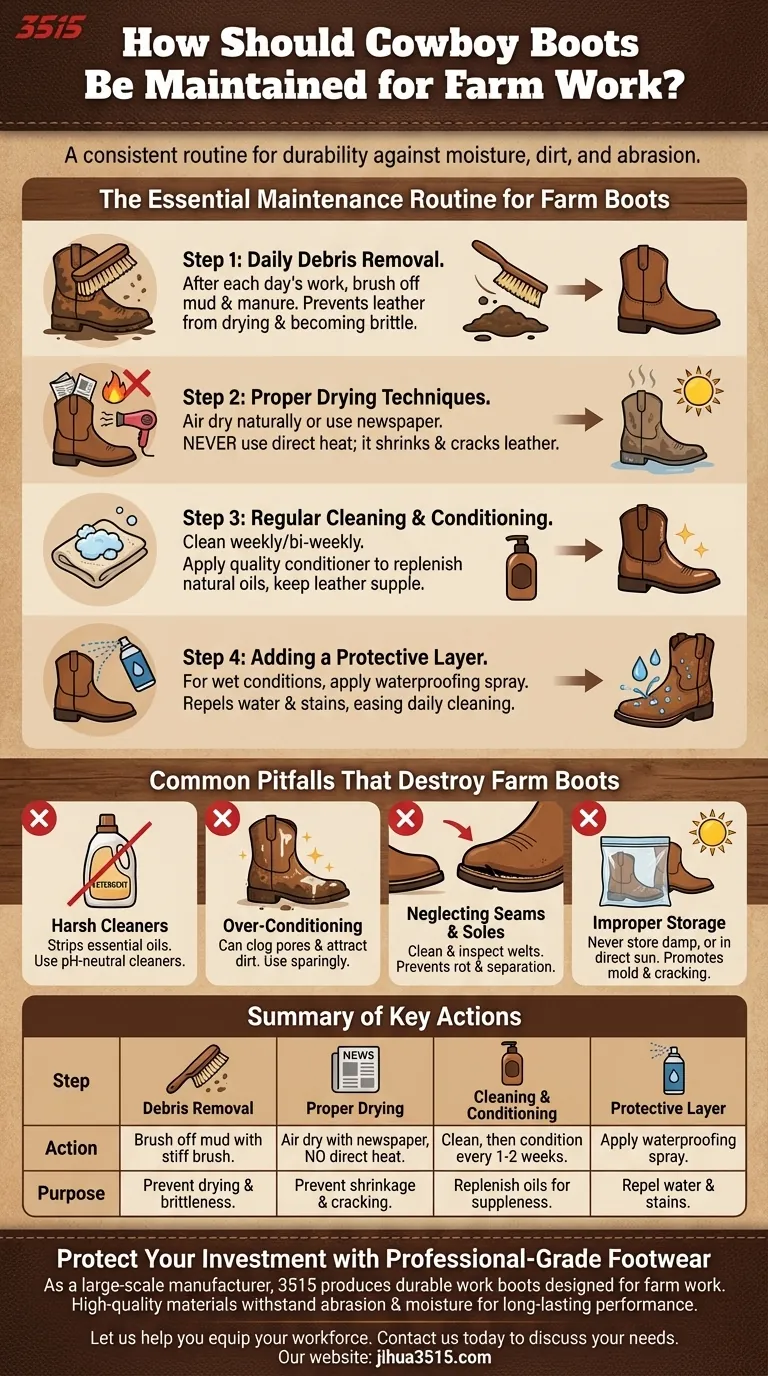
To properly maintain cowboy boots for farm work, you must adopt a consistent routine of daily cleaning, proper drying, and regular conditioning. This regimen is not about aesthetics; it's a necessary process to combat the moisture, dirt, and abrasion that will otherwise rapidly degrade the leather and compromise the boot's structural integrity.
The core challenge of maintaining farm boots isn't just cleaning them, but actively fighting against the environmental damage they endure. Your goal is to consistently remove corrosive materials like mud and manure, and systematically replenish the leather's essential oils to prevent it from drying out and cracking.
The Essential Maintenance Routine for Farm Boots
Farm work subjects boots to a level of abuse far beyond casual wear. A structured maintenance plan is the only way to ensure they provide long-term service and protection.
Step 1: Daily Debris Removal
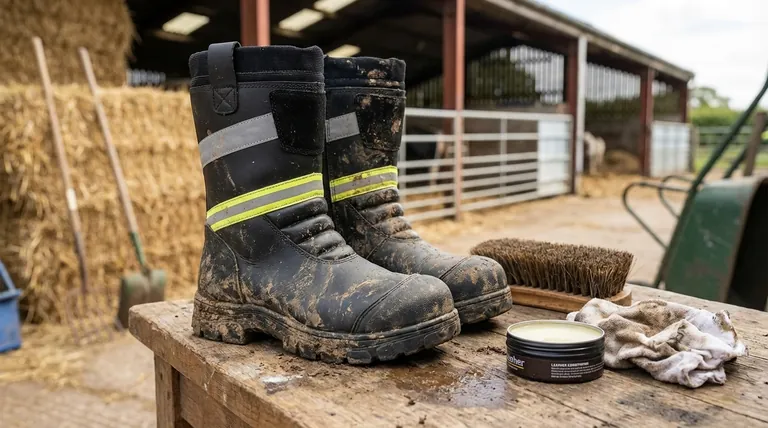
After each day's work, make it a habit to remove all caked-on mud, manure, and debris. Use a stiff-bristled brush for this task.
This isn't just for looks. Caked mud actively draws moisture and essential oils out of the leather as it dries, accelerating the aging process and making the material brittle.
Step 2: Proper Drying Techniques
If your boots get wet, proper drying is non-negotiable. Never use direct heat from a fire, heater, or hairdryer, as this will shrink and crack the leather permanently.
Instead, stuff the boots with crumbled newspaper to absorb internal moisture, or use a specialized boot dryer that uses gentle, circulating air. Always let them air dry naturally in a cool, ventilated area away from direct sunlight.
Step 3: Regular Cleaning and Conditioning
Depending on the intensity of your work, perform a deeper clean and conditioning every one to two weeks.
First, wipe the boots down with a damp cloth to remove fine dust. For stubborn stains, a small amount of mild soap or a dedicated leather cleaner can be used, but avoid soaking the boot.
Once the boots are clean and completely dry, apply a quality leather conditioner. Work it into the leather with a soft cloth, paying special attention to seams and areas that flex. Conditioning replaces the natural oils that keep the leather supple and strong.
Step 4: Adding a Protective Layer
For boots used in wet or muddy conditions, applying a waterproofing treatment or protective spray adds a critical layer of defense.
This barrier helps repel water and prevent stains, making the daily cleaning process significantly easier and offering more robust protection against moisture saturation.
Common Pitfalls That Destroy Farm Boots
Avoiding common mistakes is just as important as following the right steps. Many well-intentioned owners inadvertently shorten the lifespan of their boots.
The Mistake of Using Harsh Cleaners
Using household detergents or harsh soaps will strip the leather of its essential oils. This leaves the material dry, vulnerable, and prone to cracking. Always use a pH-neutral leather cleaner or just water.
The Problem of Over-Conditioning
While conditioning is vital, too much of a good thing can be detrimental. Over-conditioning can make the leather too soft, attract more dirt, and potentially clog the leather's pores, hindering its ability to breathe.
Neglecting the Seams and Soles
The welts and stitching are critical failure points. Debris and moisture that accumulate in these areas can cause the thread to rot and the sole to separate. Routinely clean and inspect these areas for any signs of wear.
The Impact of Improper Storage
Never store your boots when they are damp, as this will lead to mold and mildew. Likewise, avoid storing them in direct sunlight or unventilated plastic bags. A cool, dry place where air can circulate is ideal.
Making the Right Choice for Your Goal
Your maintenance strategy should adapt to the specific demands of your environment and your primary objective for the boots.
- If your primary focus is longevity in wet, muddy conditions: Prioritize daily drying and the consistent application of waterproofing treatments.
- If your primary focus is preventing cracking in dry, dusty climates: Make regular brushing and leather conditioning your most important habit.
- If your primary focus is maximum comfort and performance: Rotate between two pairs of boots to allow each pair a full 24 hours to dry and recover.
Ultimately, treating your boot care as a fundamental part of your work routine is the key to protecting your investment.
Summary Table:
| Maintenance Step | Key Action | Purpose |
|---|---|---|
| Daily Debris Removal | Brush off mud/manure with a stiff brush. | Prevents leather from drying out and becoming brittle. |
| Proper Drying | Air dry with newspaper; avoid direct heat. | Prevents permanent leather shrinkage and cracking. |
| Cleaning & Conditioning | Clean with damp cloth, condition every 1-2 weeks. | Replenishes oils to keep leather supple and strong. |
| Protective Layer | Apply waterproofing spray for wet conditions. | Repels water and stains, making cleaning easier. |
Protect Your Investment with Professional-Grade Footwear
As a large-scale manufacturer, 3515 produces a comprehensive range of durable work boots and cowboy boots designed specifically for the rigors of farm work. Our boots are built with high-quality materials to withstand abrasion, moisture, and daily wear, ensuring long-lasting performance for distributors, brand owners, and bulk clients.
Let us help you equip your workforce with reliable footwear.
Contact us today to discuss your needs and explore our extensive production capabilities for all types of shoes and boots.
Visual Guide
Related Products
- Wholesale High-Traction Camo Boots - Custom Manufacturer for Brands
- High-Traction Suede Tactical Boots Wholesale & Custom Manufacturing
- Wholesale Lightweight Tactical Boots Custom Manufacturer for Desert & Combat Use
- Durable Leather Tactical Boots Wholesale & Custom Manufacturing for Brands
- Wholesale Durable Mid-Cut Tactical Boots for Custom & Private Label Brands
People Also Ask
- What are the key features of the new line of camo boots? Built for Extreme Cold & Rugged Terrain
- Are camo boots necessary for hunting success? Prioritize Performance Over Pattern
- What is the technical logic behind using closed-eye testing for tactical boots? Unlocking Peak Footwear Stability
- How does the Rank Score Test identify the primary causes of premature failure in tactical and work boots? Key Insights
- What shoes to wear for a security job? Durable, Protective Footwear for Long Shifts



















