
I've got the task broken down. First, I need to understand the request completely. I'm acting as a trusted advisor, not just a content generator. I need to address both the obvious features users want and the deeper reasoning behind those choices, connecting them specifically to agricultural work. It's about providing a framework, not just a list.
I'll be talking to experienced professionals, so I'll keep the language clear, authoritative, and scannable with short paragraphs, bolding, and clear headings. The format will be strict Markdown for easy use. I'll open with a bold hook, include a "Core Takeaway" blockquote to immediately hit home the main idea, and then develop the main body with clear headings and short sections that address why certain features matter.
The inputs are clear. The surface need is a list of features like waterproof uppers, slip-resistant soles, reinforced toes, and so on. But the deep need is to understand which features are critical for their specific work. Farms and ranches are incredibly diverse, and their boot needs vary. One size doesn't fit all.
I've analyzed the references. They provide a good starting point, highlighting the common needs for traction, protection, durability, and waterproofing. I'll use that to structure my approach. I'll make sure to add in specific agricultural contexts (e.g., cowboy/roper heels for livestock, puncture resistance for fields) and synthesize the information. I won't just copy.
My outline will flow like this:
- Opening Hook: Directly answering the core question while establishing the importance of choosing the right boot.
- Core Takeaway Box: A direct quote to summarize the deeper requirements of the boots.
- Main Body:
- Deconstructing the Ideal Agricultural Boot: Diving into traction, uppers, safety features, and comfort.
- Matching the Boot to the Task: Specific recommendations for fieldwork, livestock handling, and work on concrete surfaces.
- Understanding the Trade-offs: Addressing key considerations like weight vs. protection, waterproofing vs. breathability, and durability vs. flexibility.
- Concluding Section: Giving actionable advice with bulleted recommendations and a final empowering statement to the user.
Finally, I'll review my output to ensure the right tone, structure, and formatting. I'm aiming for clarity and authority to build trust. I'll be focused on helping the user make smart decisions. That is the goal. The right work boot for agricultural work is a specialized tool, not just footwear. To meet the demands of farming and ranching, you must look for a combination of core features: a durable, waterproof upper, a high-traction, slip-resistant outsole with a deep tread, and specific safety components like a reinforced toe. The ideal boot is not one-size-fits-all; it must be matched to your specific daily tasks.
Beyond a simple checklist of features, the optimal agricultural boot is a calculated balance. You must match the level of protection, sole design, and material directly to your most common environments—from muddy fields to concrete barn floors—to ensure both safety and all-day endurance.
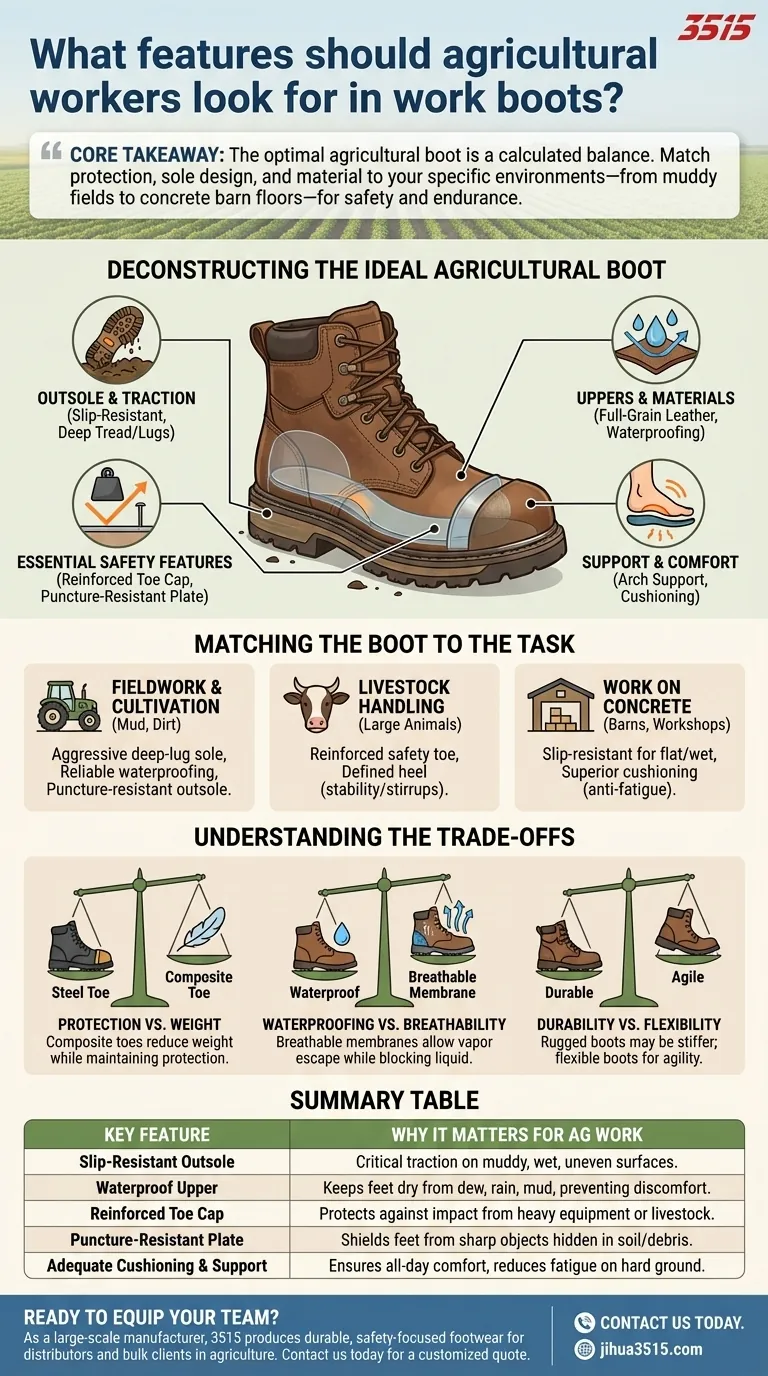
Deconstructing the Ideal Agricultural Boot
A work boot is a system of components, each serving a critical function. Understanding these parts allows you to assess a boot's suitability for the unique challenges of your work environment.
The Foundation: Outsole and Traction
The outsole is your connection to the ground, where safety often begins. On a farm, you encounter everything from slick mud and wet grass to uneven, hard-packed dirt.
An effective agricultural boot must have a slip-resistant sole. More importantly, it should feature a deep tread pattern, often called lugs, designed to grip soft surfaces and shed mud and debris.
The Shield: Uppers and Materials
The boot's upper protects your foot from the elements, impacts, and chemicals. Full-grain leather is a traditional and excellent choice for its durability and ability to mold to your foot over time.
Regardless of the material, waterproofing is non-negotiable. Whether from morning dew, rain, mud, or wash-downs, keeping your feet dry is essential for comfort and preventing skin issues.
The Armor: Essential Safety Features
Agricultural work is rife with hazards, from falling equipment to sharp objects hidden in the soil. Modern safety features are crucial for mitigating these risks.
A reinforced toe cap protects against compression and impact from livestock or machinery. Composite toes are a modern, lightweight alternative to steel toes, offering similar protection without conducting cold. A puncture-resistant plate in the sole is also a wise addition for anyone working in fields where nails, sharp rocks, or debris may be present.
The Engine: Support and Comfort
Comfort is not a luxury; it is a critical component of safety and endurance. Fatigue from ill-fitting or unsupportive boots can lead to mistakes and injuries.
Look for boots with excellent arch support and cushioning in the midsole to absorb shock on hard ground. A proper fit is paramount, so trying on different styles and brands is essential for long-term performance.
Matching the Boot to the Task
Not all farm work is the same. The 80/20 rule applies here: choose a boot designed for the tasks you perform 80% of the time.
For Fieldwork and Cultivation
Working with crops means long hours in mud, dirt, and uneven soil. The primary needs here are maximum traction and protection from the ground up.
Your boot must have an aggressive, deep-lugged sole and reliable waterproofing. A puncture-resistant outsole provides critical peace of mind when walking through unseen terrain.
For Livestock Handling
Working with large animals introduces unique risks. Protection and stability are the top priorities.
A reinforced safety toe is mandatory to guard against being stepped on. Many ranchers and farmers also prefer a boot with a defined heel, such as a roper or cowboy heel, which provides extra stability and helps lock into stirrups if you're on horseback.
For Work on Concrete and Hard Surfaces
Tasks in the dairy parlor, workshop, or on equipment pads present a different challenge. Deep, muddy treads are less effective here.
On these surfaces, you need a sole compound designed for high slip-resistance on flat, wet ground. Superior cushioning is also vital to combat the fatigue of standing on unforgiving concrete all day.
Understanding the Trade-offs
There is no single "perfect" boot, only the best boot for a specific job. Every design choice involves a compromise.
Protection vs. Weight
The most protective features, like steel toes and thick, puncture-proof soles, add significant weight. This can increase fatigue over a long day. Composite safety toes are an excellent way to reduce weight while maintaining impact protection.
Waterproofing vs. Breathability
A fully sealed, waterproof boot is essential for wet conditions, but it can trap sweat and become very hot in warm weather. Boots with a breathable waterproof membrane offer a good compromise, allowing vapor to escape while blocking liquid from entering.
Durability vs. Flexibility
The most rugged and durable boots are often stiff and require a significant break-in period. For tasks that require more agility and movement, a more flexible boot might be a better choice, even if it means sacrificing some long-term durability.
Making the Right Choice for Your Farm
Analyze your daily reality and select the tool that best fits the job.
- If your primary focus is fieldwork and row crops: Prioritize a boot with deep lugs for mud traction, full waterproofing, and a puncture-resistant sole.
- If your primary focus is livestock management: Select a boot with a reinforced safety toe and a defined heel for stability and protection.
- If your primary focus is work on varied surfaces, including concrete: Look for a versatile, slip-resistant sole with moderate tread and superior cushioning to reduce fatigue.
Investing in the correct boots is a direct investment in your daily safety, comfort, and productivity.
Summary Table:
| Key Feature | Why It Matters for Ag Work |
|---|---|
| Slip-Resistant Outsole | Provides critical traction on muddy, wet, and uneven surfaces. |
| Waterproof Upper | Keeps feet dry from dew, rain, and mud, preventing discomfort. |
| Reinforced Toe Cap | Protects against impact from heavy equipment or livestock. |
| Puncture-Resistant Plate | Shields feet from sharp objects hidden in soil or debris. |
| Adequate Cushioning & Support | Ensures all-day comfort and reduces fatigue on hard ground. |
Ready to equip your team with boots built for the demands of agriculture?
As a large-scale manufacturer, 3515 produces a comprehensive range of durable, safety-focused footwear specifically designed for distributors, brand owners, and bulk clients in the agricultural sector. Our production capabilities encompass all types of work boots and shoes, ensuring you get the right combination of protection, comfort, and durability for your workforce.
Contact us today to discuss your specific needs and receive a customized quote.
Visual Guide
Related Products
- Durable Leather Work Boots for Wholesale & Custom Manufacturing
- Durable Leather Work Boots for Wholesale & Custom OEM Manufacturing
- Durable Leather Moc Toe Work Boots for Wholesale & Custom Manufacturing
- Wholesale Customizable Safety Boots Durable & Protective Footwear Manufacturing
- Wholesale Leather Work Boots with Customizable Wedge Sole for Brands
People Also Ask
- What is the difference between full-grain and top-grain leather? Premium Material Guide for Boot Manufacturers
- What are the common workplace hazards that can be mitigated with the right work boots? Protect Your Workforce
- What are the common foot issues workers face due to uncomfortable work boots? Prevent Pain & Deformities
- What are the advantages of leather versus synthetic work boots? A Guide to Choosing the Right Material
- What are the key components of modern work boots? Engineered for Ultimate Durability and Comfort












