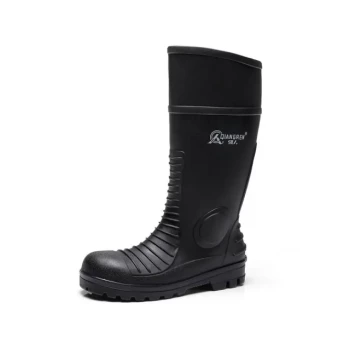
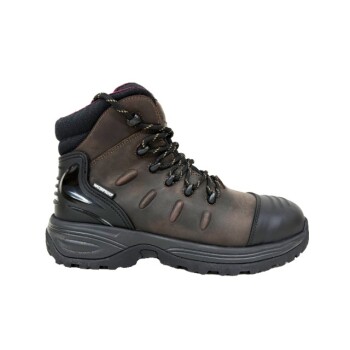
The most common materials for the upper part of a work boot are leather, nylon, rubber, and other synthetic textiles like mesh. The specific material used is not arbitrary; it's a deliberate choice by the manufacturer to balance critical factors such as durability, weight, breathability, and resistance to water and chemicals.
The choice of a work boot upper is a fundamental trade-off. Leather offers unparalleled durability and protection at the cost of weight and a break-in period, while modern synthetic materials provide a lighter, more breathable alternative that may sacrifice some long-term resilience.
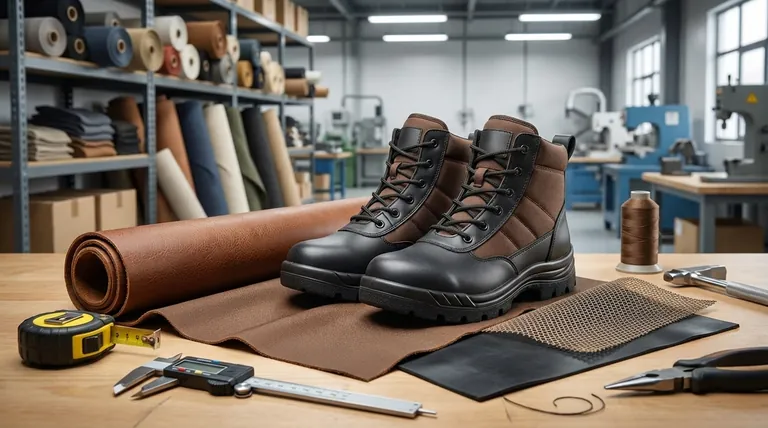
The Foundation: Understanding Leather Uppers
Leather is the traditional and most trusted material for work boot construction. Its natural fiber structure provides excellent durability, puncture resistance, and support, making it ideal for demanding environments.
Full-Grain Leather: The Gold Standard
This is the highest quality leather, taken from the outermost layer of the hide. It is the most durable, water-resistant, and breathable type of leather because its natural grain has not been sanded or buffed away. Over time, it develops a unique patina rather than wearing out.
Nubuck and Split-Grain Leather: Balanced Options
Nubuck leather is full-grain leather that has been sanded to create a soft, velvet-like surface. It is highly durable and often treated for waterproofing but can be more susceptible to stains than standard full-grain.
Split-grain leather is created from the lower layers of the hide. It is lighter and more breathable than full-grain but offers less durability and water resistance.
Genuine Leather: The Entry-Level Choice
While the term sounds premium, "genuine leather" refers to lower-quality layers of the hide. It is less durable and robust than full-grain or nubuck but provides a more affordable leather option.
The Rise of Synthetic Uppers
Synthetic materials have become a popular choice for their specific performance characteristics, often resulting in boots that are lighter and require little to no break-in period.
Nylon and CORDURA: Lightweight Durability
Nylon fabrics, especially branded versions like CORDURA, are prized for their exceptional resistance to abrasions and tears. They are frequently used in combination with leather to reduce the overall weight of the boot while maintaining strength in key areas.
Mesh: Maximizing Breathability
For work in hot climates or indoor environments, uppers incorporating mesh panels provide maximum airflow. This flexibility and breathability come at the expense of protection and water resistance, making them unsuitable for heavy-duty outdoor work.
Rubber: Absolute Waterproofing
When the primary hazard is water or chemicals, a rubber upper is the only choice for guaranteed protection. Rubber boots are completely impermeable, but this waterproofing comes with a significant trade-off: zero breathability, which can lead to discomfort during long periods of wear.
Understanding the Trade-offs
No single material is superior in all situations. Your choice depends entirely on the demands of your job and your personal comfort priorities.
Durability vs. Weight
A full-grain leather boot will almost always outlast a synthetic one under heavy use. However, that durability comes with significant weight, which can cause fatigue over a long workday. Nylon and other textiles offer a much lighter alternative.
Water Resistance vs. Breathability
This is the most critical trade-off. A fully waterproof material like rubber will not breathe, trapping sweat and heat. A highly breathable material like mesh will offer almost no water resistance. Treated leathers and waterproof membranes attempt to find a middle ground.
Protection vs. Flexibility
The rigid structure of leather provides excellent ankle support and protection from impacts. Softer synthetic materials offer more flexibility and comfort right out of the box but provide less structural support and protection.
Making the Right Choice for Your Work
Evaluate your daily tasks and environment to select the material best suited for your needs.
- If your primary focus is maximum durability and protection: Choose a boot with a full-grain leather upper for construction, logging, or heavy industrial work.
- If your primary focus is light weight and breathability: Look for uppers made from nylon, mesh, or a leather/nylon combination for warehousing, light manufacturing, or work in hot climates.
- If your primary focus is complete water protection: Select a boot with a rubber or fully waterproof synthetic upper for farming, pressure washing, or work in consistently wet conditions.
Ultimately, the right boot empowers you to perform your job safely and comfortably by matching its material construction to your specific challenges.
Summary Table:
| Material | Best For | Key Characteristics |
|---|---|---|
| Full-Grain Leather | Heavy-duty work (construction, logging) | Maximum durability, water-resistant, breathable |
| Nubuck/Split-Grain Leather | General industrial work | Good durability, softer feel, balanced performance |
| Nylon/CORDURA | Lightweight & abrasion-resistant needs | Lightweight, highly durable, often combined with leather |
| Mesh | Hot climates, indoor environments | Maximum breathability, lightweight, less protection |
| Rubber | Wet/chemical environments | 100% waterproof, chemical-resistant, non-breathable |
Need a Reliable Partner for Your Work Boot Production?
As a large-scale manufacturer, 3515 produces a comprehensive range of durable footwear for distributors, brand owners, and bulk clients. Our production capabilities encompass all types of work boots, from rugged full-grain leather models to lightweight synthetic options.
We can help you:
- Source the perfect materials for your target market's needs.
- Manufacture high-volume orders with consistent quality and competitive pricing.
- Develop custom boot designs that balance protection, comfort, and durability.
Let's discuss your project. Contact our team today to get a quote and learn how we can become your trusted manufacturing partner.
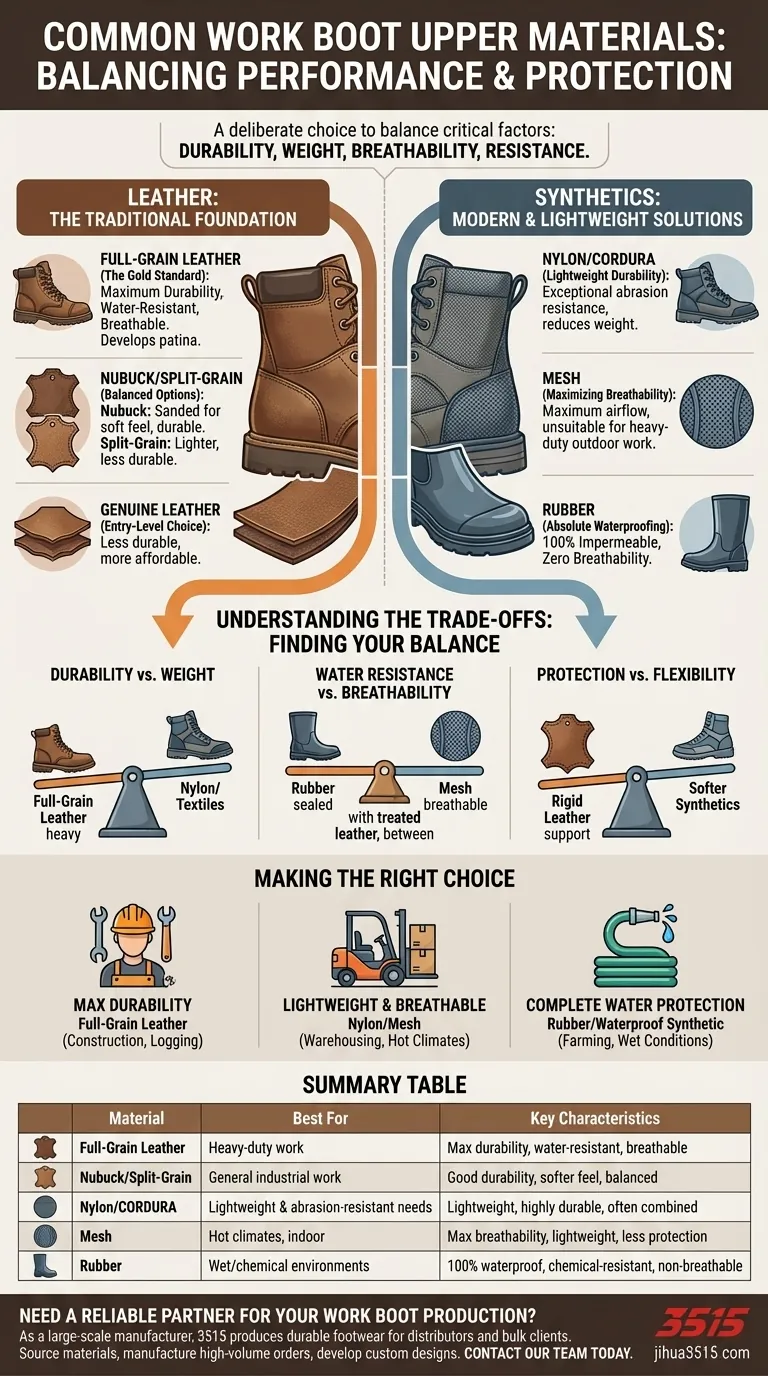
Visual Guide
Related Products
- Durable Goodyear Welt Leather Work Boots for Wholesale & Private Label
- Factory-Direct Wholesale Canvas Boots with High-Traction Rubber Soles
- Durable Leather Work Boots for Wholesale & Custom Manufacturing
- Durable Leather Work Boots for Wholesale & Custom OEM Manufacturing
- Durable Leather Moc Toe Work Boots for Wholesale & Custom Manufacturing
People Also Ask
- What is the difference between full-grain and top-grain leather? Premium Material Guide for Boot Manufacturers
- What are the advantages of leather as an upper material for work boots? Unmatched Durability & Custom Comfort
- Why is it important to waterproof leather work boots? Protect Your Investment and Performance
- How should new leather work boots be broken in? A Guide to Comfort and Durability
- What are the advantages of leather uppers in work boots? Unmatched Durability & Protection