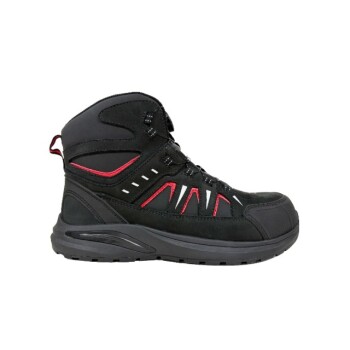
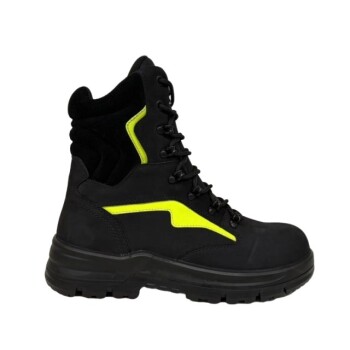
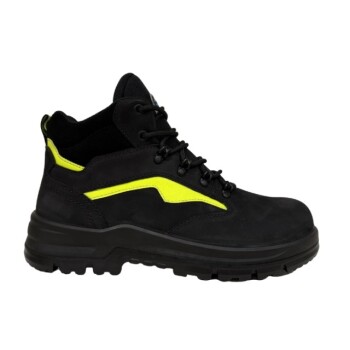
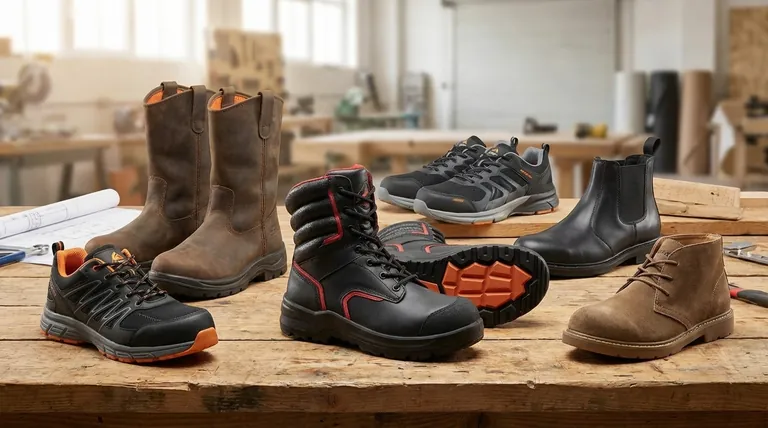
To be clear, safety toe work boots are no longer limited to a single, clunky design. They now come in a wide variety of styles, including traditional high-cut lace-ups, pull-on Wellingtons, modern athletic shoes, and even sophisticated dress-casual options like Chelsea and Chukka boots.
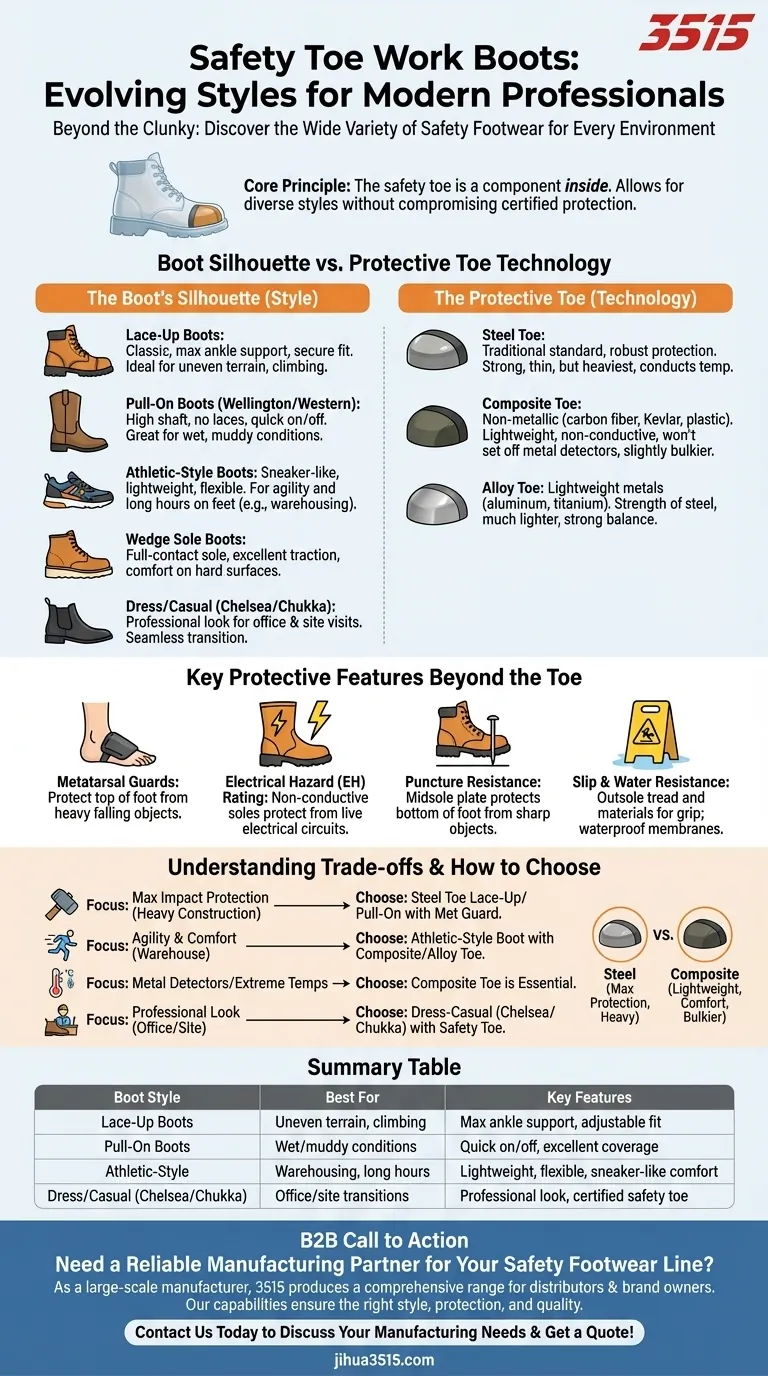
The core principle to understand is that the protective safety toe is a component inside the boot. This allows manufacturers to build footwear for nearly any professional environment or aesthetic preference without compromising on certified protection.
Distinguishing Boot Style from Toe Type
Many people confuse the boot's external style with the type of protective toe cap it contains. Understanding the difference is the first step in selecting the right footwear for your needs.
The Boot's Silhouette (The Style)
The external design of the boot is built for a specific function or environment.
-
Lace-Up Boots: The classic work boot style. It provides maximum ankle support and a secure, adjustable fit, making it ideal for climbing, logging, and work on uneven terrain.
-
Pull-On Boots (Wellington/Western): Characterized by a high shaft and no laces. These are perfect for quick on-and-off and are often used in wet, muddy conditions as they offer excellent coverage.
-
Athletic-Style Boots: These look and feel like sneakers but contain safety toes and other protective features. They are lightweight and flexible, designed for jobs requiring agility and long hours on your feet, such as in warehousing or light manufacturing.
-
Wedge Sole Boots: These feature a full-contact sole without a separate heel. The design provides excellent traction and comfort on hard, flat surfaces like concrete, reducing pressure points on the foot.
-
Dress/Casual Boots (Chelsea/Chukka): These styles blend in seamlessly in an office or business-casual setting. They offer certified protection for managers and professionals who move between the office and the job site.
The Protective Toe (The Technology)
The safety toe is the internal reinforcement that protects you from impact and compression.
-
Steel Toe: This is the traditional standard, offering robust protection against heavy impacts and sharp objects. Steel is strong and can be made relatively thin, but it is also the heaviest option.
-
Composite Toe: Made from non-metallic materials like carbon fiber, Kevlar, or plastic. These are significantly lighter than steel, do not conduct heat or cold, and won't set off metal detectors.
-
Alloy Toe: Constructed from lightweight metals like aluminum or titanium. They provide the strength of steel but at a much lower weight, offering a strong balance between protection and comfort.
Key Protective Features Beyond the Toe
A truly effective work boot offers more than just a protected toe. The style you choose can incorporate a range of safety technologies tailored to specific hazards.
Metatarsal Guards
These shields protect the delicate metatarsal bones on the top of your foot. They are critical in environments where heavy objects could be dropped, such as in heavy manufacturing or construction.
Electrical Hazard (EH) Rating
EH-rated boots are designed with non-conductive soles and heels to protect you from accidental contact with live electrical circuits.
Puncture Resistance
Many safety boots include a steel or flexible non-metallic plate in the midsole. This feature protects the bottom of your foot from sharp objects like nails or scrap metal.
Slip and Water Resistance
The boot's outsole material and tread pattern are crucial for preventing slips, trips, and falls. Many styles also feature waterproof membranes to keep your feet dry in wet conditions.
Understanding the Trade-offs
Choosing the right boot means balancing protection, comfort, and environmental needs. No single option is perfect for every situation.
Steel Toe: Maximum Protection vs. Weight
Steel toes offer the highest level of protection in a compact space. However, they are heavy, conduct temperature, and are impractical if you frequently pass through metal detectors.
Composite Toe: Lightweight Comfort vs. Bulk
Composite toes are an excellent lightweight, non-conductive alternative. To achieve the same safety rating as steel, the composite cap often needs to be slightly bulkier.
Style vs. Specialized Protection
While you can get a safety toe in a casual Chukka boot, that style will not offer the same ankle support as a lace-up logger boot or the same coverage as a pull-on Wellington. The aesthetic you choose has real-world functional implications.
How to Choose the Right Safety Boot
Your final choice should be guided by your specific job hazards and daily activities.
- If your primary focus is maximum impact protection (e.g., heavy construction): A steel toe lace-up or pull-on boot, potentially with a metatarsal guard, is your best choice.
- If your primary focus is agility and all-day comfort (e.g., warehouse work): An athletic-style boot with a composite or alloy toe offers protection without weighing you down.
- If you pass through metal detectors or work in extreme temperatures: A composite toe is essential to avoid conductivity and security hassles.
- If you need a professional look for office and site visits: A dress-casual style like a Chelsea or Chukka boot provides a seamless transition without compromising safety.
Ultimately, the best safety boot is one that meets your job's specific hazards while providing the comfort and style you need to perform at your best.
Summary Table:
| Boot Style | Best For | Key Features |
|---|---|---|
| Lace-Up Boots | Uneven terrain, climbing | Maximum ankle support, adjustable fit |
| Pull-On Boots | Wet/muddy conditions | Quick on/off, excellent coverage |
| Athletic-Style | Warehousing, long hours | Lightweight, flexible, sneaker-like comfort |
| Dress/Casual (Chelsea/Chukka) | Office/site transitions | Professional look, certified safety toe |
Need a reliable manufacturing partner for your safety footwear line?
As a large-scale manufacturer, 3515 produces a comprehensive range of footwear for distributors, brand owners, and bulk clients. Our production capabilities encompass all types of safety toe boots and shoes, ensuring you get the right style, protection, and quality for your market.
Contact us today to discuss your manufacturing needs and get a quote!
Visual Guide
Related Products
- Wholesale Durable Safety Boots Manufacturer Customizable Steel Toe Work Boots
- Customizable Anti-Smash Safety Boots for Wholesale & Private Label Manufacturing
- Wholesale Customizable Safety Boots Durable & Protective Footwear Manufacturing
- Wholesale Durable Breathable Safety Boots Custom OEM Manufacturer
- Durable Steel Toe Safety Boots Wholesale & Custom Manufacturing
People Also Ask
- What are the pros and cons of steel toe work boots? A Guide to Maximum Protection vs. Comfort
- What are the different types of steel toe work boots? Choose the Right Boot for Your Job
- What is the history of steel toe work boots? From German Invention to Modern Safety Standard
- How much weight can steel toe work boots withstand? Unpacking the 3,372 lb. Safety Standard
- What are some common myths about steel toe work boots? Debunked for Modern Workers