
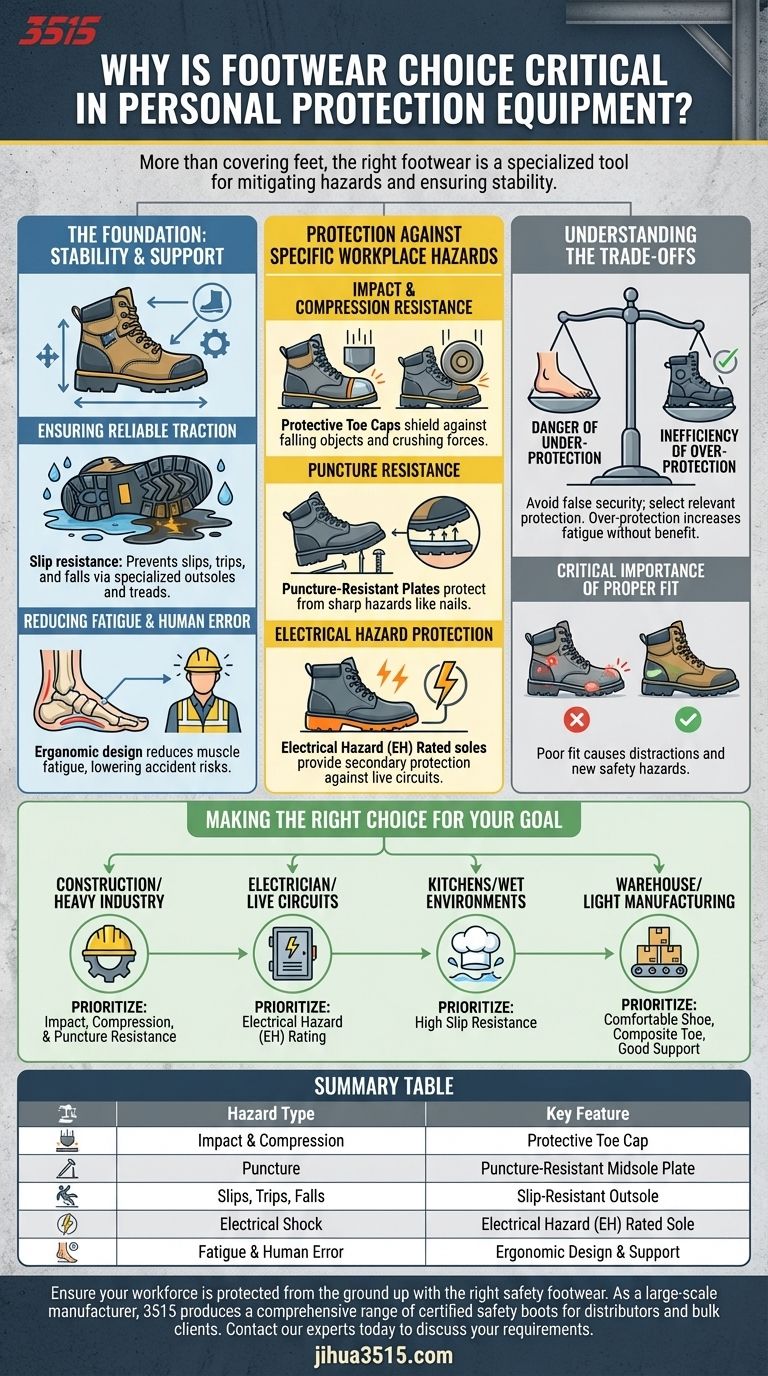
At its core, footwear is a critical component of personal protective equipment (PPE) because it is the primary interface between you and your work environment. More than just covering your feet, the right footwear is a specialized tool engineered to mitigate specific, predictable hazards, ensuring stability and providing a last line of defense against severe injury.
Your choice of footwear is not about comfort—it's about conducting a risk assessment for your feet. The right boot or shoe neutralizes environmental threats, from falling objects and sharp debris to electrical currents and slippery surfaces.
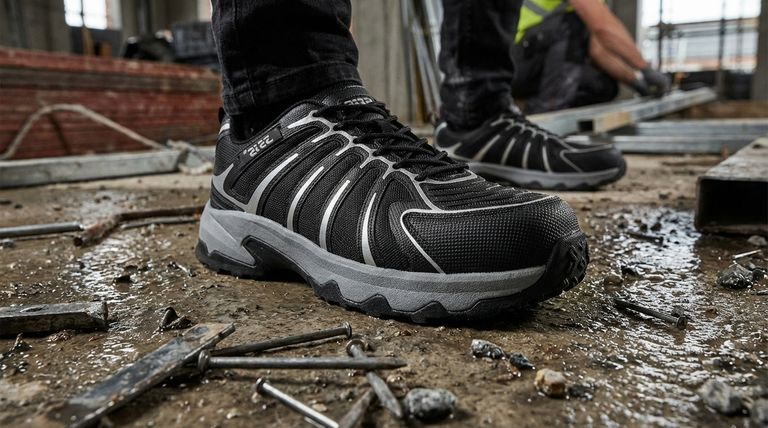
The Foundation: Stability and Support
Your feet are your foundation. If they are unstable or fatigued, the risk of accidents for your entire body increases dramatically. Proper safety footwear is designed to manage this foundational connection.
Ensuring Reliable Traction
The most common workplace accidents are slips, trips, and falls. The outsole of your footwear is engineered specifically to prevent this.
Different tread patterns and material compounds provide optimal grip on various surfaces, whether you are dealing with water, oil, or uneven terrain. This slip resistance is a quantifiable safety feature.
Reducing Fatigue and Human Error
Properly constructed footwear provides essential arch and ankle support. This reduces muscle fatigue over long shifts.
A less-fatigued worker is a more alert worker, which significantly lowers the likelihood of accidents caused by human error. The ergonomic design is a proactive safety measure.
Protection Against Specific Workplace Hazards
Beyond stability, safety footwear is designed with specific protective technologies to shield you from common environmental dangers.
Impact and Compression Resistance
The most recognized feature of safety footwear is the protective toe cap. These can be made of steel, aluminum, or composite materials.
This component is designed to protect the toes from heavy falling objects (impact resistance) and from being crushed by rolling equipment or squeezed in a pinch point (compression resistance).
Puncture Resistance
Many work environments, such as construction sites, contain sharp hazards like nails, screws, and metal shards on the ground.
A puncture-resistant plate, often made of steel or a flexible fabric like Kevlar, is built into the midsole to protect the bottom of your foot from being pierced.
Electrical Hazard Protection
Specialized footwear offers crucial protection against electrical dangers.
Electrical Hazard (EH) rated boots are made with non-conductive, shock-resistant soles and heels. They provide a secondary source of protection against accidental contact with live electrical circuits.
Understanding the Trade-offs
Choosing the right footwear requires a clear understanding of your specific environment. Selecting the wrong type can introduce its own risks.
The Danger of Under-Protection
Wearing standard boots in a hazardous environment provides a false sense of security. They offer no certified protection against impact, puncture, or electrical shock, leaving you completely exposed to those risks.
The Inefficiency of Over-Protection
Conversely, selecting a boot with features you don't need can be detrimental. For example, a heavy-duty steel plate in an environment with no puncture risk adds unnecessary weight and rigidity, increasing fatigue without providing any relevant benefit.
The Critical Importance of Proper Fit
Even the most technologically advanced safety boot is useless if it doesn't fit correctly. A poor fit can cause blisters, reduce stability, and distract you from your tasks, creating a new set of safety hazards.
Making the Right Choice for Your Goal
Always select your footwear based on a direct assessment of the hazards you will face.
- If your primary focus is construction or heavy industry: You must prioritize footwear with certified impact, compression, and puncture resistance.
- If your primary focus is work as an electrician or around live circuits: You must select footwear with a clear Electrical Hazard (EH) rating.
- If your primary focus is kitchens, processing plants, or wet environments: Your top priority should be a high rating for slip resistance on oily or wet surfaces.
- If your primary focus is general warehouse or light manufacturing work: A comfortable shoe with a basic composite safety toe and good support is often the most effective choice.
Ultimately, treating your footwear as a purpose-built tool is the first step toward ensuring your safety from the ground up.
Summary Table:
| Hazard Type | Key Footwear Protection Feature |
|---|---|
| Impact & Compression | Protective Toe Cap (Steel, Composite) |
| Puncture | Puncture-Resistant Midsole Plate |
| Slips, Trips, Falls | Slip-Resistant Outsole with Specific Tread |
| Electrical Shock | Electrical Hazard (EH) Rated Sole & Heel |
| Fatigue & Human Error | Ergonomic Design for Arch & Ankle Support |
Ensure your workforce is protected from the ground up with the right safety footwear.
As a large-scale manufacturer, 3515 produces a comprehensive range of certified safety boots and shoes for distributors, brand owners, and bulk clients. Our production capabilities encompass all types of protective footwear—from heavy-duty industrial boots with steel toes to EH-rated and slip-resistant models—tailored to your specific hazard assessments.
Contact our experts today to discuss your requirements and source reliable, high-performance safety footwear.
Visual Guide
Related Products
- Safety Footwear Wholesale Manufacturer for Custom OEM/ODM Production
- Premium Suede Sport Safety Shoes for Wholesale & Bulk Orders
- Premium Safety Shoes with Rotating Buckle Safety Sneakers
- Premium Lightweight Safety Shoes for Wholesale & Bulk Orders
- Puncture-Resistant Velcro Safety Boots for Wholesale & Custom Manufacturing
People Also Ask
- What are the key OSHA regulations for safety footwear? Ensure Compliance & Protect Your Workforce
- Why is high-load mechanical testing equipment necessary for safety footwear? Ensure Life-Saving Compression Resistance
- What does a red rectangle with a white C letter on safety footwear mean? Essential Guide to Conductive Footwear
- What is the difference between oil resistance and slip resistance in footwear? Protect Your Boots and Your Safety
- What are the basic requirements of the ASTM F2413-05 standard? Mandatory Impact & Compression Protection


















