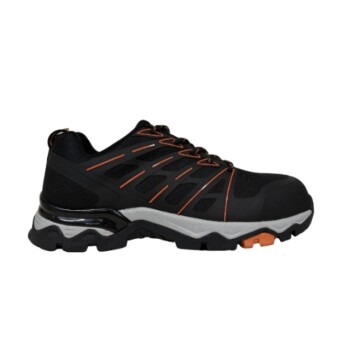
Professional foot protection prevents fractures through a combination of rigid structural reinforcement and impact dissipation. Specifically, this equipment utilizes reinforced toe caps—often engineered from composite materials—to deflect crushing forces, while energy-absorbing insoles mitigate the shock of severe impacts before they can damage the bone structure.
By integrating a hardened external shield with internal shock-dampening mechanisms, this equipment significantly lowers the probability of foot fractures from falling heavy objects and reduces the risk of secondary trauma-related complications.
The Mechanics of Fracture Prevention
To understand how safety footwear functions in high-risk environments, one must look at the specific engineering of its two primary components: the protective cap and the foundation.
Reinforced Toe Caps
The primary line of defense against fractures is the reinforced toe cap.
In modern professional equipment, these are frequently constructed from composite materials rather than just traditional steel.
This rigid shell acts as a physical barrier, absorbing the direct kinetic energy of a falling heavy object and preventing it from crushing the delicate metatarsal and phalangeal bones.
Energy-Absorbing Insoles
While the toe cap handles direct crushing forces, the energy-absorbing insole manages the shock transfer.
These insoles use high-performance cushioning materials designed to dissipate impact forces rather than transmitting them directly to the skeletal structure.
By spreading the force over a larger area and slowing the rate of impact, these components prevent the sudden stress spikes that typically cause hairline or compound fractures.
Mitigating Secondary Trauma
Effective protection extends beyond the initial point of impact.
Reducing Complication Risks
Fractures in high-risk operations often lead to secondary trauma-related complications, such as nerve damage or circulatory disruption.
By preventing the initial structural failure of the foot's bones, professional equipment drastically lowers the likelihood of these cascading medical issues.
Structural Support and Stability
Just as professional training footwear utilizes optimized structural designs to support the foot, safety equipment employs similar engineering to maintain foot alignment under stress.
This structural integrity ensures that even when a foot is subjected to a severe load, the equipment helps maintain natural geometry, reducing the risk of dislocation or ligament damage alongside fractures.
Understanding the Trade-offs
While maximum protection is the goal, users must recognize the inherent compromises in heavy-duty safety gear.
Bulk vs. Agility
Equipment designed to stop falling heavy objects inevitably adds bulk and weight to the user's foot.
While composite materials are lighter than steel, the reinforced nature of the boot can still contribute to fatigue over long shifts, potentially affecting operator agility.
Rigidity vs. Flexibility
The same rigid construction that prevents crushing injuries can limit the natural range of motion of the foot.
Operators may find that the stiffness required to protect against fractures reduces their tactile feedback and flexibility, which can be a factor in environments requiring precise footwork.
Making the Right Choice for Your Environment
Selecting the correct equipment requires balancing the specific risks of your operation with the physical needs of the wearer.
- If your primary focus is falling object protection: Prioritize footwear with composite reinforced toe caps to ensure maximum resistance against crushing forces without the thermal conductivity of steel.
- If your primary focus is impact shock reduction: Ensure the equipment features high-grade energy-absorbing insoles to mitigate force transfer during jumps or sudden movements.
Ultimately, the most effective protection comes from equipment that seamlessly combines a rigid external shield with a shock-absorbing internal foundation.
Summary Table:
| Feature | Protection Mechanism | Primary Benefit |
|---|---|---|
| Reinforced Toe Cap | Rigid barrier (Steel/Composite) | Deflects crushing forces from falling objects |
| Energy-Absorbing Insole | High-performance cushioning | Dissipates shock to prevent skeletal stress spikes |
| Structural Support | Anatomical alignment design | Reduces secondary trauma and dislocation risks |
| Composite Materials | Lightweight shielding | Offers high-impact resistance with reduced fatigue |
Secure Your Workforce with Industry-Leading Foot Protection
At 3515, we understand that in high-risk environments, the right footwear is the difference between a safe shift and a life-altering injury. As a large-scale manufacturer serving global distributors and brand owners, we specialize in high-performance safety solutions that prioritize both structural integrity and wearer comfort.
Our extensive production capabilities include:
- Flagship Safety Shoes: Engineered with advanced composite toe caps and shock-absorbing technology to prevent fractures.
- Tactical & Work Boots: Built for durability and stability in extreme conditions.
- Outdoor & Training Shoes: Combining protection with the agility required for active duty.
- Dress & Formal Shoes: High-quality options for professional uniform requirements.
Partner with 3515 to access premium bulk manufacturing tailored to your brand's standards.
Contact us today to discuss your production needs!
References
- Emily G. Jacobs, Richard Keegan. Sustaining optimal performance when the stakes could not be higher: Emotional awareness and resilience in emergency service personnel (with learnings for elite sport). DOI: 10.3389/fpsyg.2022.891585
This article is also based on technical information from 3515 Knowledge Base .
Related Products
- Premium Suede Sport Safety Shoes for Wholesale & Bulk Orders
- Premium Lightweight Safety Shoes for Wholesale & Bulk Orders
- Wholesale Anti-Smash & Puncture-Proof Safety Shoes Custom Manufacturing for Brands
- Premium KPU Injection Athletic Style Safety Shoes
- Premium Safety Shoes with Rotating Buckle Safety Sneakers
People Also Ask
- What industries have specific OSHA footwear requirements? Ensure Compliance & Protect Your Workforce
- What are the primary functions of professional safety shoes? Maximize Safety in Water Supply Confined Spaces
- What role do specialized safety shoes play in preventing falls? Engineering Stability in Industrial Environments
- What happens during the cutting stage of safety shoes manufacturing? Precision, Process & Quality
- Why wear protective masks, gloves, and safety shoes in 5S Shine? Elevate Safety and Discipline