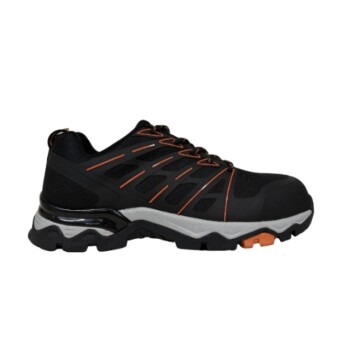
The best security shoes are not from a single brand, but are those certified to protect you from the specific hazards of your job. While reputable manufacturers like U-Power, Portwest, and Diadora Utility consistently produce high-quality, compliant footwear, the "best" shoe is always the one that matches your specific work environment.
Choosing the right security footwear is less about finding a superior brand and more about conducting a personal risk assessment. The ideal shoe is one whose specific safety features directly counter the dangers present in your workplace.
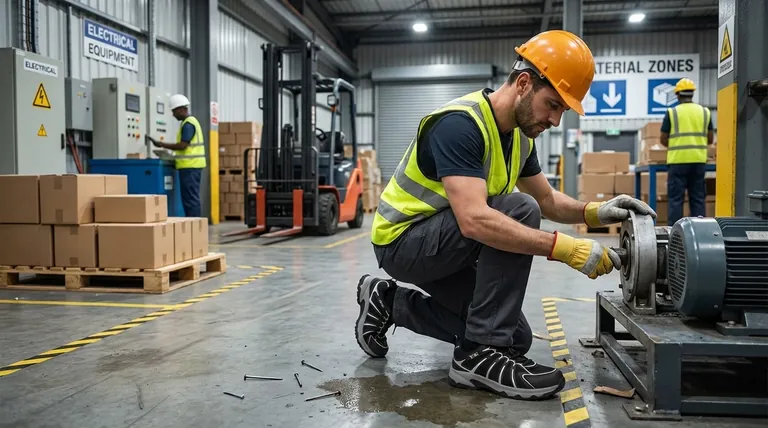
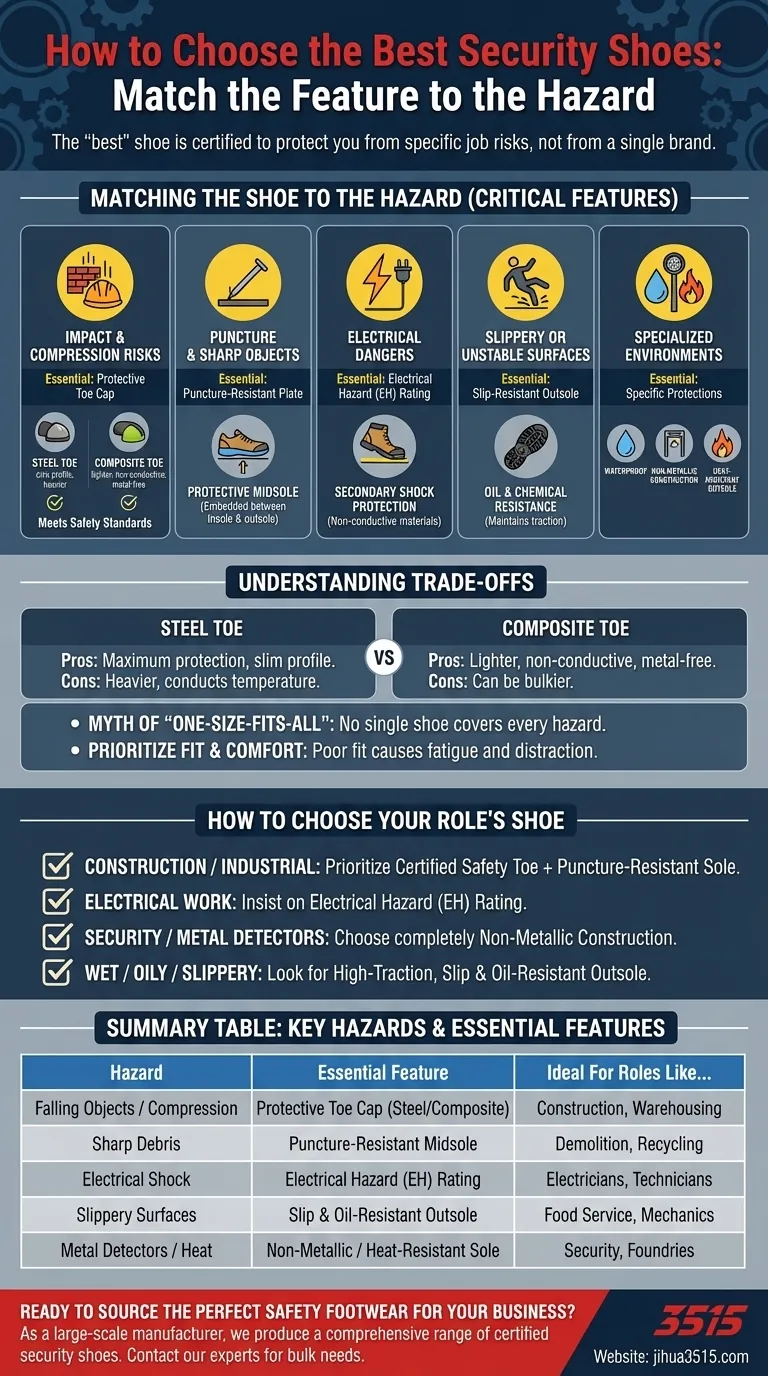
Matching the Shoe to the Hazard
Safety footwear is a form of personal protective equipment (PPE). Its effectiveness depends entirely on selecting the right features for the risks you face. A feature that is critical in one environment can be irrelevant in another.
For Impact and Compression Risks
The most recognized safety feature is the protective toe cap. This is non-negotiable in environments with falling objects or heavy machinery.
Your choice is between a traditional steel toe or a modern composite toe. Both must meet the same international safety standards for impact and compression resistance.
For Puncture and Sharp Objects
If you work on sites with nails, scrap metal, or other sharp ground debris, a puncture-resistant plate is essential.
This protective midsole is embedded between the insole and outsole to prevent sharp objects from penetrating the bottom of the shoe and injuring your foot.
For Electrical Dangers
For electricians or anyone working near live circuits, standard safety shoes are not enough. You must look for footwear with an Electrical Hazard (EH) rating.
These shoes are designed with non-conductive materials to provide a secondary source of protection from electric shock.
For Slippery or Unstable Surfaces
Slips, trips, and falls are among the most common workplace accidents. A slip-resistant outsole is a critical feature for anyone working on smooth or frequently wet surfaces.
For industrial or automotive environments, oil and chemical resistance ensures the sole does not degrade or lose traction when exposed to these substances.
For Specialized Environments
Certain jobs require very specific protections. Waterproof or water-resistant construction is vital for outdoor work or in consistently wet indoor areas.
In environments like security checkpoints, non-metallic construction prevents the footwear from setting off metal detectors. For jobs involving extreme heat, a heat-resistant outsole is required to prevent melting and protect the wearer.
Understanding the Trade-offs
Selecting the right features often involves balancing competing priorities. There is no single shoe that is perfect for every possible hazard.
Steel Toe vs. Composite Toe
A steel toe offers maximum protection in a slim profile but is heavier and will conduct heat or cold.
A composite toe, made from materials like carbon fiber or plastic, is lighter, does not conduct temperature or electricity, and is ideal for metal-free environments. However, it can sometimes be bulkier than a steel toe to achieve the same safety rating.
The Myth of "One-Size-Fits-All" Protection
It is a critical mistake to assume one high-quality safety shoe is suitable for all tasks.
A top-tier construction boot with a steel toe and puncture plate offers no protection from electrical hazards. An EH-rated shoe may not have the slip resistance needed for a commercial kitchen.
Don't Overlook Fit and Comfort
The safest shoe in the world is useless if it is too uncomfortable to be worn properly throughout the day.
Poor fit can cause fatigue and pain, which can distract you and increase the risk of an accident. Always prioritize a proper fit after you have identified the necessary safety features.
How to Choose the Right Security Shoe for Your Role
Use your specific job hazards as a checklist to find the footwear that offers you the most effective protection.
- If your primary focus is construction or industrial sites: Prioritize a certified safety toe (steel or composite) and a puncture-resistant sole.
- If your primary focus is working with electricity: Insist on footwear with a clear Electrical Hazard (EH) rating as its primary feature.
- If your primary focus is security or areas with metal detectors: Choose a completely non-metallic shoe, including a composite toe and hardware.
- If your primary focus is wet, oily, or slippery environments: Look for shoes with a high-traction, slip-resistant outsole, and consider waterproof materials.
A proper risk assessment of your environment is the first and most critical step in ensuring your personal safety on the job.
Summary Table:
| Key Hazard | Essential Safety Feature | Ideal For Roles Like... |
|---|---|---|
| Falling Objects / Compression | Protective Toe Cap (Steel/Composite) | Construction, Warehousing |
| Sharp Ground Debris | Puncture-Resistant Midsole | Demolition, Recycling |
| Electrical Shock | Electrical Hazard (EH) Rating | Electricians, Technicians |
| Slippery Surfaces | Slip & Oil-Resistant Outsole | Food Service, Mechanics |
| Metal Detectors / Extreme Heat | Non-Metallic / Heat-Resistant Sole | Security, Foundries |
Ready to source the perfect safety footwear for your business?
As a large-scale manufacturer, 3515 produces a comprehensive range of certified security shoes and boots for distributors, brand owners, and bulk clients. We can help you match the exact safety features—from steel toes to EH ratings—to your customers' specific job hazards.
Contact our experts today to discuss your bulk footwear needs and get a customized solution.
Visual Guide
Related Products
- Wholesale Anti-Smash & Puncture-Proof Safety Shoes Custom Manufacturing for Brands
- Heavy-Duty Waterproof Nubuck Safety Boots Safety Shoes for Bulk Supply
- Premium Wholesale Tactical Style Safety Shoes Boots with Quick Lacing
- Premium Suede Sport Safety Shoes for Wholesale & Bulk Orders
- Custom Safety Shoe Manufacturer for Wholesale & OEM Brands
People Also Ask
- Why do operations involving heavy fruit bunches and 'gancu' require anti-smash and anti-puncture safety boots?
- What makes a safety shoe a safety shoe? Essential Protection for Hazardous Work
- What are the advantages of water-based polyurethane spray coatings for safety shoe slip resistance? Enhanced Traction
- What additional features can a good safety shoe offer? Maximize Protection and Comfort
- How do safety shoes and tactical boots support physiological maintenance? Protect Your Health in Toxic Environments