In short, shock-absorbing insoles are a critical safety component in firefighter boots because they directly combat the immense physical toll of the job. They systematically reduce the impact forces transmitted through the feet, legs, and spine from walking on hard surfaces and carrying heavy gear, which is essential for mitigating fatigue and preventing injury during long and unpredictable incidents.
The core function of a shock-absorbing insole is not merely comfort; it is to preserve a firefighter's physical endurance and joint health. This directly translates to enhanced operational readiness, improved decision-making under pressure, and a more sustainable career.
The Physics of the Job: Why Impact Matters
A firefighter's body is subjected to extreme physical stress, and much of that force is focused through their feet. Understanding the sources of this impact reveals why specialized insoles are a necessity, not an accessory.
The Burden of Heavy Equipment
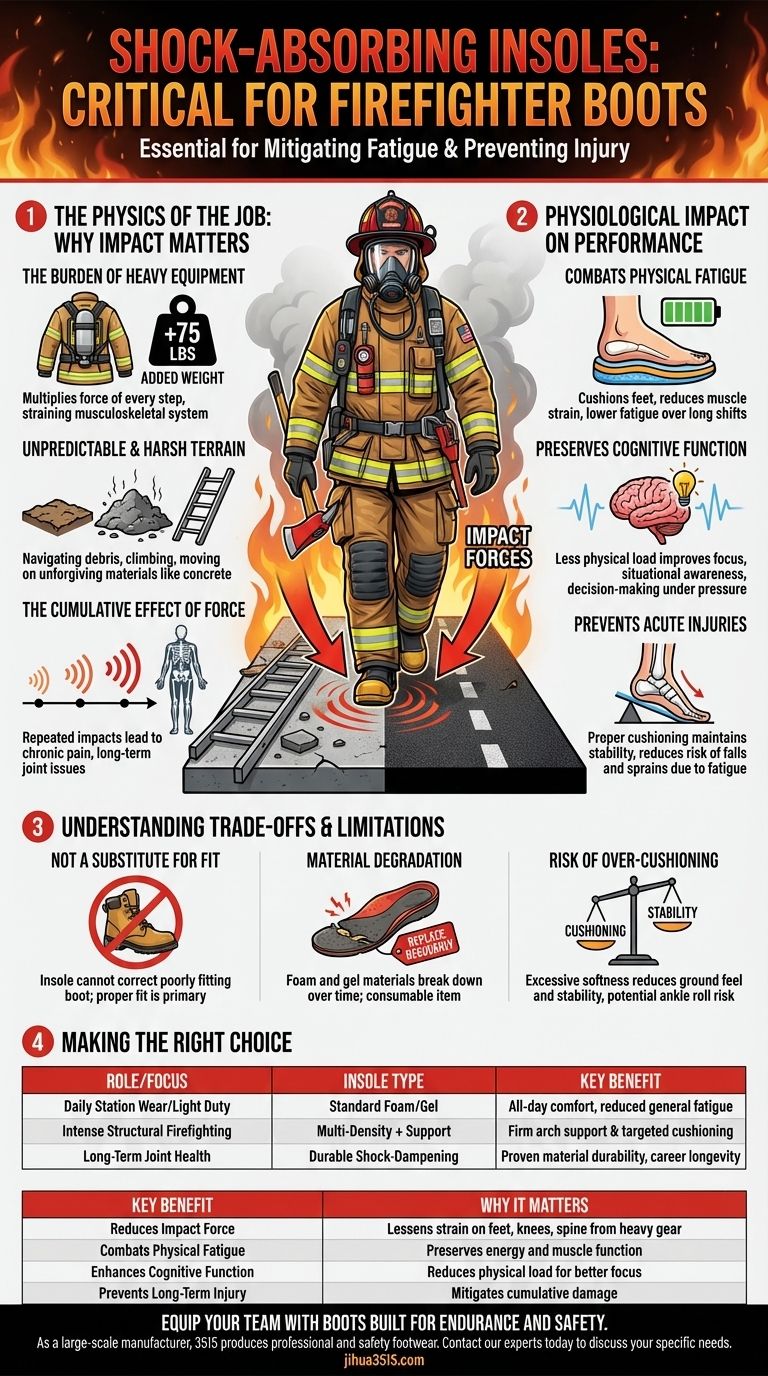
A full set of turnout gear, including an SCBA (Self-Contained Breathing Apparatus) and tools, can add over 75 pounds of weight. This additional load dramatically multiplies the force of every step, placing significant strain on the musculoskeletal system.
Unpredictable and Harsh Terrain
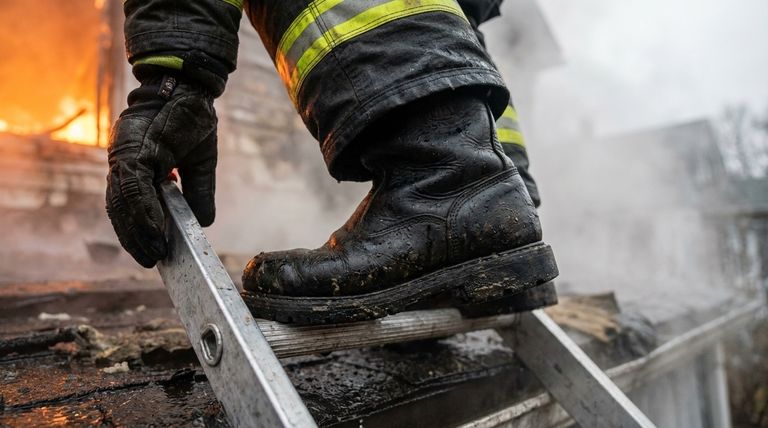
Fire scenes are rarely flat, smooth surfaces. Firefighters must navigate debris, climb ladders, and move quickly on unforgiving materials like concrete and asphalt. Each step on this terrain is a high-impact event that needs to be absorbed.
The Cumulative Effect of Force
The stress from a single incident is significant, but the real damage occurs over time. The thousands of repeated impacts from daily duties accumulate over a career, leading to chronic pain and long-term joint issues in the feet, knees, hips, and lower back.
The Physiological Impact on Firefighter Performance
Reducing physical impact has direct and immediate benefits that go far beyond simple comfort. It is a key factor in maintaining a firefighter's ability to perform their duties safely and effectively.
Combating Physical Fatigue
Shock-absorbing insoles cushion the feet, which reduces the constant micro-adjustments and strain on the muscles in the feet, legs, and core. Less muscle activation is required for stabilization, which directly translates to lower levels of physical fatigue over a long shift.
Preserving Cognitive Function
Physical exhaustion has a proven negative effect on mental acuity. By lessening the body's physical load and pain signals, a firefighter can better maintain focus, situational awareness, and the clear-headedness required for critical decision-making in hazardous environments.
Preventing Acute Injuries
Fatigue is a leading cause of missteps that can lead to acute injuries like ankle sprains or falls. Proper cushioning and support help maintain stability when a firefighter is exhausted, reducing the risk of an incident-ending injury.
Understanding the Trade-offs and Limitations
While critically important, shock-absorbing insoles are part of a larger system. Recognizing their limitations is key to maximizing their benefit.
Not a Substitute for Proper Boot Fit
An insole cannot correct the problems of a poorly fitting boot. The boot itself is the primary foundation for support and protection. The insole serves to enhance the performance of a correctly sized and structured boot.
Material Degradation Over Time
The foam, gel, or composite materials that provide shock absorption will compress and break down with use. Over time, they lose their ability to cushion effectively and must be replaced to maintain their protective qualities. They are a consumable piece of equipment.
The Risk of Over-Cushioning
There must be a balance between cushioning and stability. An insole that is excessively soft can reduce the wearer's "feel" for the ground beneath them and may not provide enough rigid support, potentially increasing the risk of ankle rolls in certain situations.
Making the Right Choice for Your Role
Selecting the right insole depends on your primary duties and long-term goals.
- If your primary focus is daily station wear and light duty: A standard foam or gel insole provides excellent all-day comfort and is highly effective at reducing general fatigue.
- If your primary focus is intense structural firefighting: Seek out multi-density insoles that offer firm arch support for stability combined with targeted, high-performance cushioning in the heel and forefoot.
- If your primary focus is long-term joint health: Prioritize insoles made from durable, proven shock-dampening materials and commit to replacing them regularly to ensure you are always receiving their full protective benefit.
Ultimately, investing in proper foot support is a direct investment in a firefighter's performance, safety, and career longevity.
Summary Table:
| Key Benefit | Why It Matters for Firefighters |
|---|---|
| Reduces Impact Force | Lessens strain on feet, knees, and spine from heavy gear and hard surfaces. |
| Combats Physical Fatigue | Preserves energy and muscle function over long shifts and emergencies. |
| Enhances Cognitive Function | Reduces physical load to help maintain focus and decision-making under pressure. |
| Prevents Long-Term Injury | Mitigates cumulative damage from repeated impacts over a career. |
Equip your team with boots built for endurance and safety. As a large-scale manufacturer, 3515 produces a comprehensive range of professional and safety footwear for distributors, brand owners, and bulk clients. Our production capabilities encompass all types of safety boots, including advanced models designed to integrate with high-performance, shock-absorbing insoles. Let us help you enhance firefighter performance and well-being. Contact our experts today to discuss your specific needs.
Visual Guide
Related Products
- High Performance Fire-Retardant Waterproof Safety Boots
- Wholesale Waterproof Tactical Boots Custom Suede & High-Traction Soles
- Premium Flame-Retardant Waterproof Safety Boots and Shoes
- Premium Suede Metatarsal Guard Safety Boots Work Shoes
- Premium Wholesale Waterproof Safety Boots High Performance Protection for Industrial Markets
People Also Ask
- Why are waterproof safety boots recommended for certain work environments? Essential Protection for Wet & Hazardous Jobs
- What roles do 3D vision systems and industrial robots play in the manufacturing of fire safety boots? Smart Automation
- What's the difference between waterproof and water-resistant boots? Choose the Right Footwear for Your Environment
- How does boot construction affect waterproofing? The Science Behind Truly Dry Feet
- What should you look for to ensure boots are fully waterproof? The Essential 2-Part System