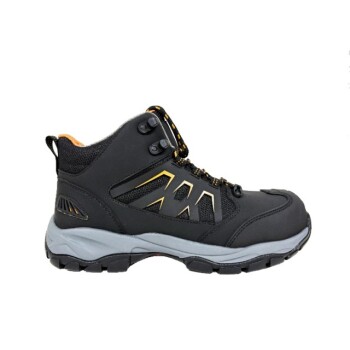
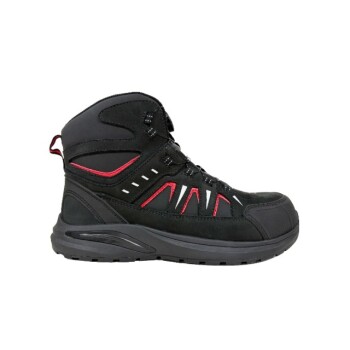
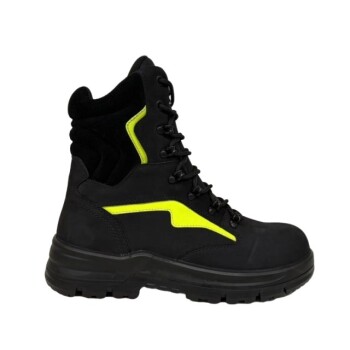
Industrial safety boots with steel toes provide a non-negotiable physical barrier against severe crushing and impact injuries for machine operators. Particularly in environments utilizing carding machines, roller systems, and heavy assembly lines, these reinforced toe caps prevent foot fractures and permanent pressure injuries by withstanding the immense force of machinery pinch points and falling materials.
Core Takeaway: The rigid architecture of a steel toe cap serves as a mechanical shield for the phalanges, engineered to withstand high-pressure compression and disperse impact energy (up to 200 Joules) to prevent bone-crushing trauma in hazardous processing environments.
The Mechanics of Compression Protection
Mitigating Pinch Point Risks
For operators working near carding machines and roller systems, the primary danger is not always a falling object, but rather "pinch points."
These are areas where moving machinery parts converge. If a foot is accidentally caught in a roller or conveyor feed, the steel toe cap resists the compressive force.
Preventing Soft Tissue and Bone Damage
Without this rigid barrier, the static pressure of the machinery would immediately crush the delicate bones of the foot.
The steel cap maintains a protective pocket of space, ensuring that the heavy pressure is taken by the boot, not the operator’s foot.
Impact Absorption and Force Dispersion
Handling Falling Objects
In tire manufacturing and heavy assembly lines, operators frequently handle heavy truck hubs and raw materials.
When these heavy objects are dropped, the integrated protective layer of the safety boot disperses the instantaneous force.
Reducing Fracture Severity
Instead of the impact force concentrating on a single bone, the steel cap spreads the energy across a wider structural area.
This dispersion mechanism is critical for preventing bone cracks and compound fractures that would otherwise occur upon direct contact.
Quantifiable Protection Standards
Standardized safety boots (such as those meeting the S1 standard) provide measurable protection levels.
They are engineered to withstand high-energy impacts of up to 200 Joules and static pressure loads of up to 15 kilonewtons, validating their role as critical safety hardware.
Holistic Stability and Traction
Addressing Slick Surfaces
While the steel toe protects against crushing, the environment in processing plants often presents slipping hazards due to oil or water.
Safety boots are designed as a complete system, pairing the steel toe with slip-resistant outsoles.
Preventing Secondary Accidents
A slip on an oily surface can lead to a secondary accident, such as falling into a machine or dropping a heavy load.
By providing traction on wet surfaces, the boots stabilize the operator, ensuring they maintain control over heavy materials and machinery.
Understanding the Trade-offs
Steel vs. Composite Limitations
While steel offers maximum protection against crushing, it is heavy and conducts temperature.
In extreme cold or heat, steel toes can transfer that temperature to the user's foot, potentially causing discomfort or separate safety issues.
Security and Sensitivity
Steel toes are magnetic and will set off metal detectors, which can be a logistical hurdle in high-security facilities.
In these specific scenarios, composite toes (mentioned in the primary reference) may be a viable alternative, though they are often bulkier than steel to achieve the same impact rating.
Making the Right Choice for Your Goal
To select the correct protective footwear, you must assess the specific hazards of your processing plant.
- If your primary focus is heavy machinery with rollers: Prioritize boots with high static pressure ratings (compression resistance) to protect against pinching hazards.
- If your primary focus is manual handling of heavy parts: Ensure the boots meet the 200 Joule impact standard to protect against falling objects like truck hubs.
- If your primary focus is working on oily floors: verify that the boots include slip-resistant outsoles alongside the steel toe to prevent loss of footing.
The steel toe is not just a shoe feature; it is a critical engineering control that separates a minor workplace incident from a life-altering injury.
Summary Table:
| Feature | Protection Benefit | Standard Rating |
|---|---|---|
| Steel Toe Cap | Prevents crushing from machinery pinch points | 15kN Static Pressure |
| Impact Shield | Disperses energy from falling heavy objects | 200 Joules |
| Rigid Architecture | Protects phalanges from bone-crushing trauma | Industry Standard |
| Slip-Resistant Outsole | Stabilizes operator on oily or wet surfaces | S1/SRC Standards |
As a large-scale manufacturer serving distributors and brand owners, 3515 offers comprehensive production capabilities for all footwear types, anchored by our flagship Safety Shoes series. We understand that for machine operators, a steel toe is a critical engineering control, not just a shoe feature. Our extensive portfolio covers work and tactical boots, outdoor shoes, training shoes, and sneakers, as well as Dress & Formal shoes to meet diverse bulk requirements. Ensure your workforce or retail line is equipped with the highest standards of durability and protection. Contact us today to explore our bulk manufacturing solutions!
References
- Anindita Tasnim Onni, Bente E. Moen. Prevalence of Occupational Injuries in selected Coir Industries in Sri Lanka: a cross-sectional study. DOI: 10.3126/ijosh.v13i2.48717
This article is also based on technical information from 3515 Knowledge Base .
Related Products
- Durable Steel Toe Safety Boots Wholesale & Custom Manufacturing
- Puncture-Resistant Velcro Safety Boots for Wholesale & Custom Manufacturing
- Wholesale Durable Breathable Safety Boots Custom OEM Manufacturer
- Premium Sport Style Safety Boots for Bulk Orders
- Wholesale Durable Safety Boots Manufacturer Customizable Steel Toe Work Boots
People Also Ask
- Why is it mandatory to wear safety shoes with steel toe protection during metal loading? Prevent Crushing Injuries
- What are the main materials used in steel toe safety shoes? A Guide to Protective Footwear Construction
- What are the characteristics of steel toe safety boots? Maximum Protection, Key Trade-offs
- Is it true that steel toes can cause toes to get cut off? Debunking the Dangerous Myth
- What are the 5 main protections offered by steel toe boots? A Guide to Workplace Foot Safety