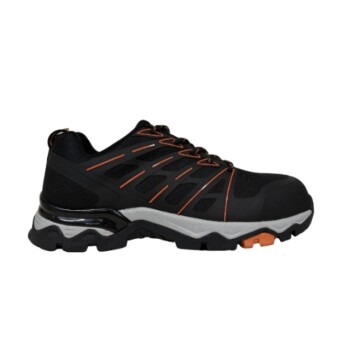
Professional safety shoes are a critical mandatory requirement during heavy-duty girder erection because these environments expose workers to extreme physical hazards that standard footwear cannot withstand. These operations involve maneuvering massive prefabricated beams and operating large-scale lifting equipment, creating a high risk of crushing injuries from falling objects. Furthermore, the combination of high-altitude work and complex ground debris makes specialized footwear essential for preventing punctures and potentially fatal slips.
Girder erection transforms a construction site into a high-risk zone; professional safety shoes serve as the fundamental engineering control that mitigates the three primary threats: impact from heavy loads, punctures from debris, and loss of balance at height.
Mitigating Physical Impact and Puncture Risks
Protection Against Heavy Loads
Girder erection is defined by the movement of heavy prefabricated beams and the use of massive lifting equipment.
In this environment, the risk of objects falling or shifting is elevated. Professional safety shoes provide impact protection—typically through reinforced toe caps—to shield the foot from crushing forces that would otherwise cause catastrophic injury.
Defense Against Ground Hazards
Infrastructure sites are rarely clean surfaces; they are often covered in "complex debris" such as scrap metal, nails, or sharp rocks.
Standard shoe soles offer little resistance to these hazards. Professional safety footwear features puncture-resistant midsoles that prevent sharp objects from penetrating the shoe and injuring the foot during ground operations.
ensuring Stability and Traction
Superior Grip for High-Altitude Work
Working on girders often involves high-altitude tasks where a slip can be fatal.
To address this, professional safety shoes are engineered with high-grip rubber outsoles. These provide the friction necessary to move safely across steel or concrete surfaces, even when the environment is slippery due to weather or industrial fluids.
Adapting to Rugged Terrain
Infrastructure projects frequently suffer from poor infrastructure or rugged, uneven terrain during the erection phase.
Shoes designed for this environment utilize deep-lug anti-slip tread patterns. This design digs into loose or uneven ground, providing the traction needed to navigate the site without losing footing.
Critical Ankle Support
Balance is easily compromised when carrying heavy loads or walking on irregular surfaces.
Reinforced ankle support structures are a vital feature of these shoes. They provide physical stability to the joint, compensating for environmental hazards and helping the worker maintain balance where a twisted ankle could lead to a fall.
Understanding the Trade-offs
Weight vs. Protection
The robust features required for girder erection—steel toes, puncture plates, and heavy rubber soles—inevitably add weight to the footwear.
While this ensures maximum safety, it can lead to increased leg fatigue over long shifts compared to lighter, non-protective footwear.
Tactile Feedback
Thick, puncture-resistant soles disconnect the wearer from the "feel" of the ground.
While this prevents injury, it can slightly reduce tactile feedback, requiring the worker to rely more visually on where they place their feet, especially when navigating narrow beams.
Making the Right Choice for Your Goal
When selecting safety footwear for infrastructure projects, you must match the technical specifications to the specific phase of work.
- If your primary focus is working near heavy lifting zones: Prioritize footwear with maximum impact resistance ratings to protect against crushing injuries from prefabricated beams.
- If your primary focus is high-altitude or uneven terrain: Look for high-grip rubber outsoles with deep lugs and rigid ankle support to maximize stability and prevent falls.
The right safety shoe does not just protect the foot; it anchors the worker, enabling precision and safety in an unforgiving environment.
Summary Table:
| Feature | Protection Benefit | Infrastructure Site Application |
|---|---|---|
| Reinforced Toe Caps | Crush & Impact Resistance | Protection against falling prefabricated beams and heavy equipment. |
| Puncture-Resistant Midsole | Sharp Object Defense | Prevents injuries from nails, scrap metal, and sharp ground debris. |
| High-Grip Rubber Outsole | Slip Resistance & Friction | Ensures stability during high-altitude work on steel or concrete surfaces. |
| Deep-Lug Tread Pattern | Superior Traction | Provides footing on rugged, uneven terrain and loose soil. |
| Ankle Support Structure | Joint Stability | Reduces the risk of twists and falls when carrying heavy loads. |
Secure Your Workforce with Industry-Leading Safety Footwear
Infrastructure projects demand uncompromising protection. As a large-scale manufacturer serving distributors and brand owners, 3515 offers comprehensive production capabilities for all footwear types, anchored by our flagship Safety Shoes series.
Our extensive portfolio covers work and tactical boots, outdoor shoes, training shoes, and sneakers, as well as Dress & Formal shoes to meet your diverse bulk requirements. We provide the durability, traction, and impact resistance needed to mitigate risks in the most unforgiving environments.
Ready to upgrade your supply chain? Contact us today to discuss how our manufacturing expertise can deliver the high-performance footwear your clients and projects require.
References
- Bayu Aninditya, Fitri Suryani. Implementation of the Hazard Identification, Risk Assessment and Risk Control (HIRARC) Method on Erection Girder Work of South Japek II Toll Road Construction Project Package 3. DOI: 10.58631/injurity.v2i9.127
This article is also based on technical information from 3515 Knowledge Base .
Related Products
- Premium Suede Sport Safety Shoes for Wholesale & Bulk Orders
- Premium Lightweight Safety Shoes for Wholesale & Bulk Orders
- Wholesale Anti-Smash & Puncture-Proof Safety Shoes Custom Manufacturing for Brands
- Premium KPU Injection Athletic Style Safety Shoes
- Premium Safety Shoes with Rotating Buckle Safety Sneakers
People Also Ask
- What are the primary functions of professional safety shoes? Maximize Safety in Water Supply Confined Spaces
- What industries have specific OSHA footwear requirements? Ensure Compliance & Protect Your Workforce
- What role do specialized safety shoes play in preventing falls? Engineering Stability in Industrial Environments
- How do I choose the best safety shoes? Match Certified Features to Your Hazards
- Why is barefoot walking used as a baseline in gait safety research? Unlocking Natural Biomechanics for Shoe Design