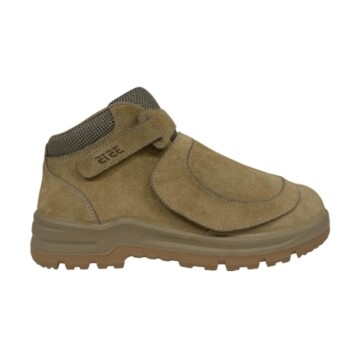
Professional construction boots are a strategic investment in project velocity. By integrating arch support to minimize physical exhaustion and puncture resistance to navigate hazards, these boots allow personnel to move rapidly and securely between critical zones like mobilization, pre-casting, and erection areas. This directly translates to maintained schedules and improved operational efficiency.
On complex construction sites, efficiency is defined by the workforce's ability to remain mobile and active. Professional footwear safeguards the construction schedule by preventing disabling injuries and significantly reducing the cumulative fatigue of navigating diverse, difficult terrains.
Mitigating Fatigue to Maintain Pace
The Critical Role of Arch Support
Construction sites are rarely flat or uniform; they consist of soft soil, shifting gravel, and hard concrete structures.
Arch support is essential for neutralizing the strain caused by walking on these uneven surfaces for extended periods. By properly aligning the foot, these boots reduce the physical toll on the worker, preventing premature exhaustion during long shifts.
Sustaining Energy Across Zones
A fatigued worker moves slower and makes more mistakes.
Quality boots often include ankle protection alongside arch support to stabilize the leg muscles. This preservation of physical energy ensures that personnel maintain a consistent work pace from the start of the day until the final hour.
Enhancing Mobility Through Injury Prevention
The Efficiency of Puncture Resistance
Complex sites are often littered with sharp objects that pose immediate threats to safety and workflow.
Puncture-resistant soles provide a necessary barrier against these hazards. When workers trust their footwear, they can move confidently and quickly without having to meticulously scan every step for debris.
Seamless Transitions Between Work Areas
Operational efficiency relies on the smooth flow of labor between different phases of construction.
Personnel frequently move between mobilization, pre-casting, and erection areas. Puncture resistance and durable construction ensure these transitions happen without interruption, preventing injury-related stoppages that can derail the overall timeline.
Understanding the Trade-offs
Balancing Weight and Protection
While protection is paramount, adding features like steel toes or heavy-duty puncture plates increases the weight of the boot.
Heavier boots can lead to leg fatigue if the worker is walking extreme distances. It is important to balance the level of reinforcement (e.g., steel vs. composite materials) with the specific mobility needs of the role.
Rigidity vs. Flexibility
To resist punctures and support arches, the soles of professional boots must be relatively stiff.
This rigidity provides stability on loose gravel but can reduce ground feel and flexibility. Operators who need to kneel frequently or maneuver in tight spaces may find extremely rigid soles cumbersome.
Making the Right Choice for Your Goal
Select footwear based on the specific operational demands of your site personnel:
- If your primary focus is traversing hazardous debris: Prioritize boots with high-grade puncture-resistant soles to ensure workers can move quickly without fear of injury.
- If your primary focus is endurance on large sites: Prioritize boots with superior arch support and ankle stability to keep workers moving efficiently across varying terrains like soil and concrete.
Equipping your workforce with the correct footwear is not just a safety compliance measure; it is a direct method for securing your project's critical path.
Summary Table:
| Key Feature | Operational Benefit | Efficiency Impact |
|---|---|---|
| Arch Support | Reduces physical strain on uneven terrain | Sustains worker energy and pace throughout long shifts |
| Puncture Resistance | Protects against sharp debris and hazards | Enables confident, rapid movement between work zones |
| Ankle Stability | Minimizes muscle fatigue and injury risk | Prevents downtime and ensures smooth labor transitions |
| Balanced Weight | Optimizes protection vs. mobility | Enhances agility for workers traversing large-scale sites |
Maximize Your Project Efficiency with 3515 Footwear
As a large-scale manufacturer serving distributors and brand owners, 3515 offers comprehensive production capabilities for all footwear types, anchored by our flagship Safety Shoes series. We understand that on complex construction sites, high-performance footwear is a strategic asset for project velocity. Our extensive portfolio covers work and tactical boots, outdoor shoes, training shoes, and sneakers, as well as Dress & Formal shoes to meet diverse bulk requirements.
Partner with us to equip your workforce with boots engineered for durability and peak performance. Contact us today to discuss your wholesale needs and discover how our manufacturing expertise can provide the value and reliability your brand demands.
References
- Bayu Aninditya, Fitri Suryani. Implementation of the Hazard Identification, Risk Assessment and Risk Control (HIRARC) Method on Erection Girder Work of South Japek II Toll Road Construction Project Package 3. DOI: 10.58631/injurity.v2i9.127
This article is also based on technical information from 3515 Knowledge Base .
Related Products
- Wholesale Durable Safety Boots | Custom Steel Toe & Puncture-Resistant Manufacturing
- Puncture-Resistant Velcro Safety Boots for Wholesale & Custom Manufacturing
- Wholesale Durable Breathable Safety Boots Custom OEM Manufacturer
- Premium High-Cut Waterproof Safety Boots Manufacturing & Wholesale Solutions
- Wholesale Customizable Suede Safety Boots - Puncture-Proof with Velcro Closure
People Also Ask
- What materials are commonly used for outsoles in safety boots? A Guide to Durability, Grip, and Comfort
- What are the consequences of not wearing safety boots? Protect Your Finances and Career
- How should safety boots be cleaned to avoid damage? A Gentle Guide to Preserve Your Boots
- What are the key features of safety boots? Essential Protection for Hazardous Workplaces
- What are the risks of using ordinary rubber boots in forest clearing? Why professional safety boots are essential