
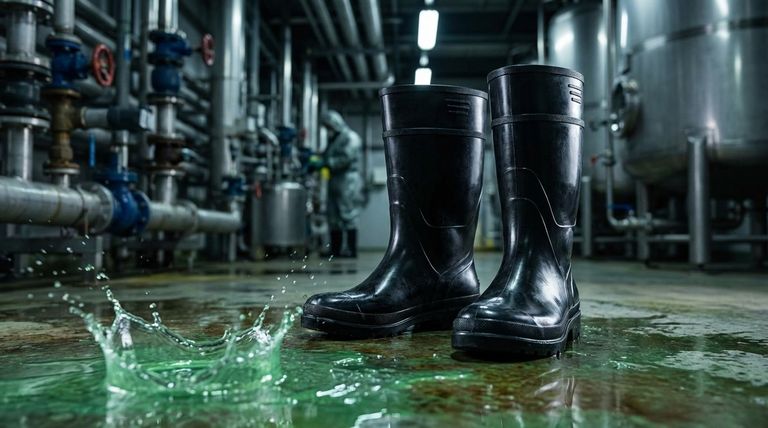
In environments with hazardous substances, rubber boots are highly beneficial due to their inherent material properties. They create a non-porous, impermeable barrier that is resistant to many chemicals, while their smooth surface allows for simple and effective decontamination, preventing the spread of harmful agents.
The core advantage of rubber boots in hazardous settings is their dual capability: they not only block contaminants but also allow for easy and thorough cleaning, which is critical for preventing cross-contamination and ensuring long-term user safety.
The Core Protective Properties of Rubber
To understand why rubber is a superior material for protective footwear, we must look at its specific physical and chemical characteristics. These properties work together to create a reliable defense system for the wearer.
An Impermeable and Chemical-Resistant Barrier
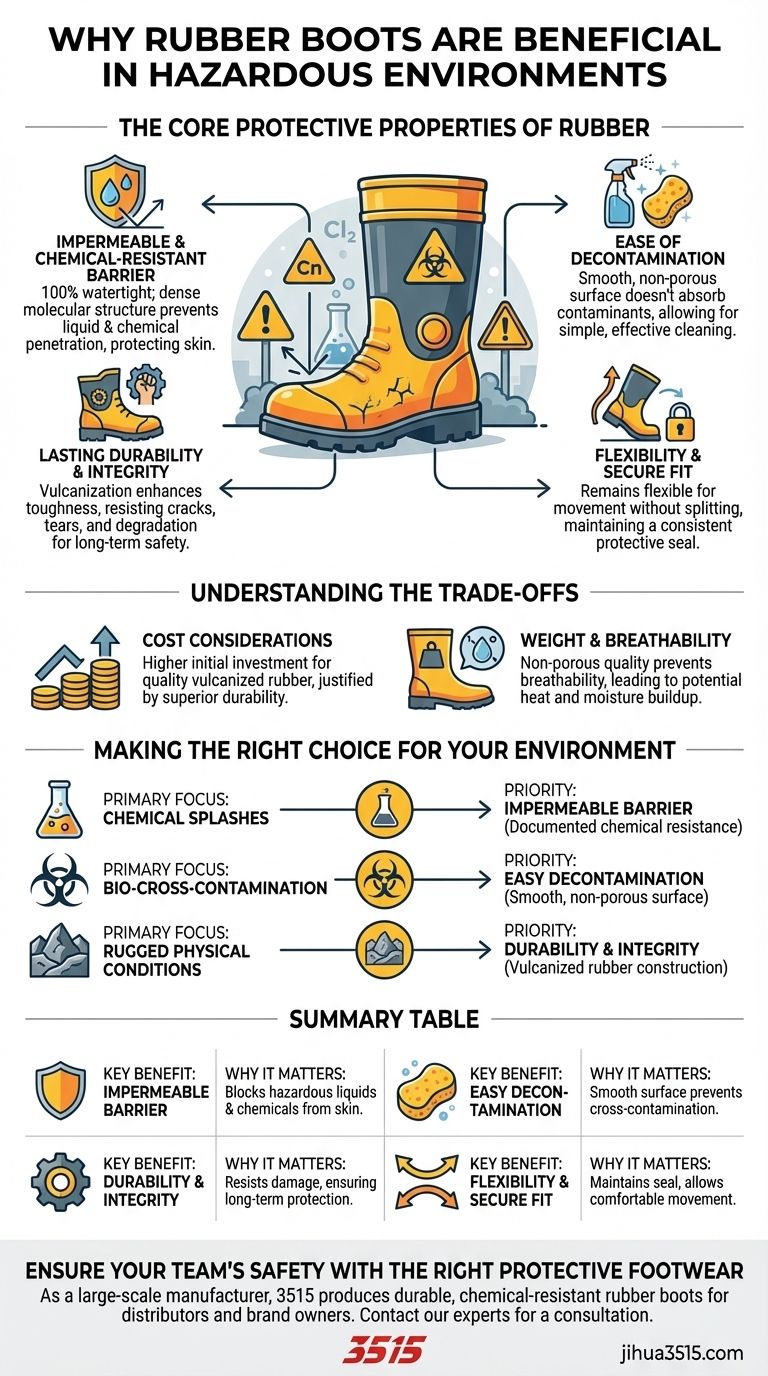
Natural and synthetic rubber compounds are 100% watertight. Their dense molecular structure prevents liquids from penetrating, making them an ideal first line of defense against splashes and spills.
Crucially, this resistance extends to many chemicals, acids, and bases, protecting the wearer's skin from direct contact with hazardous materials.
Ease of Decontamination
The surface of a rubber boot is smooth and non-porous. Unlike materials like leather or fabric, it does not absorb or trap contaminants.
This allows for simple, repeatable cleaning and decontamination procedures, ensuring that hazardous substances are not unknowingly carried from a contaminated area to a clean one.
Lasting Durability and Integrity
Rubber boots are renowned for their durability and ability to resist physical damage. A process called vulcanization enhances this toughness, making the material resistant to cracking, tearing, and degradation.
This structural integrity is vital for safety, as a compromised boot loses its protective value. The material also provides excellent slip and shock resistance, adding another layer of safety in unpredictable environments.
Flexibility and Secure Fit
Despite its toughness, rubber remains highly flexible. This allows the boot to move with the wearer without splitting or cracking, maintaining a consistent protective seal.
A comfortable fit also ensures that personnel will wear the boots correctly and consistently, which is fundamental to any safety protocol.
Understanding the Trade-offs
While rubber offers exceptional protection, it's important to be aware of its limitations to make a fully informed decision.
Cost Considerations
High-quality, vulcanized rubber boots are often more expensive than alternatives made from materials like PVC. This initial investment, however, is often justified by their superior durability and longevity.
Weight and Breathability
The same non-porous quality that makes rubber waterproof also means it is not breathable. In hot conditions or during long periods of wear, this can lead to heat and moisture buildup inside the boot, causing discomfort.
Making the Right Choice for Your Environment
Your specific hazard will determine which feature of a rubber boot is most critical.
- If your primary focus is protection from chemical splashes: Prioritize boots with documented chemical resistance, as the impermeable barrier is your most important defense.
- If your primary focus is preventing biological cross-contamination: The most critical feature is the boot's smooth, non-porous surface that can be easily and effectively sanitized.
- If your primary focus is durability in rugged physical conditions: Seek out boots made from vulcanized rubber, which offer superior resistance to tears and physical stress.
Ultimately, selecting the right rubber boot is a critical investment in personal and environmental safety.
Summary Table:
| Key Benefit | Why It Matters in Hazardous Environments |
|---|---|
| Impermeable Barrier | Blocks hazardous liquids and chemicals from contacting skin. |
| Easy Decontamination | Smooth, non-porous surface allows for thorough cleaning to prevent cross-contamination. |
| Durability & Integrity | Resists tears, cracks, and degradation, ensuring long-term protection. |
| Flexibility & Secure Fit | Maintains a protective seal while allowing comfortable movement. |
Ensure your team's safety with the right protective footwear.
As a large-scale manufacturer, 3515 produces a comprehensive range of durable and chemical-resistant rubber boots for distributors, brand owners, and bulk clients. Our production capabilities ensure you get high-quality footwear designed for maximum protection and easy decontamination in your specific hazardous environment.
Contact our experts today for a consultation and discover how our boots can be a critical part of your safety protocol.
Visual Guide
Related Products
- Factory Direct Wholesale Rain Boots Durable Waterproof & Fully Customizable
- Durable Rubber Sole Outdoor Shoes Wholesale & Custom Manufacturing
- Wholesale Durable Camouflage Canvas Shoes with High-Traction Cleated Rubber Sole
- Durable Leather Work Boots for Wholesale & Custom Manufacturing
- Wholesale Durable Leather Work Boots | 8-Inch Goodyear Welt Manufacturer
People Also Ask
- What are the characteristics of rain boots? A Guide to Waterproof Footwear for Every Need
- What factors should be considered when choosing rain boots? Find the Perfect Boot for Your Needs
- What are the main differences between rain boots and snow boots? Choose the Right Boot for Your Climate
- How should one decide between PVC and rubber for rain boots? A Guide to Choosing the Right Material
- Why are rain boots more flexible and comfortable than snow boots? The Key Differences Explained















