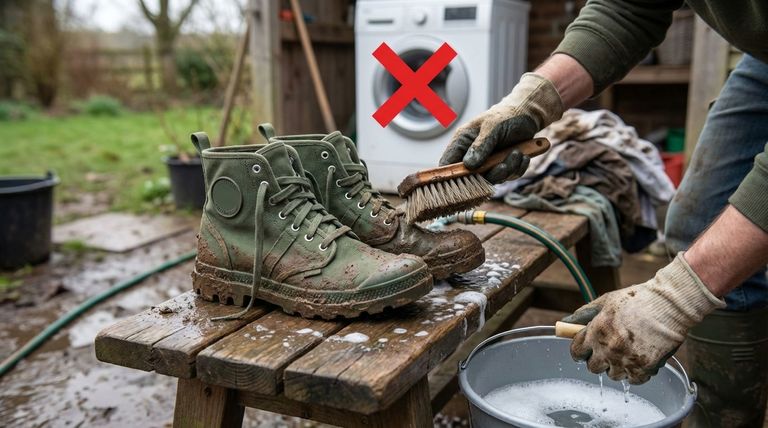
No, you should never put wellies in a washing machine. The combination of intense heat and the tumbling action is highly destructive to the materials your boots are made from. This process can damage the rubber, degrade the adhesives holding the seams together, and compromise their waterproof integrity, effectively ruining them.
The core issue is material science: the rubber and PVC compounds used in wellies are not designed to withstand the heat and mechanical stress of a washing machine cycle. Hand washing is the only method that guarantees both the longevity of your boots and the safety of your appliance.
Why a Washing Machine is a Risk to Your Boots
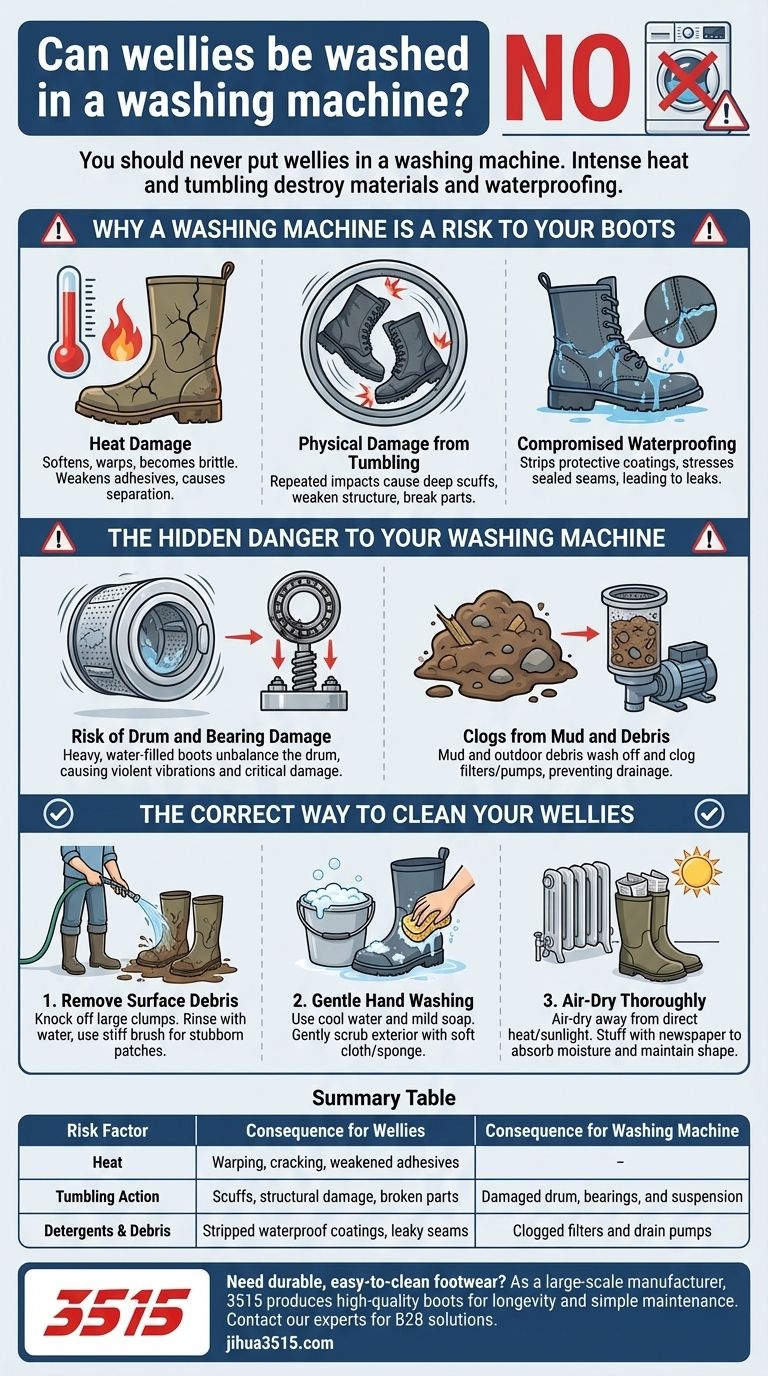
Attempting to machine wash your wellies introduces several risks that can lead to irreversible damage. Understanding these specific failure points makes the case for manual cleaning clear.
Heat Damage and Material Degradation
The hot water in a standard wash cycle can cause the rubber or PVC to soften, warp, or become brittle once it cools. This thermal stress can lead to cracking and splitting, especially along flexion points.
Furthermore, the heat can weaken the adhesives used to bond the sole to the upper, causing them to separate and creating leaks.
Physical Damage from Tumbling
Wellies are heavy and rigid. As they tumble inside the drum, they repeatedly strike the machine's walls and each other. This can cause deep scuffs, damage decorative elements like buckles, and weaken the boot's overall structure.
Compromised Waterproofing
The primary purpose of a welly is to be waterproof. The aggressive washing action, combined with detergents, can strip away any protective coatings and put immense stress on the sealed seams, leading to leaks that render the boots useless.
The Hidden Danger to Your Washing Machine
The risk isn't just to your footwear; it's also to your appliance. The potential repair costs for your washing machine far outweigh any convenience gained.
Risk of Drum and Bearing Damage
The significant weight of water-filled boots can unbalance the washing machine's drum during the spin cycle. This creates violent vibrations that can damage the drum itself, the suspension system, and the critical bearings that allow it to spin smoothly.
Clogs from Mud and Debris
If your boots are caked in mud, stones, or other outdoor debris, this will wash off and can easily clog your machine's filter and drain pump. This can prevent the machine from draining, leading to errors and requiring a service call.
The Correct Way to Clean Your Wellies
Properly cleaning your boots is simple and takes only a few minutes. This manual method ensures they remain in excellent condition for years.
Step 1: Remove Surface Debris
First, knock the boots together to dislodge any large, dried clumps of mud. Use an outdoor tap or a hose to rinse away the remaining surface dirt. A stiff brush can help with stubborn patches.
Step 2: Gentle Hand Washing
Fill a bucket with cool water and a small amount of mild soap, such as dish soap. Use a soft cloth or sponge to gently scrub the entire exterior of the boots.
Step 3: Air-Dry Thoroughly
Wipe the boots with a dry cloth and leave them to air-dry naturally. Crucially, keep them away from direct heat sources like radiators, fireplaces, or direct sunlight, as intense heat can cause the rubber to crack.
Stuffing them with newspaper can help absorb internal moisture and maintain their shape as they dry.
Making the Right Choice for Your Boots
There is no scenario where the convenience of a machine wash is worth the guaranteed risk. The choice is clear and simple.
- If your primary focus is preserving your wellies: Adhere strictly to manual hand-washing with cool water and mild soap to protect the rubber, seams, and waterproofing.
- If your primary focus is protecting your washing machine: Never put heavy, solid, or excessively dirty items like boots inside. This prevents catastrophic damage to the drum and drainage system.
- If your primary focus is a quick clean: A rinse with a hose and a quick wipe-down is the fastest safe method and is sufficient for most routine cleaning.
Taking a few moments to clean your wellies by hand is the definitive way to ensure they remain functional and reliable.
Summary Table:
| Risk Factor | Consequence for Wellies | Consequence for Washing Machine |
|---|---|---|
| Heat | Warping, cracking, weakened adhesives | - |
| Tumbling Action | Scuffs, structural damage, broken parts | Damaged drum, bearings, and suspension |
| Detergents & Debris | Stripped waterproof coatings, leaky seams | Clogged filters and drain pumps |
Need durable, easy-to-clean footwear for your customers? As a large-scale manufacturer, 3515 produces a comprehensive range of high-quality boots and shoes designed for longevity and simple maintenance. We provide reliable footwear solutions for distributors, brand owners, and bulk clients. Contact our experts today to discuss your production needs and discover how we can support your business with superior products.
Visual Guide
Related Products
- Wholesale Durable Camouflage Canvas Shoes with High-Traction Cleated Rubber Sole
- Wholesale Breathable Training Shoes Custom Athletic Footwear Manufacturer
- Durable Waterproof Rain Boots | Custom Manufacturer for Wholesale & Brands
- Lightweight Breathable Training Shoes for Wholesale & Custom OEM Manufacturing
- Wholesale Durable & Breathable Training Shoes for Custom Brands
People Also Ask
- Why is the selection of high-strength fabric materials necessary in the production of canvas shoes and training shoes?
- What are the properties of canvas as a shoe material? A Guide to Lightweight Comfort & Style
- Can canvas shoes be worn in rainy conditions? The Truth About Water Resistance
- What are some examples of vulcanized shoes? Discover the Flexibility and Board Feel of Classic Sneakers
- What are the characteristics of canvas as a shoe material? A Guide to Lightweight, Breathable Footwear