Brand transparency is the critical factor when choosing eco-friendly wellies because it is the only verifiable proof that a brand’s claims are legitimate. Without it, terms like "sustainable" or "green" are merely marketing, leaving you unable to confirm whether the product aligns with ethical labor practices, responsible material sourcing, or genuine environmental policies.
In an industry where "eco-friendly" can be a vague promise, transparency acts as your primary tool for verification. It separates brands with a genuine commitment to sustainability from those engaging in greenwashing, allowing you to assess their impact on the planet and people.
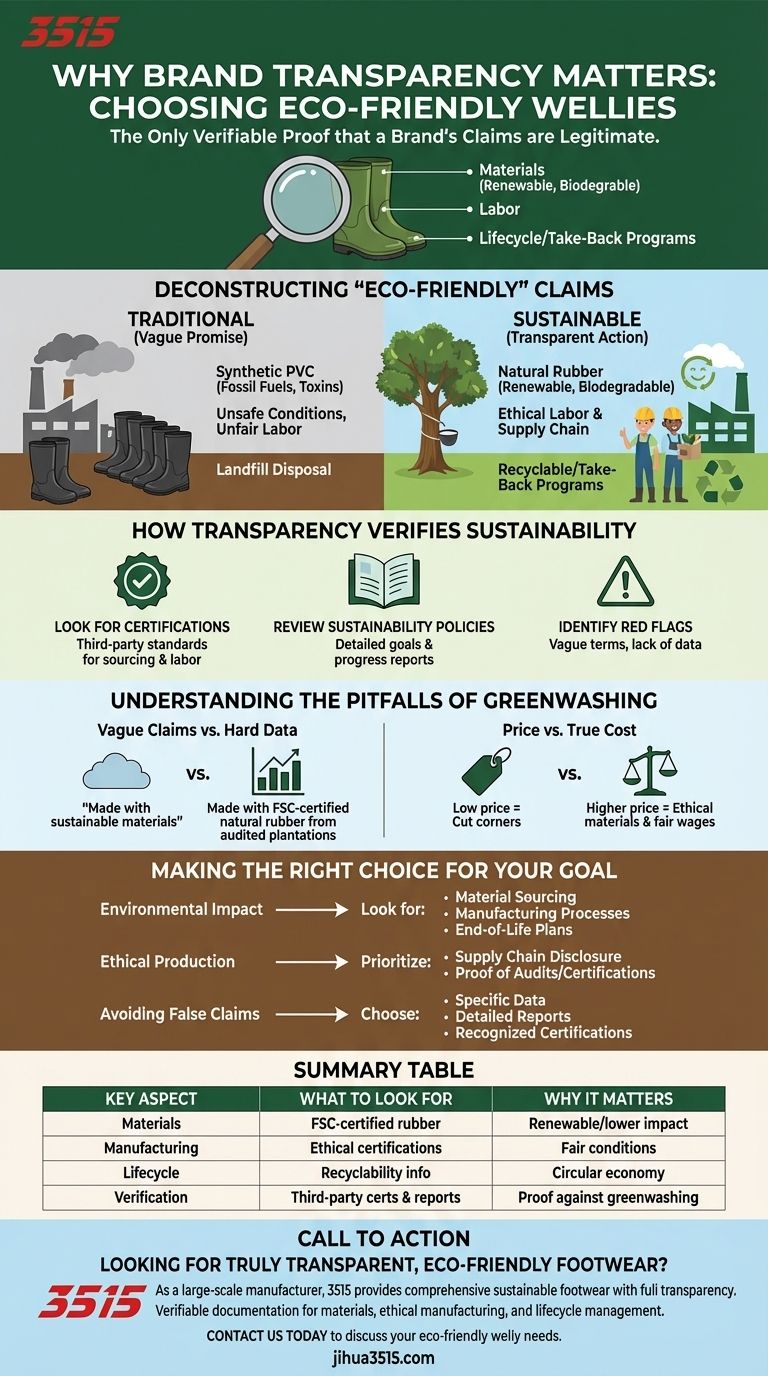
Deconstructing the "Eco-Friendly" Claim
The term "eco-friendly" is not a regulated standard. To understand its true meaning, you must look at the specific, verifiable actions a brand takes across its entire production lifecycle.
The Critical Role of Materials
Most traditional wellies are made from polyvinyl chloride (PVC), a synthetic plastic derived from fossil fuels. Its production and disposal can release harmful toxins.
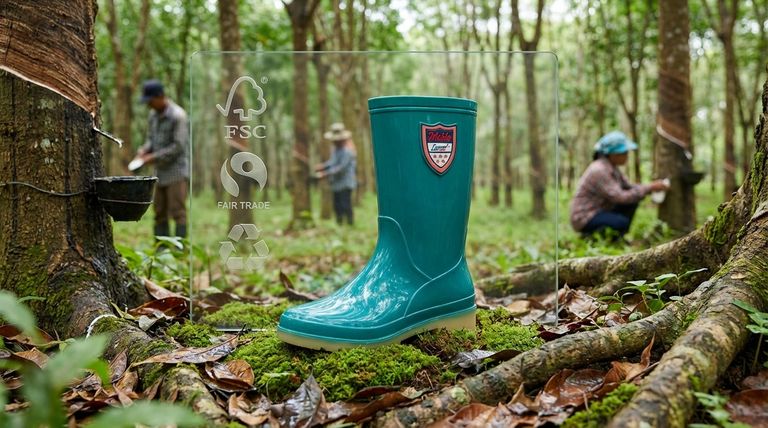
Truly sustainable brands often use natural rubber. This material is a renewable resource, harvested as latex from rubber trees. When sourced responsibly, it is biodegradable and has a significantly lower environmental footprint.
Manufacturing and Ethical Labor
An "eco-friendly" label becomes meaningless if the product is made in unsafe conditions or with unfair labor.
Brand transparency allows you to investigate a company's manufacturing practices. Look for disclosures about their supply chain, factory conditions, and third-party certifications that ensure ethical labor standards are met.
Lifecycle and End-of-Life Responsibility
A product's environmental impact doesn't end when you buy it. True sustainability considers the entire lifecycle.
Transparent brands will often provide clear information on the recyclability of their wellies or offer take-back programs to ensure the materials are properly managed at the end of their use.
How Transparency Verifies Sustainability
Vague claims are easy to make; providing proof is much harder. Transparency is the bridge between a brand's promise and its actual practices, giving you the power to hold them accountable.
Look for Specific Certifications
Certifications from reputable third-party organizations are a clear sign of transparency. They prove a brand has met specific, high standards for sourcing or labor.
Review Sustainability Policies
Credible brands are not shy about their efforts. They often publish detailed sustainability reports or have dedicated sections on their websites that outline their policies, goals, and progress.
Identify the Red Flags
A lack of transparency is a major red flag. Be cautious of brands that use generic terms like "green" or "conscious" without providing any specific data, reports, or certifications to back them up.
Understanding the Pitfalls of Greenwashing
Not all eco-claims are equal. Understanding the difference between genuine commitment and clever marketing is essential to making a truly responsible purchase.
Vague Claims vs. Hard Data
Greenwashing often relies on ambiguous language. "Made with sustainable materials" is a vague claim.
In contrast, a transparent brand will say, "Made with FSC-certified natural rubber from audited plantations that prohibit deforestation." The second statement is specific, measurable, and verifiable.
The Price vs. True Cost
Truly sustainable products may have a higher price tag. This often reflects the true cost of using high-quality, ethically sourced materials and paying workers a fair wage.
A suspiciously low price on a supposedly "eco-friendly" product can be an indicator that corners were cut somewhere in the supply chain.
Making the Right Choice for Your Goal
Your final decision should be guided by a brand's willingness to be open about its entire process, from raw materials to final product.
- If your primary focus is environmental impact: Look for brands that clearly disclose their material sourcing, manufacturing processes, and provide a clear plan for product end-of-life.
- If your primary focus is ethical production: Prioritize brands that are transparent about their supply chain and can show proof of ethical labor through audits or certifications.
- If your primary focus is avoiding false claims: Choose brands that back up their marketing with specific data, detailed reports, and recognized third-party certifications.
Ultimately, choosing a truly eco-friendly welly is an investment in a brand's proven commitment to transparency.
Summary Table:
| Key Aspect | What to Look For | Why It Matters |
|---|---|---|
| Materials | FSC-certified natural rubber, recycled content | Verifies renewable sourcing and reduces environmental impact |
| Manufacturing | Ethical labor certifications, supply chain disclosures | Ensures fair working conditions and responsible production |
| Lifecycle | Recyclability info, take-back programs | Confirms end-of-life responsibility and circular economy commitment |
| Verification | Third-party certifications, detailed sustainability reports | Provides proof against vague marketing claims and greenwashing |
Looking for truly transparent, eco-friendly footwear?
As a large-scale manufacturer, 3515 produces a comprehensive range of sustainable footwear for distributors, brand owners, and bulk clients. Our production capabilities encompass all types of eco-friendly shoes and boots, with full transparency across our supply chain.
We provide verifiable documentation for material sourcing, ethical manufacturing practices, and lifecycle management—ensuring your brand can confidently stand behind genuine sustainability claims.
Contact us today to discuss your eco-friendly welly needs and receive detailed information about our sustainable manufacturing processes.
Visual Guide
Related Products
- Durable Waterproof Rain Boots | Custom Manufacturer for Wholesale & Brands
- Durable Leather Work Boots for Wholesale & Custom OEM Manufacturing
- Durable Leather Work Boots for Wholesale & Custom Manufacturing
- Durable Goodyear Welt Leather Work Boots for Wholesale & Private Label
- Durable Leather Work Boots Wholesale Manufacturer & Custom Factory
People Also Ask
- What are the main materials for waterproof rain boots? Choose the Right Material for Durability & Comfort
- What is the overall recommendation for choosing rain boot materials? A Guide to Rubber vs. PVC
- How does boot height affect waterproofing? Choose the Right Height for Ultimate Protection
- Why are rain boots more flexible and comfortable than snow boots? The Key Differences Explained
- What are the best types of shoes for different gardening conditions? Find Your Perfect Match.