
In most cases, you should not automatically size up when buying Wellington boots. The correct approach is to start with your standard shoe size and only size up if you are between sizes or plan to consistently wear very thick, heavy socks.
The goal is not simply a larger boot, but the correct fit. This is achieved by balancing your true foot size with the specific demands of your environment, such as the need for thick socks or integrated safety features.
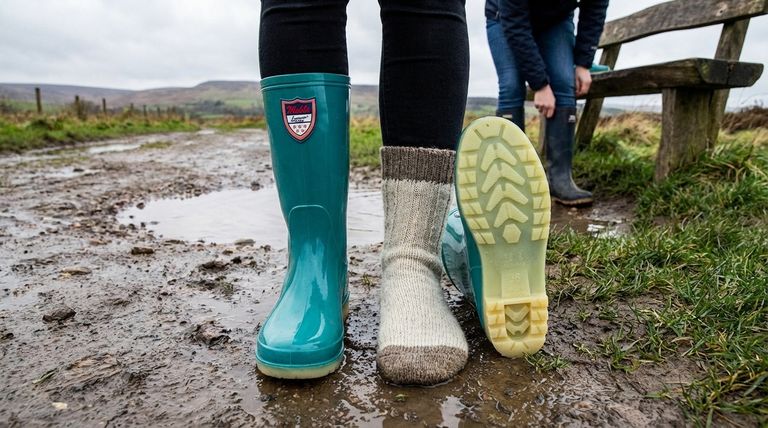
The Foundation of a Perfect Fit
Getting the size right is the first step, but it requires understanding the key variables that influence how a boot will feel and perform on your foot.
Start With Your True Size
Your regular shoe size is the most reliable starting point. Most manufacturers design their boots to fit true to size, accounting for a standard pair of socks.
The Critical Role of Socks
The thickness of your socks is the most common reason to adjust boot size. If your primary use for the boots involves heavy, thermal socks for cold weather, sizing up can provide the necessary extra room.
When Sizing Up Makes Sense
There are two primary scenarios where choosing a larger size is the correct decision.
First, if the brand's sizing guide or your own measurements place you between two sizes, always choose the larger one. A slightly roomy boot is far more comfortable than one that is too constrictive.
Second, if you know you will exclusively wear thick, cushioned, or thermal socks, going up a size prevents a cramped fit that can restrict circulation and ironically lead to colder feet.
Beyond Sizing: Matching Function to Your Needs
A proper fit is also influenced by the boot's construction. Safety features and materials can significantly alter the internal volume and feel of the boot.
The Impact of Safety Features
Features required for workplace safety, like steel or composite toe caps, take up space within the boot. These rigid components do not conform to your foot, so a boot with a safety toe may feel tighter than a standard one in the same size.
Other features like metatarsal guards or puncture-resistant soles add rigidity and can also affect the overall fit and flexibility.
Choosing the Right Outsole for Traction
The boot's sole should match your typical environment. A heel outsole provides excellent grip in mud and on uneven, soft ground.
For wet, flat surfaces like concrete or pavement, a wedge outsole offers superior slip resistance by maximizing surface contact.
The Importance of Material
The boot's material dictates its durability and protection. Rubber is the traditional, waterproof standard. Modern boots often use polyurethane, which is lighter, more durable, and offers better resistance to chemicals and abrasions.
Understanding the Trade-offs
Simply buying a larger size "just in case" can create its own set of problems. It's crucial to understand the risks of an improper fit.
The Problem with a Too-Loose Fit
A boot that is too large allows your foot to slide, causing friction and leading to painful blisters. It also fails to provide adequate ankle and arch support, increasing the risk of slips or twisted ankles.
The Problem with a Too-Tight Fit
A boot that is too snug can be more than just uncomfortable. It can restrict blood flow, leading to cold feet and numbness. It also leaves no room for air to circulate, which can cause sweat to accumulate and lead to other foot issues.
Making the Right Choice for Your Goal
Select your boot based on a clear understanding of your primary use case.
- If your primary focus is casual use in mild weather: Start with your true size and wear a standard sock.
- If your primary focus is work in extreme cold: Size up by a half or full size to accommodate thick thermal socks.
- If your primary focus is workplace safety (OSHA requirements): Try on the exact model with a safety toe, as you may need to adjust your size to account for the rigid cap.
- If your foot measurement is between sizes: Always select the larger size for better overall comfort.
Ultimately, choosing the right Wellington boot is about ensuring it serves its purpose safely and comfortably for your specific needs.
Summary Table:
| Fit Scenario | Recommended Action | Key Consideration |
|---|---|---|
| Standard Use / Mild Weather | Start with your true shoe size. | Boots are designed for a standard sock. |
| Extreme Cold / Thick Thermal Socks | Size up by a half or full size. | Prevents a cramped fit and cold feet. |
| Workplace Safety (e.g., Steel Toe) | Try on the specific model; may need to size up. | Rigid safety features reduce internal space. |
| Foot Measurement is Between Sizes | Always choose the larger size. | A slightly roomy boot is better than too tight. |
Get a Perfect Fit for Your Business
As a large-scale manufacturer, 3515 produces a comprehensive range of durable Wellington boots for distributors, brand owners, and bulk clients. Our production capabilities encompass all types of safety, work, and casual boots, ensuring you get the right fit, features, and quality for your market.
Let us help you equip your customers with superior footwear.
Contact our experts today to discuss your requirements and request a quote.
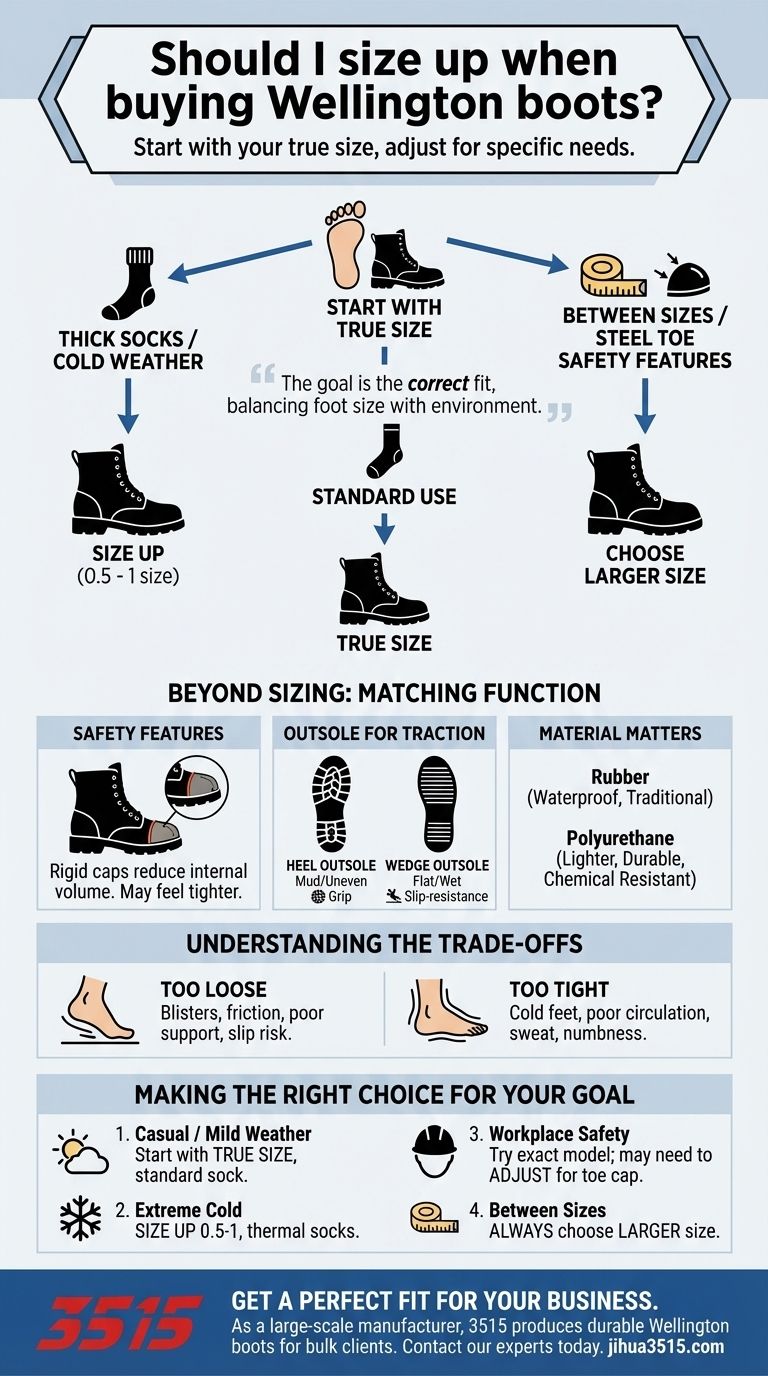
Visual Guide
Related Products
- Durable Waterproof Rain Boots | Custom Manufacturer for Wholesale & Brands
- Durable Goodyear Welt Leather Work Boots for Wholesale & Private Label
- Wholesale Durable Leather Work Boots | 8-Inch Goodyear Welt Manufacturer
- High-Traction Suede Tactical Boots Wholesale & Custom Manufacturing
- Premium Wholesale Tactical Style Safety Shoes Boots with Quick Lacing
People Also Ask
- What are the main materials for waterproof rain boots? Choose the Right Material for Durability & Comfort
- What is the overall recommendation for choosing rain boot materials? A Guide to Rubber vs. PVC
- How does boot height affect waterproofing? Choose the Right Height for Ultimate Protection
- Why are rain boots more flexible and comfortable than snow boots? The Key Differences Explained
- What are the best types of shoes for different gardening conditions? Find Your Perfect Match.



















