
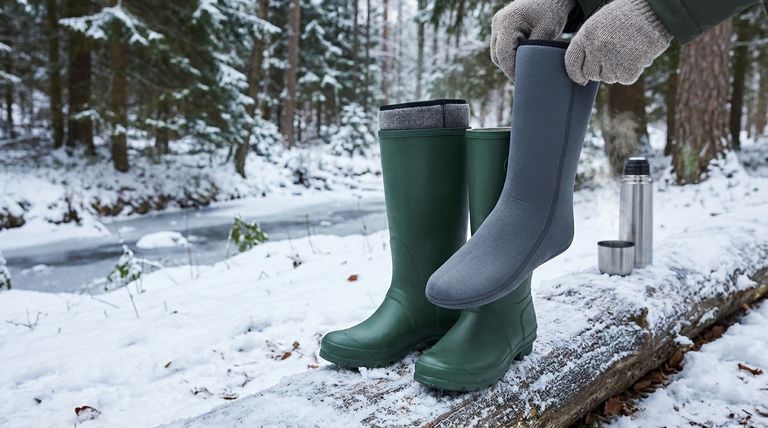
The most effective method to upgrade the thermal retention of standard rubber boots is the addition of a specialized thermal liner. To significantly improve warmth, you should utilize purpose-built welly socks designed to replicate the insulating properties of a neoprene lining. These liners must extend to the full height of the boot to create a seal against cold drafts and prevent conductive heat loss through the rubber shell.
Standard rubber boots excel at waterproofing but often lack inherent thermal retention. The key to warmth lies not in changing the boot itself, but in retrofitting it with a lining that traps heat and separates your foot from the cold, conductive rubber.
Principles of Retrofitting Insulation
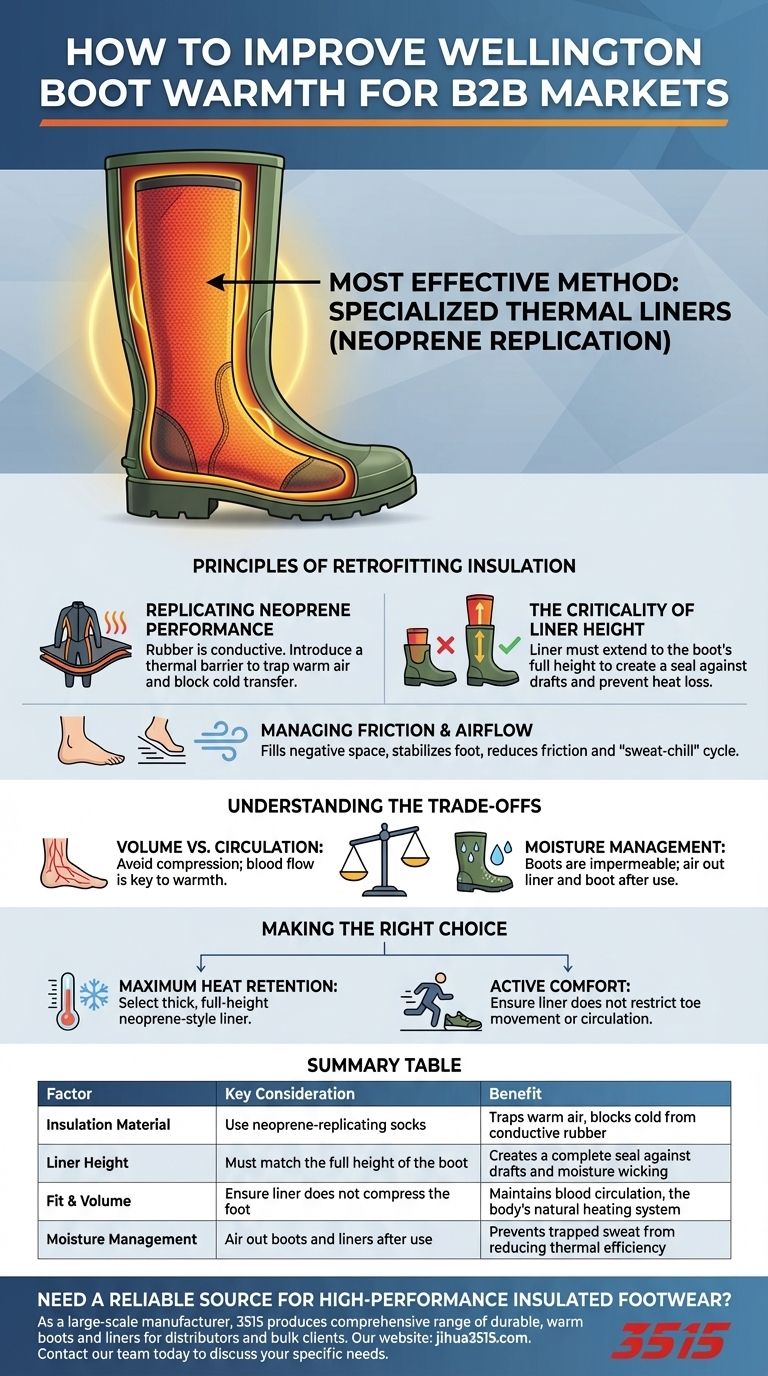
Replicating Neoprene Performance
The primary deficiency in standard Wellington boots is the lack of a thermal core. Rubber is a conductor, meaning it transfers the cold from the ground directly to your foot.
To counter this, you must introduce a barrier. Using socks that replicate a neoprene lining adds a layer of synthetic insulation akin to a wetsuit. This traps a layer of warm air against the skin while blocking the cold radiating from the boot wall.
The Criticality of Liner Height
Insulation is only effective if the seal is complete. A common mistake is using standard-length socks inside tall boots.
For maximum efficiency, the thermal sock must be the same length as the boot. This prevents cold air from "sinking" into the gap between your leg and the boot collar. It also stops moisture from wicking down from the top edge.
Managing Friction and Airflow
Cold is often exacerbated by poor circulation or dampness. A loose boot allows the foot to slide, generating friction and potentially blisters, while a cold rubber wall causes condensation.
A full-length, neoprene-style sock fills the negative space inside the boot. This stabilizes the foot, reducing friction. Furthermore, by preventing the foot from touching the cold rubber directly, you reduce the "sweat-chill" cycle that creates cold feet.
Understanding the Trade-offs
The Volume vs. Circulation Paradox
While adding thick, neoprene-replicating socks improves insulation, it also consumes volume inside the boot.
If your boots are already snug, adding a thick liner may compress your foot. Compression restricts blood flow, which is the body's primary heating mechanism. If the sock is too tight, your feet will become colder regardless of the insulation thickness.
Moisture Management Limitations
Unlike high-end military boots which often utilize GORE-TEX membranes to allow moisture escape, standard wellies are impermeable.
Adding a warm liner increases the likelihood of sweating. Because the rubber shell does not breathe, this moisture is trapped. You must ensure you air out both the boot and the liner after every use to maintain thermal efficiency.
Making the Right Choice for Your Goal
To solve your specific problem, apply the following principles:
- If your primary focus is maximum heat retention: Select a thick, neoprene-style sock liner that reaches the very top of the boot to maximize the insulating air gap.
- If your primary focus is active comfort: Ensure the added liner does not restrict toe movement or circulation, as blood flow is critical for warmth during movement.
By effectively managing the internal environment of the boot with the right liner height and material, you transform a simple rain shell into a thermal tool.
Summary Table:
| Factor | Key Consideration | Benefit |
|---|---|---|
| Insulation Material | Use neoprene-replicating socks | Traps warm air, blocks cold from conductive rubber |
| Liner Height | Must match the full height of the boot | Creates a complete seal against drafts and moisture wicking |
| Fit & Volume | Ensure liner does not compress the foot | Maintains blood circulation, the body's natural heating system |
| Moisture Management | Air out boots and liners after use | Prevents trapped sweat from reducing thermal efficiency |
Need a reliable source for high-performance insulated footwear?
As a large-scale manufacturer, 3515 produces a comprehensive range of durable and warm boots and liners for distributors, brand owners, and bulk clients. Our production capabilities encompass all types of insulated and waterproof footwear, ensuring your customers stay warm and dry in any condition.
Contact our team today to discuss your specific needs and discover how we can provide the thermal solutions you require.
Visual Guide
Related Products
- Durable Waterproof Rain Boots | Custom Manufacturer for Wholesale & Brands
- Durable Goodyear Welt Leather Work Boots for Wholesale & Private Label
- Wholesale Durable Leather Work Boots | 8-Inch Goodyear Welt Manufacturer
- High-Traction Suede Tactical Boots Wholesale & Custom Manufacturing
- Durable Leather Tactical Boots Wholesale & Custom Manufacturing for Brands
People Also Ask
- What are the main materials for waterproof rain boots? Choose the Right Material for Durability & Comfort
- What is the overall recommendation for choosing rain boot materials? A Guide to Rubber vs. PVC
- How does boot height affect waterproofing? Choose the Right Height for Ultimate Protection
- Why are rain boots more flexible and comfortable than snow boots? The Key Differences Explained
- What are the best types of shoes for different gardening conditions? Find Your Perfect Match.



















