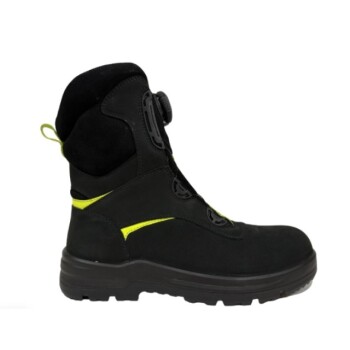
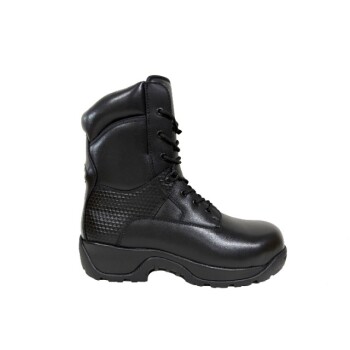
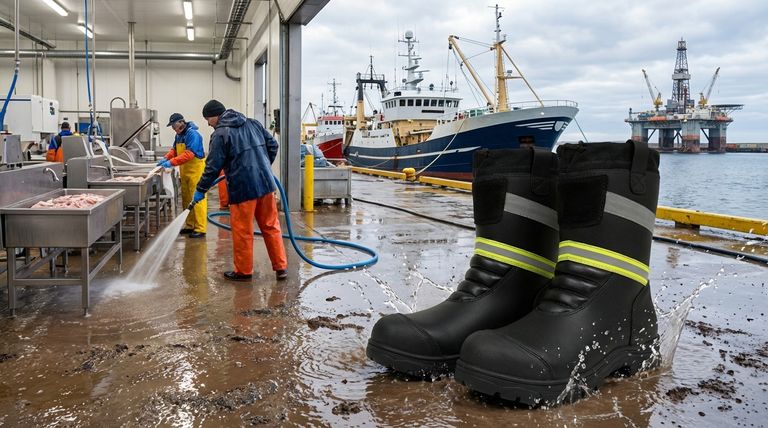
In essence, PVC boots are the standard in industries where the primary threats are liquids and chemicals, not heavy impacts. These boots are most frequently used in farming and agriculture, food and poultry processing, custodial services, fishing and wildlife jobs, and on oil rigs where waterproof and chemical-resistant footwear is essential.
The fundamental reason these industries rely on PVC is not for impact protection, but for creating an impermeable barrier. PVC boots excel in environments where the primary hazards are water, chemicals, and biological contaminants.
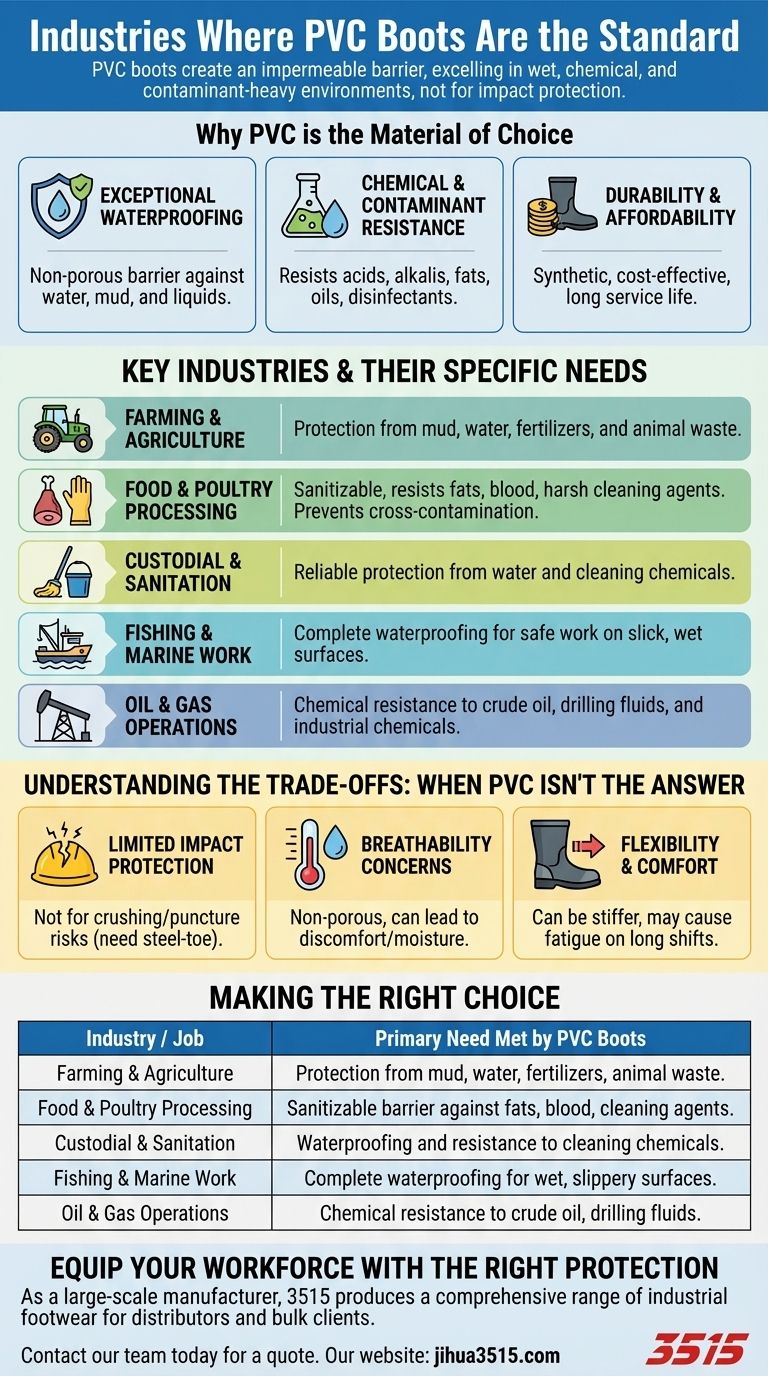
Why PVC is the Material of Choice for Wet and Hazardous Environments
To understand where PVC boots are used, you must first understand the material's core properties. Polyvinyl chloride (PVC) is a synthetic plastic polymer valued for its unique combination of resistance and affordability.
Exceptional Waterproofing
The primary benefit of PVC is that it is completely non-porous. This creates an impassable barrier against water, mud, and other liquids, making it ideal for any job involving consistently wet or mucky terrain.
Chemical and Contaminant Resistance
PVC is inherently resistant to a wide range of substances, including common acids, alkalis, fats, oils, and disinfectants. This makes it a crucial piece of personal protective equipment (PPE) in environments with chemical exposure or strict sanitation protocols.
Durability and Affordability
As a synthetic material, PVC is relatively inexpensive to produce. It offers a high degree of durability and a long service life for its cost, making it an economical choice for businesses that need to outfit large workforces.
Key Industries and Their Specific Needs
Different industries leverage the properties of PVC to solve distinct on-the-job challenges.
Farming and Agriculture
Workers in this sector are constantly exposed to mud, water, fertilizers, and animal waste. PVC boots provide the necessary protection to keep feet dry and shielded from potentially corrosive or unsanitary materials.
Food and Poultry Processing
Hygiene is paramount in food processing. PVC boots can be easily and thoroughly sanitized, and their resistance to animal fats, blood, and harsh cleaning agents prevents degradation and cross-contamination.
Custodial and Sanitation Services
This field involves constant contact with water and a variety of cleaning chemicals. PVC provides reliable protection for workers, ensuring their feet stay dry and safe from chemical exposure throughout their shifts.
Fishing and Marine Work
For anyone working on boats or in marine environments, waterproof footwear is non-negotiable. PVC boots offer the complete water protection needed to work comfortably and safely on slick, wet surfaces.
Oil and Gas Operations
On oil rigs and in refineries, workers face exposure to crude oil, drilling fluids, and various industrial chemicals. The chemical-resistant nature of PVC makes it a suitable choice for these demanding conditions.
Understanding the Trade-offs: When PVC Isn't the Answer
While excellent for specific applications, PVC boots are not a universal solution. Their limitations are as important to understand as their strengths.
Limited Impact Protection
Standard PVC boots do not offer significant protection against crushing or puncture injuries. Jobs in construction, manufacturing, or logistics where falling objects are a risk require steel-toed boots, which are typically made from leather or other durable materials.
Breathability Concerns
Because PVC is non-porous, it does not breathe. In hot climates or during long periods of strenuous activity, this can lead to discomfort and moisture buildup inside the boot.
Flexibility and Comfort
PVC can be stiffer than materials like rubber or leather. For jobs requiring extensive walking or agility, the relative inflexibility of some PVC boot models might lead to fatigue over a long shift.
Making the Right Choice for Your Work
Selecting the correct footwear requires a clear understanding of your primary workplace hazards.
- If your primary focus is waterproofing and chemical resistance: PVC boots are the ideal and most cost-effective choice for environments like food processing, agriculture, or sanitation.
- If your primary focus is protection from heavy or sharp objects: A certified steel-toe or composite-toe boot is non-negotiable, as required in construction and heavy manufacturing.
- If your primary focus is general-purpose use with some water exposure: PVC is a practical option for tasks like gardening or painting where a simple, waterproof barrier is all that is needed.
Ultimately, selecting the correct boot is about precisely matching its material science to the daily realities of your work environment.
Summary Table:
| Industry/Job | Primary Need Met by PVC Boots |
|---|---|
| Farming & Agriculture | Protection from mud, water, fertilizers, and animal waste. |
| Food & Poultry Processing | Sanitizable barrier against fats, blood, and cleaning agents. |
| Custodial & Sanitation | Waterproofing and resistance to various cleaning chemicals. |
| Fishing & Marine Work | Complete waterproofing for wet, slippery surfaces. |
| Oil & Gas Operations | Chemical resistance to crude oil, drilling fluids, and more. |
Equip Your Workforce with the Right Protection
As a large-scale manufacturer, 3515 produces a comprehensive range of industrial footwear for distributors, brand owners, and bulk clients. Our production capabilities encompass all types of PVC boots designed for the demanding environments of agriculture, food processing, and more.
We provide durable, cost-effective footwear solutions tailored to your specific industry needs. Let's discuss how we can support your business with high-quality PVC boots.
Contact our team today for a quote
Visual Guide
Related Products
- Premium Wholesale Waterproof Safety Boots High Performance Protection for Industrial Markets
- High-Traction Suede Tactical Boots Wholesale & Custom Manufacturing
- High Performance Fire-Retardant Waterproof Safety Boots
- Premium Waterproof High-Cut Industrial Safety Boots for Wholesale and Bulk Orders
- Wholesale Waterproof Tactical Boots Custom Suede & High-Traction Soles
People Also Ask
- What weather and chemical protections do premium boots offer? Your Complete Guide to Safety & Performance
- Why are waterproof safety boots recommended for certain work environments? Essential Protection for Wet & Hazardous Jobs
- What are the primary protective functions of industrial safety boots in oil palm plantations? Master Rough Terrain Safety
- Why are oil-resistant and anti-slip properties critical for industrial safety boots? Expert Outsole Engineering Guide
- What are the best types of shoes for different gardening conditions? Find Your Perfect Match.