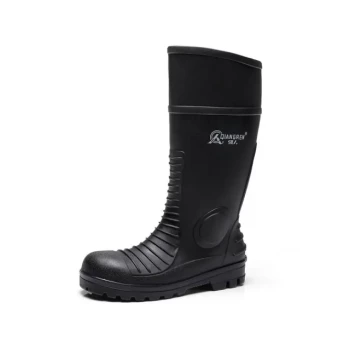
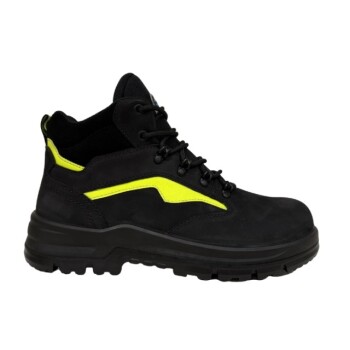
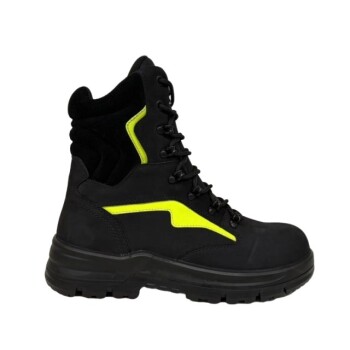
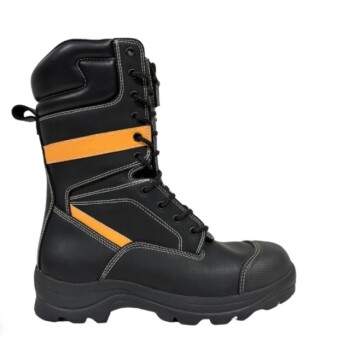
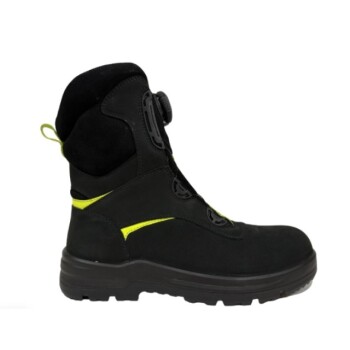
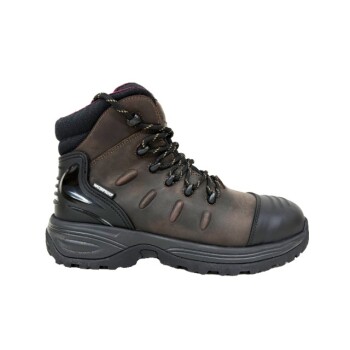
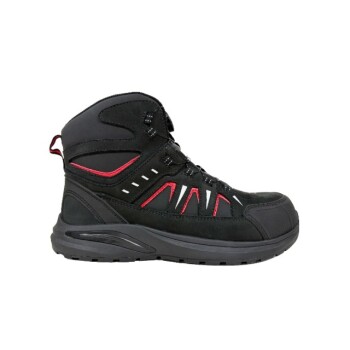
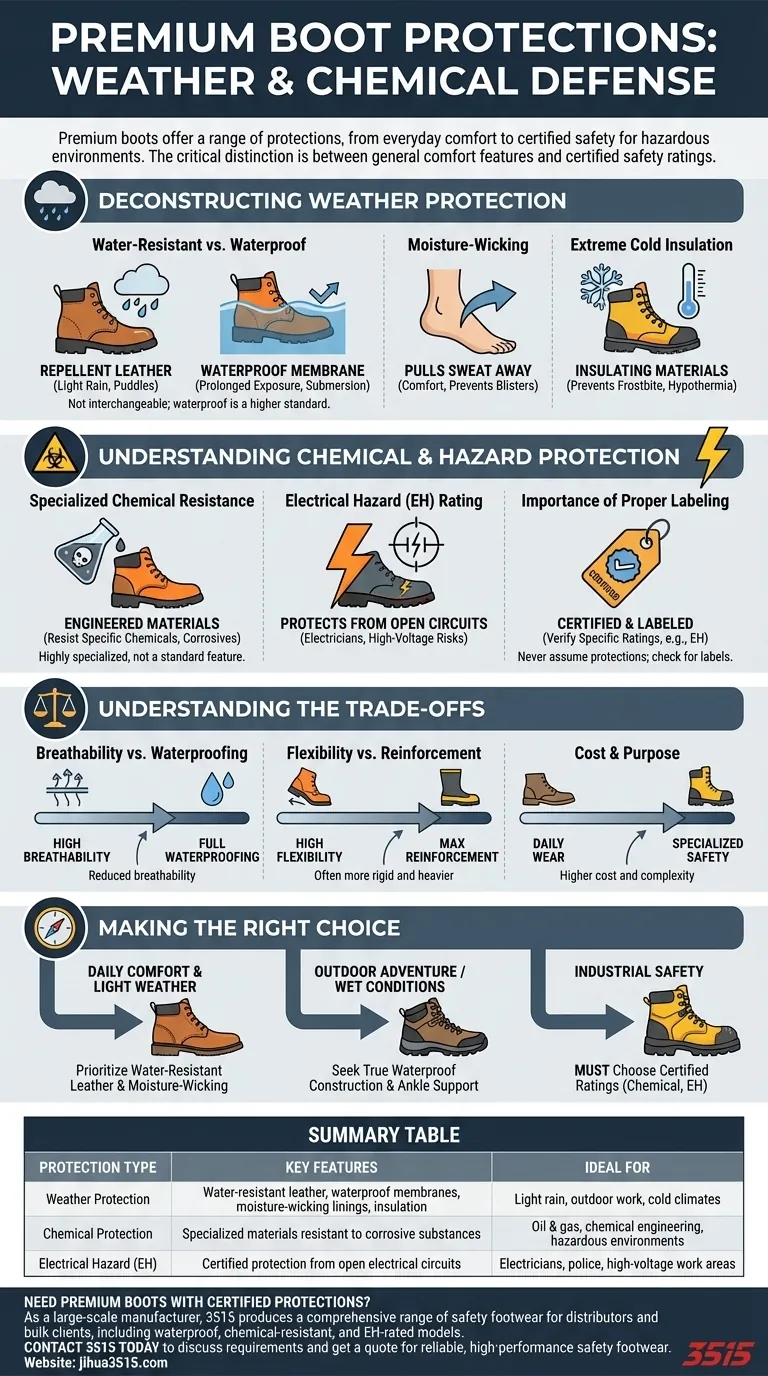
To put it simply, premium boots offer a range of weather and chemical protections, from water-resistant leathers for everyday comfort to specialized, certified waterproofing and chemical resistance designed for hazardous industrial environments. The specific protections are dictated entirely by the boot's intended purpose.
The critical distinction is between general comfort features and certified safety ratings. While most premium boots handle light rain and puddles, true protection for hazardous weather or chemical exposure is a specialized feature you must actively seek out and verify.
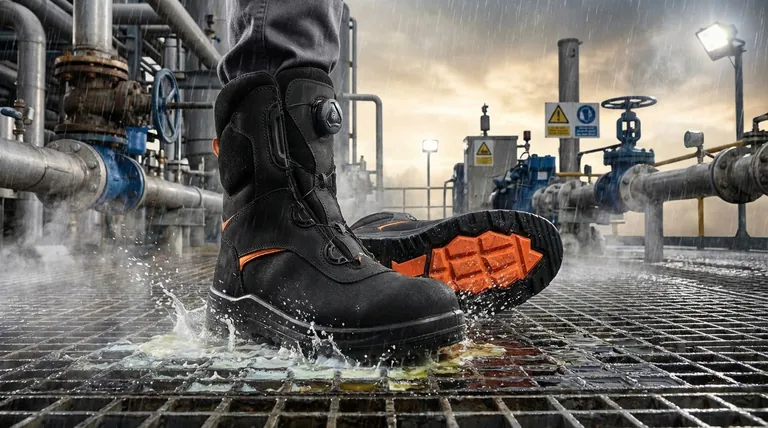
Deconstructing Weather Protection
Understanding the terminology used for weather protection is the first step. "Water-resistant" and "waterproof" are not interchangeable terms; they represent different levels of defense against the elements.
Water-Resistant vs. Waterproof
Most high-quality boots use water-resistant leather and materials. This treatment is sufficient to repel light rain or snow and keep your feet dry when crossing a puddle.
Waterproof construction, however, is a higher standard. These boots often incorporate a waterproof membrane or sealed seams to handle prolonged exposure or submersion, making them essential for work on docks, in mines, or in consistently wet conditions.
The Role of Moisture-Wicking
Effective weather protection also addresses moisture from the inside. Premium boots use moisture-wicking linings to pull sweat away from the skin, which is crucial for comfort and preventing blisters during long-term wear.
Protection from Extreme Cold
For cold climates, work boots are constructed with materials designed to insulate. This protection is vital for preventing serious medical conditions like frostbite, Raynaud's Syndrome, or hypothermia in extreme weather.
Understanding Chemical & Hazard Protection
For many professionals, protection goes beyond water. In specific industries, boots are a critical piece of personal protective equipment (PPE) designed to guard against unseen dangers like chemicals and electrical currents.
The Need for Specialized Chemical Resistance
Chemical resistance is not a standard feature in most boots. It is a highly specialized characteristic for industries like oil/gas and chemical engineering, where workers may be exposed to corrosive or hazardous substances.
These boots are made from materials specifically engineered to resist degradation from particular chemicals, and their capabilities will be clearly stated by the manufacturer.
Electrical Hazard (EH) Rating
An Electrical Hazard (EH) rating signifies that the boot's construction can protect the wearer from open electrical circuits. This is a crucial safety feature for electricians, police, and anyone working in environments with high-voltage risks.
The Importance of Proper Labeling
You should never assume a boot offers these protections. Specialized safety features are certified and clearly labeled. Always check for specific ratings (like EH) to ensure the boot is fit for your specific work environment.
Understanding the Trade-offs
Choosing a boot with higher levels of protection often involves compromising on other features. It's a balance of safety, comfort, and practicality.
Breathability vs. Waterproofing
A fully waterproof membrane that blocks all water from entering can also make it harder for sweat vapor to escape. This can lead to less breathability compared to a merely water-resistant boot.
Flexibility vs. Reinforcement
Boots built for extreme chemical or physical hazards are often more rigid and heavier. The materials required for this level of protection are inherently less flexible than those used for general-purpose or adventure boots.
Cost and Purpose
Specialized protective features significantly increase the cost and complexity of a boot. A chemical-resistant, waterproof, EH-rated boot is overkill and may be uncomfortable for daily wear or light hiking.
Making the Right Choice for Your Goal
Selecting the correct boot requires an honest assessment of your environment and potential hazards.
- If your primary focus is daily comfort and light weather: Prioritize boots with water-resistant leather and moisture-wicking linings.
- If your primary focus is outdoor adventure or consistently wet conditions: Seek out boots with a true waterproof construction and excellent ankle support.
- If your primary focus is industrial safety: You must choose boots with the specific, certified ratings (e.g., chemical resistance, EH) required for your job.
Choosing the right boot begins with a clear understanding of the environment you intend to face.
Summary Table:
| Protection Type | Key Features | Ideal For |
|---|---|---|
| Weather Protection | Water-resistant leather, waterproof membranes, moisture-wicking linings, insulation | Light rain, outdoor work, cold climates |
| Chemical Protection | Specialized materials resistant to corrosive substances | Oil & gas, chemical engineering, hazardous environments |
| Electrical Hazard (EH) | Certified protection from open electrical circuits | Electricians, police, high-voltage work areas |
Need Premium Boots with Certified Protections?
As a large-scale manufacturer, 3515 produces a comprehensive range of safety footwear for distributors, brand owners, and bulk clients. Our production capabilities encompass all types of certified work boots and shoes, including waterproof, chemical-resistant, and EH-rated models tailored to your specific industry hazards.
Contact 3515 today to discuss your requirements and get a quote for reliable, high-performance safety footwear.
Visual Guide
Related Products
- Premium Wholesale Waterproof Safety Boots High Performance Protection for Industrial Markets
- Premium Waterproof High-Cut Industrial Safety Boots for Wholesale and Bulk Orders
- High Performance Fire-Retardant Waterproof Safety Boots
- Wholesale Heavy-Duty Waterproof Steel Toe Work Boots OEM Manufacturer
- Heavy-Duty Waterproof Nubuck Safety Boots Safety Shoes for Bulk Supply
People Also Ask
- Why are waterproof safety boots recommended for certain work environments? Essential Protection for Wet & Hazardous Jobs
- What are the primary protective functions of industrial safety boots in oil palm plantations? Master Rough Terrain Safety
- Why are oil-resistant and anti-slip properties critical for industrial safety boots? Expert Outsole Engineering Guide
- What are the best types of shoes for different gardening conditions? Find Your Perfect Match.
- How does boot height affect waterproofing? Choose the Right Height for Ultimate Protection