
The ideal work shoe is determined by the specific tasks and hazards of a profession, not just the job title. For example, warehouse and manufacturing staff often require safety-toe shoes to protect against impact, while nurses and retail workers need cushioned, supportive footwear for long hours of standing on hard surfaces. Similarly, those in agriculture or mining benefit from taller, waterproof boots for protection against the elements and uneven terrain.
The most effective way to choose work footwear is to match the shoe's specific features—such as safety toes, slip-resistance, or waterproofing—to the unique risks and physical demands of your work environment.
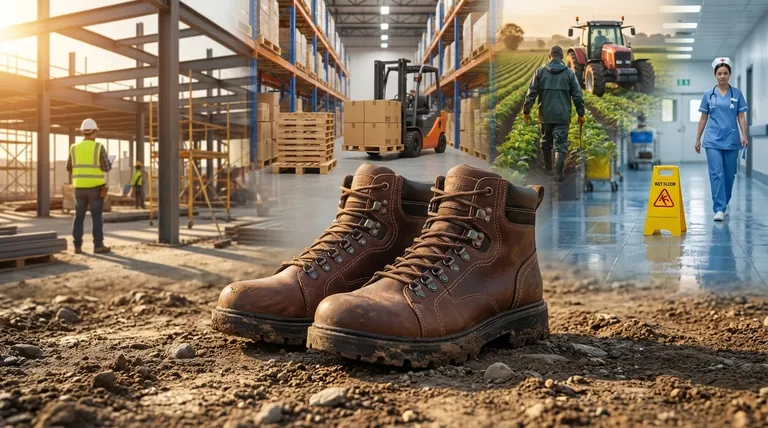
Matching Footwear Features to Workplace Hazards
Thinking in terms of features rather than job titles allows you to make a more precise and effective choice. Your work environment dictates your needs.
For Impact and Compression Risks
Many jobs involve the risk of heavy objects falling or rolling onto your feet.
Safety-toe footwear is the non-negotiable solution here. These shoes and boots contain a reinforced cap over the toes, typically made of steel, aluminum, or a composite material.
This protection is critical for professions like warehousing, distribution, manufacturing, and general construction, where materials and equipment are constantly being moved.
For Long Hours on Hard Surfaces
Standing and walking for an entire shift on concrete or tile can lead to significant foot, leg, and back pain.
For these roles, prioritize shoes with superior cushioning, strong arch support, and lightweight construction. The goal is to minimize fatigue and absorb shock.
This is the primary need for nurses, retail sales workers, hospitality staff, and some food processing roles where mobility and comfort are paramount.
For Wet or Slippery Environments
Water, oil, and other liquids create dangerous slip-and-fall hazards.
Waterproof boots are essential for keeping feet dry and preventing discomfort or health issues. Equally important are slip-resistant outsoles, which are designed with specific tread patterns and rubber compounds to provide maximum grip.
These features are vital for jobs in agriculture, food processing, fisheries, mining, and oil & gas.
For Ankle Support and Stability
Working on uneven ground, ladders, or in environments with debris requires enhanced stability to prevent sprains and falls.
6-inch and 8-inch boots provide increasing levels of ankle support. The higher the boot, the more it restricts potentially harmful ankle movement.
These are ideal for general work, construction, paving, asphalt, agriculture, and foundry work, where terrain is unpredictable and a secure footing is crucial.
Understanding the Trade-offs
No single work shoe is perfect for every situation. Choosing the right features often involves balancing competing priorities.
The Weight of Protection
The most protective features, like steel toes and thick puncture-resistant soles, add significant weight to footwear.
This can increase fatigue over a long shift. Composite safety toes offer a lighter alternative, though they may not be suitable for the most extreme impact risks.
The Breathability Compromise
Waterproof membranes are excellent at keeping water out, but they inherently reduce a shoe's ability to breathe.
In hot environments, this can lead to excessive sweating and discomfort. Some modern materials offer better breathability, but a trade-off almost always exists.
Flexibility vs. Support
A rigid, tall boot provides excellent ankle support but can feel restrictive for jobs that require frequent squatting or kneeling.
Conversely, a flexible, low-cut shoe is more comfortable for dynamic movement but offers minimal protection against twisted ankles.
Making the Right Choice for Your Role
Focus on the single biggest challenge or hazard you face daily to guide your decision.
- If your primary focus is protection from falling objects: Your first priority should be a work shoe or boot with a certified safety toe.
- If your primary focus is all-day comfort while standing: Seek out lightweight, well-cushioned shoes specifically designed to combat fatigue on hard floors.
- If your primary focus is stability on uneven ground: Opt for 6-inch or 8-inch boots that provide the necessary ankle support to prevent injury.
- If your primary focus is staying dry and avoiding slips: Choose footwear that is explicitly labeled as waterproof and features a high-traction, slip-resistant outsole.
Choosing the right work shoe is a critical investment in your daily safety and long-term health.
Summary Table:
| Profession / Work Environment | Primary Hazard | Key Shoe Features |
|---|---|---|
| Warehousing, Manufacturing | Impact from falling objects | Safety-toe (Steel, Aluminum, Composite) |
| Nursing, Retail, Hospitality | Fatigue from standing on hard surfaces | Superior cushioning, arch support |
| Agriculture, Food Processing | Wet, slippery conditions | Waterproofing, Slip-resistant outsoles |
| Construction, Foundry Work | Uneven terrain, debris | 6-inch or 8-inch boots for ankle support |
Ensure your workforce is equipped with the right footwear for maximum safety and productivity. As a large-scale manufacturer, 3515 produces a comprehensive range of safety shoes and boots for distributors, brand owners, and bulk clients. Our production capabilities encompass all types of professional footwear, from lightweight comfort shoes to heavy-duty safety boots. Let us help you find the perfect match for your specific industry needs. Contact our team today for a consultation and discover how we can support your business.
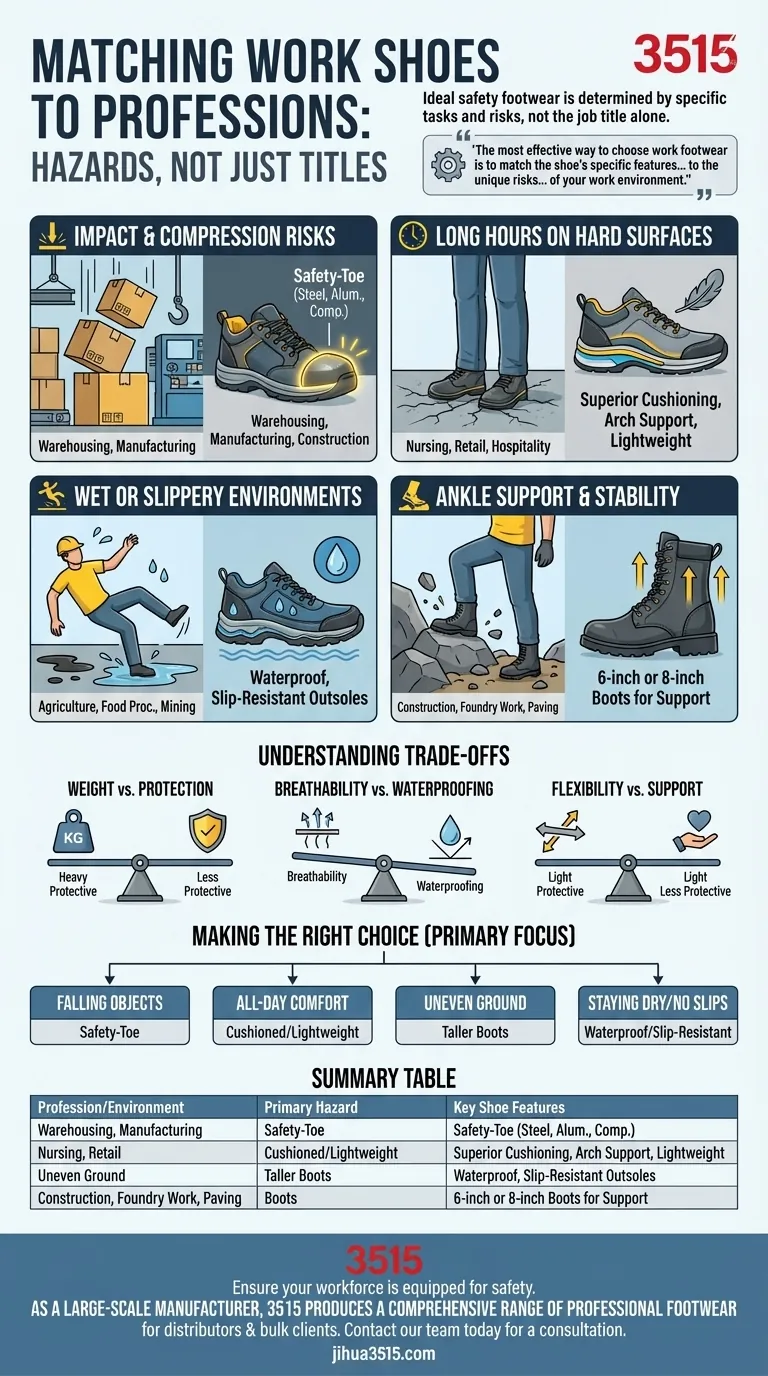
Visual Guide
Related Products
- Durable Canvas Work Shoes with Rubber Lug Sole | Wholesale Manufacturer
- Durable Goodyear Welt Leather Work Boots for Wholesale & Private Label
- Durable Leather Work Boots for Wholesale & Custom OEM Manufacturing
- Durable Leather Work Boots for Wholesale & Custom Manufacturing
- Durable Leather Safety Boots for Wholesale & Custom OEM Manufacturing
People Also Ask
- What are the properties of canvas as a shoe material? A Guide to Lightweight Comfort & Style
- Why is the selection of high-strength fabric materials necessary in the production of canvas shoes and training shoes?
- What types of jobs are canvas work boots suitable for? Ideal for Light-Duty, High-Mobility Roles
- Can canvas shoes be worn in rainy conditions? The Truth About Water Resistance
- What are the functional advantages of choosing rubber soles over leather soles for work boots? Superior Safety & Durability
















