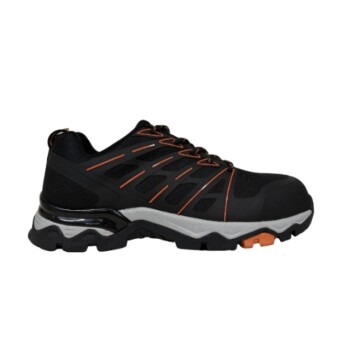
To ensure reliable biofeedback functionality, sensor hardware embedded in safety shoes must meet rigorous industrial-grade standards for precision and durability. Specifically, these components require high sensitivity to capture pressure, deformation, and physiological data, combined with exceptional fatigue resistance to withstand long-term, high-intensity work environments.
The core challenge is not just data collection, but ensuring signal stability under stress. Sensors must possess the mechanical fortitude to convert physical movement into accurate digital signals repeatedly without degrading over time.
Critical Hardware Capabilities
Industrial-Grade Precision
For biofeedback to be actionable, the hardware must be capable of high-precision data collection.
Generic sensors are insufficient; the hardware must detect minute variances in pressure and foot deformation. This level of sensitivity is required to accurately map the wearer's physiological parameters during active work.
Extreme Fatigue Resistance
Work boots are subjected to constant compression, flexion, and impact.
Sensors must demonstrate high fatigue resistance to survive this environment. They must maintain functionality during long-term wear, ensuring that the physical stress of the shoe does not compromise the sensor's structural integrity.
Real-Time Signal Stability
The hardware's primary function is converting physical movement into digital signals instantaneously.
To support motion fatigue monitoring and injury prevention, this conversion must be stable and consistent. Any latency or signal noise caused by the high-intensity work environment renders the biofeedback useless.
Understanding the Trade-offs
Sensitivity vs. Durability
A common engineering challenge in this field is balancing high sensitivity with ruggedness.
Highly sensitive sensors are often fragile, yet industrial environments demand robustness. You must select hardware that is "industrial-grade," meaning it does not sacrifice measurement accuracy for durability, or vice versa.
Complexity of Integration
Embedding sensors capable of monitoring physiological parameters increases the complexity of the shoe's design.
Hardware that tracks deformation and pressure requires precise placement. This often necessitates a tradeoff between the shoe's traditional comfort or weight and its advanced monitoring capabilities.
Making the Right Choice for Your Goal
To select the correct sensor hardware, you must align the specifications with your specific safety objectives.
- If your primary focus is Injury Prevention: Prioritize high sensitivity and precision to detect the earliest micro-changes in gait or pressure distribution.
- If your primary focus is Long-Term Fatigue Monitoring: Prioritize fatigue resistance and signal stability to ensure data remains consistent over months of high-intensity wear.
Success lies in sourcing components that treat the shoe not just as a wearable, but as a precision industrial instrument.
Summary Table:
| Performance Metric | Requirement Detail | Impact on Biofeedback |
|---|---|---|
| Precision | High sensitivity to pressure & deformation | Accurate physiological mapping |
| Durability | High fatigue resistance & ruggedness | Consistent data in high-intensity work |
| Stability | Instant physical-to-digital conversion | Reliable real-time motion monitoring |
| Integration | Strategic sensor placement | Balanced comfort and functionality |
Elevate Your Product Line with 3515 Smart Footwear Solutions
As a large-scale manufacturer serving distributors and brand owners, 3515 offers comprehensive production capabilities for all footwear types, anchored by our flagship Safety Shoes series. Our extensive portfolio covers work and tactical boots, outdoor shoes, training shoes, and sneakers, as well as Dress & Formal shoes to meet diverse bulk requirements.
Whether you are looking to integrate advanced biofeedback sensors into your industrial footwear or require high-performance tactical gear, we provide the manufacturing excellence and technical expertise to bring your vision to life. Contact us today to discuss your specific requirements and learn how our industrial-grade production can add value to your brand.
References
- Dees Postma, Dennis Reidsma. A Design Space of Sports Interaction Technology. DOI: 10.1561/1100000087
This article is also based on technical information from 3515 Knowledge Base .
Related Products
- Premium KPU Injection Athletic Style Safety Shoes
- Advanced KPU Athletic Safety Shoe with Steel Toe Cap Anti-Slip Rotary Lacing System
- Premium KPU Athletic Safety Shoes for Wholesale
- Premium Safety Shoes with Rotating Buckle Safety Sneakers
- Wholesale Anti-Smash & Puncture-Proof Safety Shoes Custom Manufacturing for Brands
People Also Ask
- How do athletic-style safety shoes balance flexibility and safety? Perfect Agility for Active Professionals
- What is a recommended alternative to using hairspray for slip resistance? Ditch Unreliable Hacks for Real Safety
- What workplace hazards indicate the need for safety shoes? Identify risks to protect your workforce.
- Why should ergonomics and comfort be prioritized when selecting safety shoes? Boost Compliance & Worker Health
- What role does blockchain play in footwear supply chain transparency? Enhance Safety Shoe Traceability and Verification