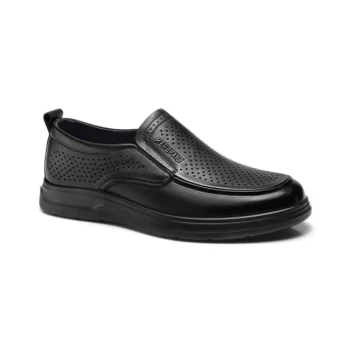
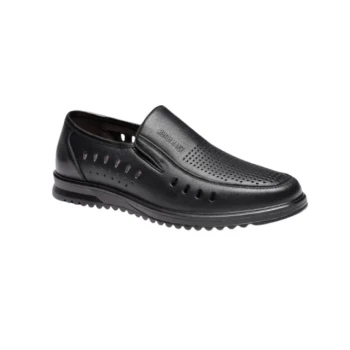
The findings were definitive. In a comprehensive, multi-year study involving 17,000 food service workers, facilities that provided employees with 5-star rated slip-resistant shoes saw a 67% reduction in slip-related injuries. This stark contrast was measured against facilities that did not provide such footwear.
The core takeaway is not simply that special shoes work, but that a proactive, employer-led program—one that provides verified, high-performance footwear—is a powerful engineering control that dramatically reduces a leading cause of workplace injury.
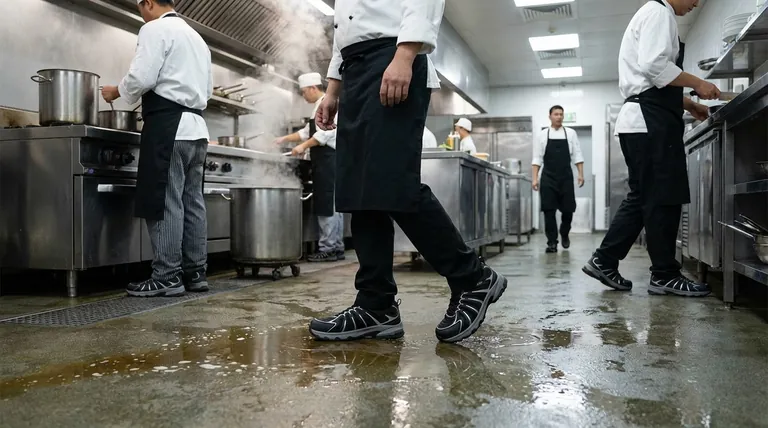
Deconstructing the 67% Reduction
The study's primary finding is a powerful statistic, but its true value lies in understanding the principles that made it possible. This was not a passive recommendation; it was an active intervention.
The Power of an Employer-Led Program
Simply mandating slip-resistant shoes or offering a small stipend often fails to achieve high compliance. By directly providing the shoes, employers remove critical barriers for workers, such as cost and the cognitive load of selecting the right equipment.
This "provider" model ensures that every at-risk employee is equipped with the correct, standardized tool for the job from their very first day. It shifts the responsibility from the individual to the organization.
The Critical Role of Shoe Ratings
A key detail is that the shoes were 5-star rated based on independent laboratory tests. The term "slip-resistant" is not a regulated standard, and marketing claims can be misleading.
Effective programs rely on objective, data-backed performance metrics. The study's success was rooted in using footwear that was verifiably effective for the specific environmental conditions.
From Behavioral to Engineering Controls
This approach represents a fundamental shift in safety strategy. A "be careful" sign is a behavioral control, which relies on consistent human action and is prone to failure.
Providing high-traction footwear is an engineering control. It changes the physical interface between the employee and the floor, making a slip less likely to occur regardless of momentary lapses in attention. Engineering controls are almost always more reliable and effective.
Understanding the Pitfalls and Considerations
Implementing a footwear program requires more than just buying shoes. To replicate the study's success, you must address the potential points of failure.
Verification is Non-Negotiable
The single greatest mistake is trusting a label without verifying the performance. A successful program is built on shoes that are proven to reduce the coefficient of friction on the surfaces your employees actually walk on.
Always seek footwear rated by credible, independent labs. The 5-star rating system used in the study is a perfect example of this principle in action.
The Cost vs. ROI Calculation
There is an upfront cost to providing footwear for every employee. However, this cost must be weighed against the significant, often hidden, expenses of a single slip-and-fall injury.
These costs include direct medical and insurance payouts, lost productivity, the cost of hiring and training temporary replacements, and potential legal fees. A 67% reduction in these incidents represents a powerful and rapid return on investment.
Employee Comfort and Adoption
A safety device that isn't used is worthless. If the provided shoes are uncomfortable, heavy, or ill-fitting, employees may fail to wear them consistently, undermining the entire program.
A successful program must consider human factors. Offering a few vetted models and ensuring a proper sizing process is critical for long-term adoption and success.
How to Apply This to Your Workplace
Use the study's findings to build a data-driven safety initiative. Your implementation should be guided by your specific operational goals.
- If your primary focus is maximum injury reduction: Directly provide all at-risk employees with independently-verified, top-rated slip-resistant footwear.
- If your primary focus is improving safety culture: Use this study's powerful 67% statistic to make a compelling business case for investing in a provider-led footwear program.
- If you are currently running a shoe allowance program: Immediately audit the program to ensure funds are exclusively used for footwear that meets a specific, high-performance rating standard.
By shifting from passive policy to active provision, you transform footwear from a personal responsibility into a highly effective, data-backed safety system.
Summary Table:
| Key Finding | Implication |
|---|---|
| 67% Reduction in Slip Injuries | Proves the effectiveness of a verified footwear program. |
| Employer-Led Provision Model | Shifting from policy to active provision ensures compliance and effectiveness. |
| Use of 5-Star Rated Footwear | Objective, lab-tested performance is critical; marketing claims are not enough. |
| Shift to an Engineering Control | More reliable than behavioral controls like "be careful" signs. |
Ready to achieve a dramatic reduction in workplace slip injuries?
As a large-scale manufacturer, 3515 produces a comprehensive range of independently-tested, high-performance safety footwear for distributors, brand owners, and bulk clients. Our production capabilities encompass all types of slip-resistant shoes and boots designed to meet the highest standards, just like those used in the landmark study.
We can help you implement a successful, employer-led footwear program that protects your employees and delivers a powerful return on investment.
Contact us today to discuss your safety footwear needs and receive a customized solution.
Visual Guide

Related Products
- Heavy-Duty Waterproof Nubuck Safety Boots Safety Shoes for Bulk Supply
- Premium Suede Sport Safety Shoes for Wholesale & Bulk Orders
- Durable Leather Moc Toe Work Boots for Wholesale & Custom Manufacturing
- Durable High-Traction Canvas Sneakers Wholesale & Custom Manufacturing
- Advanced KPU Athletic Safety Shoe with Steel Toe Cap Anti-Slip Rotary Lacing System
People Also Ask
- What primary protective functions do professional safety boots provide in urban solid waste recovery and waste picking processes? Discover Dual-Layer Protection.
- How do safety boots reduce cutting hazards? Essential Protection for Your Workforce
- Which organizations develop safety standards for work boots? Ensure Compliance & Worker Safety
- What are the common types of safety boots and their primary uses? A Guide to Industrial Footwear
- Why is ankle and arch support important in safety footwear? Prevent Injury & Fatigue