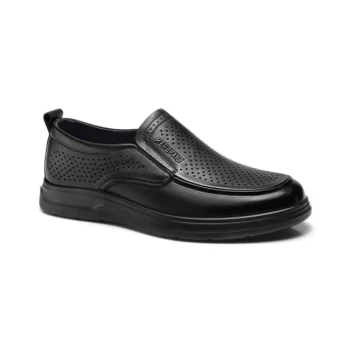
Lubricant viscosity testing serves as the fundamental diagnostic tool for predicting how safety footwear will perform in dangerous, real-world conditions. By using an absolute viscometer to measure a fluid's resistance to flow, engineers can calculate how difficult it will be to squeeze a fluid film—such as oil, soap, or water—out from under a shoe sole, allowing them to design treads that maintain friction even when high-viscosity contaminants attempt to separate the shoe from the floor.
Viscosity data is the bridge between a generic sneaker and professional safety gear. It reveals that higher viscosity fluids create tougher films that are harder to displace, necessitating specialized engineering to ensure the shoe contacts the ground rather than hydroplaning on the liquid.
The Physics of Fluid Displacement
To understand why viscosity testing is critical, you must first understand the mechanic of a slip. For a shoe to grip, it must push the liquid out of the way to make contact with the floor.
The Challenge of the Fluid Film
When you step on a wet surface, a thin layer of fluid is trapped between the outsole and the ground.
This layer acts as a barrier. If the shoe cannot break through this barrier quickly enough, friction is lost, and a slip occurs.
How Viscosity Dictates Danger
Viscosity measures a fluid's internal resistance to flow.
High viscosity fluids (like oils or heavy soaps) are thick and resistant to movement.
Low viscosity fluids (like water) flow freely and are easier to move.
The Friction Correlation
According to industry testing, there is a direct correlation between viscosity and safety.
Fluids with higher viscosity form films that are significantly more difficult to displace.
This difficulty results in lower friction coefficients, making these environments structurally more dangerous than those with only water.
Engineering for Specific Environments
Data from viscosity testing moves safety design from guesswork to precision engineering. It allows manufacturers to stop treating "wet" as a single category.
Targeting the Contaminant
Designers use viscosity data to categorize environments based on the fluids present.
An industrial kitchen deals with soapy solutions and grease (high viscosity), while an outdoor site might deal mostly with rainwater (low viscosity).
Customizing the Solution
Because high-viscosity films are harder to break, footwear for oily environments requires different engineering than footwear for wet sidewalks.
The data dictates the aggressiveness of the tread pattern needed to penetrate the specific fluid film expected in that workspace.
Understanding the Trade-offs
While viscosity testing provides critical data, relying on it requires an understanding of the limitations inherent in specialized design.
Specificity vs. Versatility
A shoe engineered to displace high-viscosity oil often features a specific tread pattern that may not be necessary—or comfortable—for general use.
Optimizing for one extreme fluid type can sometimes result in average performance in other, less demanding conditions.
The Variable of Wear
Testing establishes a baseline for new footwear, but it cannot perfectly predict performance over time.
As a sole wears down, its ability to displace high-viscosity films degrades, often faster than its ability to displace water.
Making the Right Choice for Your Goal
When selecting safety footwear, you must match the engineering to your specific environment's viscosity profile.
- If your primary focus is Industrial Kitchens or Automotive Work: Look for footwear explicitly tested against high-viscosity fluids like oil and soap, as these require aggressive film displacement.
- If your primary focus is Outdoor or General Wet Environments: Prioritize footwear designed for low-viscosity water displacement, which may offer a different balance of comfort and traction.
True safety comes from understanding that the "thickness" of the spill determines the physics of the fall.
Summary Table:
| Fluid Type | Viscosity Level | Displacement Difficulty | Primary Design Focus |
|---|---|---|---|
| Water/Rain | Low | Low | General drainage & tread flexibility |
| Soapy Water | Medium | Moderate | Channeling & surface tension breaking |
| Oil/Grease | High | Very High | Aggressive tread patterns & film penetration |
| Heavy Soaps | Very High | Extreme | Maximum displacement & material compatibility |
Partner with 3515 for Precision-Engineered Safety Solutions
As a large-scale manufacturer serving distributors and brand owners, 3515 offers comprehensive production capabilities for all footwear types, anchored by our flagship Safety Shoes series. Our extensive portfolio covers work and tactical boots, outdoor shoes, training shoes, and sneakers, as well as Dress & Formal shoes to meet diverse bulk requirements.
By leveraging advanced viscosity testing and technical engineering, we provide our partners with high-performance footwear tailored to specific industrial hazards. Whether you are looking to expand your brand with specialized slip-resistant technology or require a reliable manufacturing partner for bulk safety gear, we deliver the quality and expertise you need.
Contact us today to discuss your production needs and technical specifications.
References
- Mohamed Ahmed Ramadan. Friction Coefficient of Rubber Shoe Sole Sliding Against Different Rubber Floor Tiles. DOI: 10.24874/ti.1188.09.21.11
This article is also based on technical information from 3515 Knowledge Base .
Related Products
- Premium Suede Sport Safety Shoes for Wholesale & Bulk Orders
- Wholesale Durable 6-Inch Work Boots | Custom & Private Label Manufacturer
- Heavy-Duty Waterproof Nubuck Safety Boots Safety Shoes for Bulk Supply
- Durable Leather Moc Toe Work Boots for Wholesale & Custom Manufacturing
- Durable Goodyear Welt Leather Work Boots for Wholesale & Private Label
People Also Ask
- What industries have specific OSHA footwear requirements? Ensure Compliance & Protect Your Workforce
- What are the primary functions of professional safety shoes? Maximize Safety in Water Supply Confined Spaces
- What role do specialized safety shoes play in preventing falls? Engineering Stability in Industrial Environments
- How do complex outsole tread designs in safety shoes work with coated floors? Master Slip Resistance Engineering
- What happens during the cutting stage of safety shoes manufacturing? Precision, Process & Quality