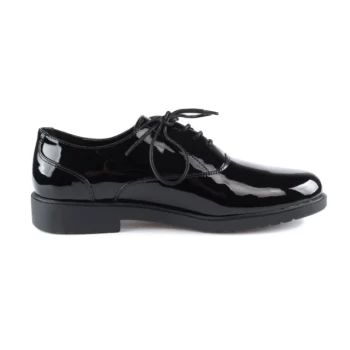
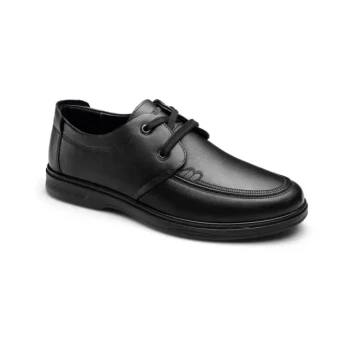
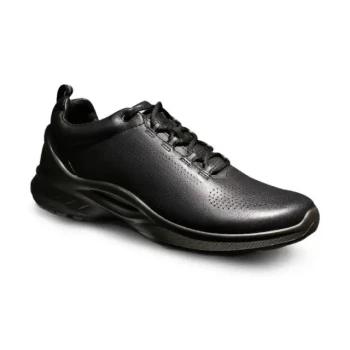
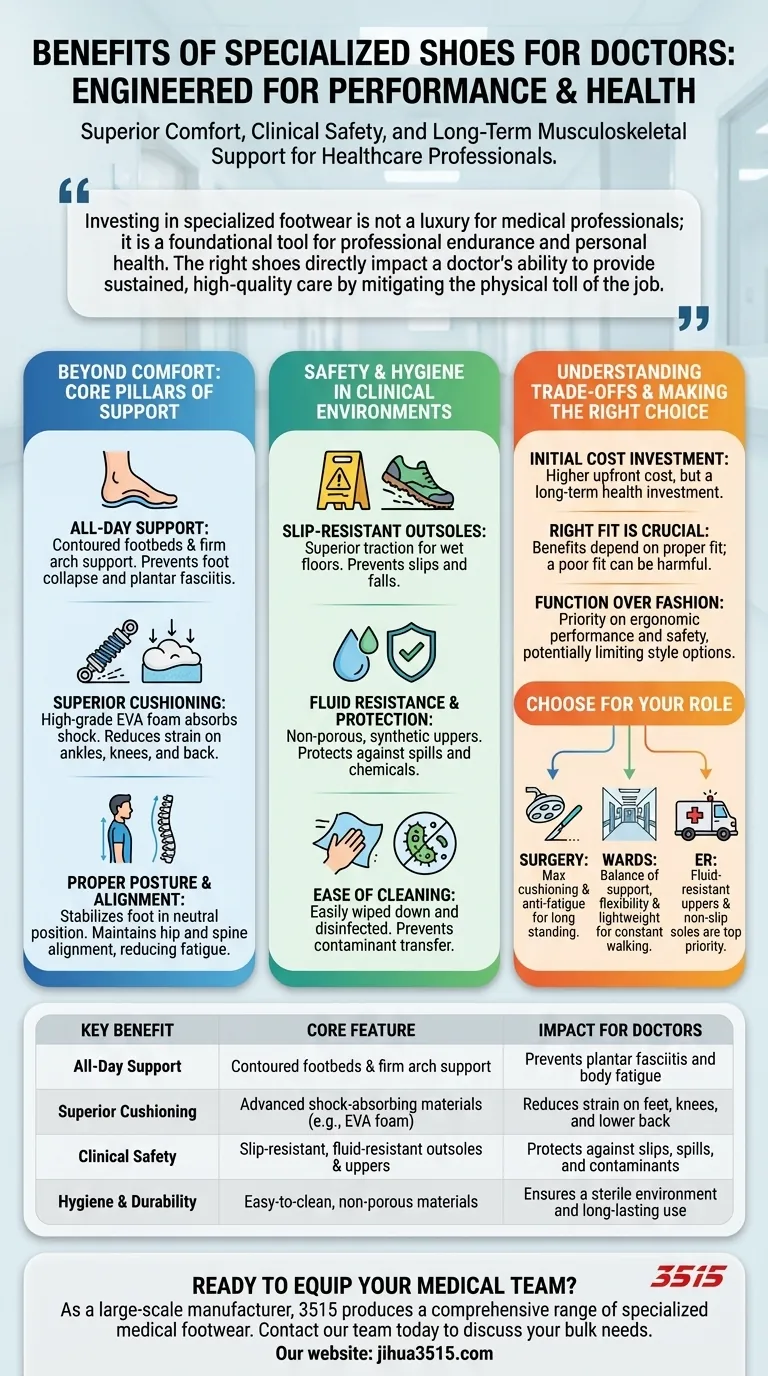
The primary benefits of specialized shoes for doctors are superior comfort, clinical safety, and long-term musculoskeletal support. This specialized footwear is engineered to distribute pressure evenly and reduce impact, allowing medical professionals to endure long shifts and focus entirely on patient care without the distraction of physical pain.
Investing in specialized footwear is not a luxury for medical professionals; it is a foundational tool for professional endurance and personal health. The right shoes directly impact a doctor's ability to provide sustained, high-quality care by mitigating the physical toll of the job.
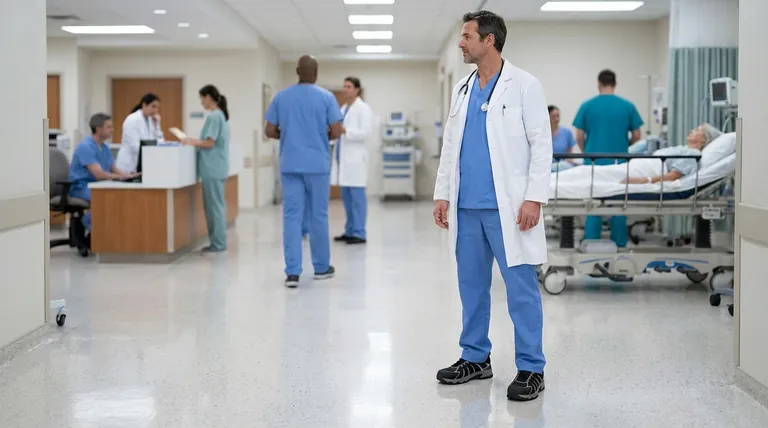
Beyond Comfort: The Core Pillars of Medical Footwear
The demands of a medical environment go far beyond what standard consumer footwear is designed to handle. Specialized shoes are engineered systems built to counteract the specific stresses of the profession.
Engineered for All-Day Support
Proper medical shoes feature contoured footbeds and firm arch support. This design prevents the foot from collapsing inward or rolling outward during long hours of standing and walking.
This structural support is critical for preventing common and painful conditions like plantar fasciitis, which can be debilitating for someone who spends 12 hours a day on their feet.
Superior Cushioning and Shock Absorption
Hospital floors are hard and unforgiving. Specialized shoes use advanced materials, like high-grade EVA foam, to absorb the shock of each step.
This constant impact dissipation reduces the strain not just on the feet, but on the entire kinetic chain, including the ankles, knees, and lower back.
Promoting Proper Posture and Alignment
Foot health is the foundation of body alignment. When feet are improperly supported, it can lead to a cascade of postural problems.
By stabilizing the foot in a neutral position, these shoes help maintain proper alignment in the hips and spine, reducing overall body fatigue and preventing chronic back pain.
Safety and Hygiene in a Clinical Environment
A doctor's footwear must perform beyond comfort; it is a piece of personal protective equipment (PPE) that contributes to a safe and sterile environment.
Slip-Resistant Outsoles
Clinical environments are prone to wet and slippery surfaces. Medical-grade shoes are equipped with specially designed outsoles that offer superior traction to prevent slips and falls. This is a non-negotiable safety feature.
Fluid Resistance and Protection
The uppers of these shoes are often made from non-porous, synthetic materials. This design protects the feet from accidental spills of fluids or chemicals, a critical element of infection control and personal safety.
Ease of Cleaning
Hygiene is paramount. Specialized footwear is designed to be easily wiped down and disinfected, preventing the transfer of contaminants between patient rooms and other clinical areas.
Understanding the Trade-offs
While the benefits are significant, it's important to approach the decision with a clear understanding of the practical considerations.
The Initial Cost Investment
High-quality medical footwear represents a greater upfront cost than typical sneakers or casual shoes. It's crucial to view this not as an expense, but as an investment in your daily comfort, long-term health, and ability to perform your job effectively.
Finding the Right Fit Is Crucial
The term "doctor shoe" is not a monolith. The benefits are only realized when the shoe is properly matched to your specific foot shape, arch type, and daily activities. A poorly fitting specialized shoe can be worse than a standard one.
Function Over Fashion
The primary design driver for medical footwear is ergonomic performance, not aesthetics. While styles have improved, the focus remains squarely on support and safety, which may limit stylistic options.
Making the Right Choice for Your Role
Your specific responsibilities should guide your footwear selection.
- If your primary focus is long hours standing in surgery: Prioritize shoes with maximum cushioning and anti-fatigue properties to reduce static load on your joints and spine.
- If your primary focus is constant walking through wards: Look for a balance of robust support, flexibility, and a lightweight design to minimize energy expenditure throughout the day.
- If your primary focus is the unpredictable ER environment: Emphasize fluid-resistant uppers and certified non-slip soles as your top priorities for safety and hygiene.
Choosing the right footwear is a proactive step in managing the physical demands of your career, ensuring you can care for others without neglecting yourself.
Summary Table:
| Key Benefit | Core Feature | Impact for Doctors |
|---|---|---|
| All-Day Support | Contoured footbeds & firm arch support | Prevents plantar fasciitis and body fatigue |
| Superior Cushioning | Advanced shock-absorbing materials (e.g., EVA foam) | Reduces strain on feet, knees, and lower back |
| Clinical Safety | Slip-resistant, fluid-resistant outsoles & uppers | Protects against slips, spills, and contaminants |
| Hygiene & Durability | Easy-to-clean, non-porous materials | Ensures a sterile environment and long-lasting use |
Ready to equip your medical team with footwear engineered for performance?
As a large-scale manufacturer, 3515 produces a comprehensive range of specialized footwear for distributors, brand owners, and bulk clients. Our production capabilities encompass all types of medical shoes and boots, designed to provide the superior comfort, safety, and support that healthcare professionals rely on.
Let us help you provide the right foundation for those who care for others. Contact our team today to discuss your specialized footwear needs.
Visual Guide
Related Products
- Wholesale Comfortable Business Casual Shoes Custom Manufacturing
- Wholesale Comfort Dress Shoes with Dial Closure for Custom Manufacturing
- Wholesale Patent Oxford Dress Shoes | Custom & Bulk Manufacturing
- Custom OEM Training Shoes Wholesale Manufacturer Durable & Breathable
- Custom Manufactured Air Cushion Leather Business Shoes for Wholesale
People Also Ask
- What are the key characteristics of business casual shoes? Achieve Polished Versatility for Your Wardrobe
- Which types of shoes should be avoided with business casual attire? Maintain a Polished Professional Image
- What should be considered when selecting shoes for a casual business setting? Achieve the Perfect Balance of Style and Comfort
- What is the recommended approach to trying on business casual shoes? Ensure a Perfect Fit for Your Workday
- What are some types of business casual shoes? Build a Versatile & Professional Footwear Wardrobe