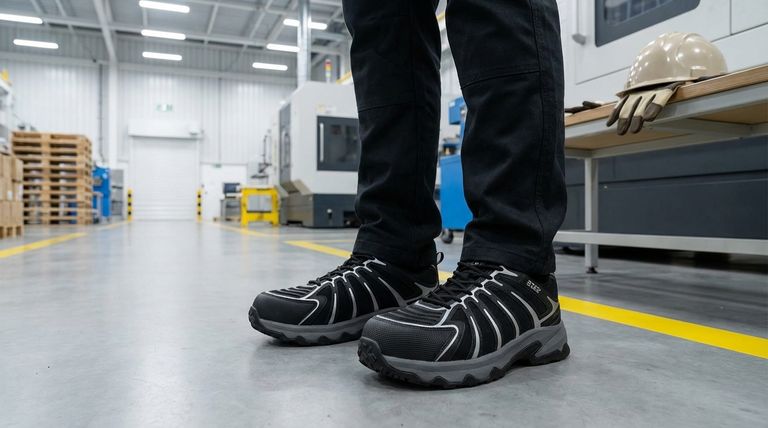
A truly effective work shoe is a highly specialized piece of equipment that must meet two distinct goals. It must provide the specific, mandated protection required for your job environment while also delivering the lightweight comfort of modern athletic footwear, recognizing that you spend a significant portion of your day wearing it.
The ideal work shoe is not just a protective shell; it's a carefully engineered tool that balances non-negotiable safety features like toe protection and slip resistance with the ergonomic design needed to reduce fatigue and support you through a full workday.
The Foundation: Core Safety Features
To be considered a true work shoe, a baseline of protective technologies is required. These features are designed to mitigate the most common workplace hazards.
Preventing Slips, Trips, and Falls
A primary function of any work shoe is to keep you stable on your feet. Slip resistance is critical, especially on surfaces that may be compromised.
This protection is often enhanced by outsoles that are also specifically rated for oil and water resistance, ensuring a secure grip in unpredictable conditions.
Guarding Against Impact and Compression
Many work environments pose a risk from falling objects or heavy machinery. Enhanced toe protection is the standard solution.
This is typically achieved through integrated steel, alloy, or composite safety caps designed to withstand significant impact and compression forces.
Absorbing the Strain of a Long Day
Constant walking or standing on hard surfaces takes a toll on the body. A quality work shoe must feature an outsole that effectively absorbs shock.
This ergonomic feature reduces the impact on your feet, ankles, and spine, directly combating fatigue and preventing long-term strain.
Mitigating Electrical Hazards
In certain industrial or technical settings, the buildup of static electricity can be a significant risk to sensitive equipment or even personnel.
Antistatic properties are built into some work shoes to safely dissipate this electrical charge, preventing uncontrolled discharge.
Beyond Safety: The Ergonomics of All-Day Wear
Safety certifications are the starting point, but true effectiveness is determined by how the shoe performs over an eight-to-twelve-hour shift. Modern work shoes borrow heavily from athletic shoe technology to achieve this.
The Importance of Lightweight Design
Historically, protective footwear was heavy and cumbersome. The goal today is to provide protection in a light and comfortable package.
Lighter shoes reduce leg fatigue, improve mobility, and make the workday feel less strenuous, directly impacting your overall energy levels.
The Need for a Functional Fit
A work shoe must function as an extension of your body. It cannot be something you tolerate; it must provide consistent support.
This means it should fit correctly without pinching or excessive movement, functioning as a comfortable and reliable part of your daily life at work.
Understanding the Trade-offs
Selecting the right work shoe involves balancing competing priorities. Understanding these trade-offs is key to making an informed decision.
Protection vs. Weight
The highest levels of impact protection, often found in steel-toe boots, typically add more weight. Lighter composite toes offer excellent protection but may have different ratings. You must choose the protection level your job requires without adding unnecessary weight.
Durability vs. Flexibility
The most rugged, abrasion-resistant materials can sometimes be stiff and require a break-in period. More flexible, athletic-style materials may offer immediate comfort but might not withstand the harshest industrial environments for as long.
Specialized Features vs. Versatility
A shoe designed specifically for a chemical plant will have features unnecessary for a warehouse worker. Over-specializing can lead to a shoe that is less comfortable or breathable for your specific daily tasks.
How to Select the Right Work Shoe
Your choice should be guided by the primary demands of your work environment.
- If your primary focus is working in wet or oily environments: Prioritize certified slip-resistant outsoles that are also rated for oil resistance.
- If your primary focus is protection from heavy falling objects: A certified steel or composite safety toe that meets your workplace standards is non-negotiable.
- If your primary focus is long hours of standing or walking: Emphasize a lightweight design with a high-quality, shock-absorbing midsole and outsole to combat fatigue.
- If your primary focus is working around sensitive electronics: Look for shoes with specific antistatic or Electrostatic Dissipative (ESD) ratings.
Choosing the right work shoe is a direct investment in your daily safety, comfort, and long-term health.
Summary Table:
| Requirement | Key Feature | Primary Benefit |
|---|---|---|
| Slip & Fall Prevention | Slip & Oil-Resistant Outsole | Stable footing on hazardous surfaces |
| Impact Protection | Steel/Composite Safety Toe | Guards against falling objects |
| Fatigue Reduction | Shock-Absorbing Midsole | Reduces strain from standing/walking |
| Electrical Safety | Antistatic/ESD Properties | Prevents static discharge |
| All-Day Comfort | Lightweight, Ergonomic Design | Enhances mobility and reduces fatigue |
Need high-quality work shoes that meet all safety standards without compromising on comfort?
As a large-scale manufacturer, 3515 produces a comprehensive range of safety footwear for distributors, brand owners, and bulk clients. Our production capabilities encompass all types of protective shoes and boots, engineered to provide the perfect balance of mandated protection and athletic-style comfort for long shifts.
Contact our experts today to discuss your specific requirements and discover how we can support your business with reliable, high-performance footwear.
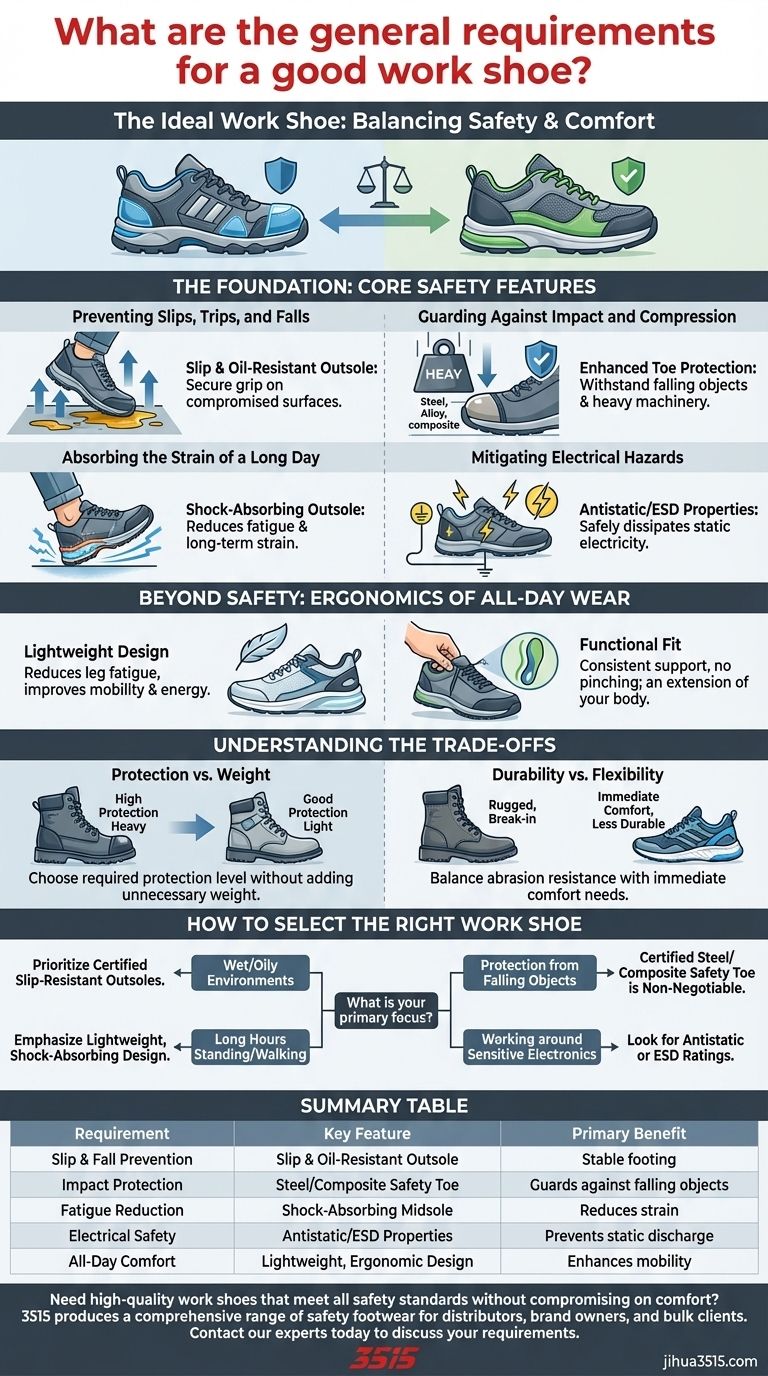
Visual Guide
Related Products
- Durable Canvas Work Shoes with Rubber Lug Sole | Wholesale Manufacturer
- Durable Leather Work Boots for Wholesale & Custom OEM Manufacturing
- Durable Leather Work Boots for Wholesale & Custom Manufacturing
- Durable Goodyear Welt Leather Work Boots for Wholesale & Private Label
- Durable Leather Safety Boots for Wholesale & Custom OEM Manufacturing
People Also Ask
- What are the properties of canvas as a shoe material? A Guide to Lightweight Comfort & Style
- Why is the selection of high-strength fabric materials necessary in the production of canvas shoes and training shoes?
- What types of jobs are canvas work boots suitable for? Ideal for Light-Duty, High-Mobility Roles
- Can canvas shoes be worn in rainy conditions? The Truth About Water Resistance
- What are the functional advantages of choosing rubber soles over leather soles for work boots? Superior Safety & Durability