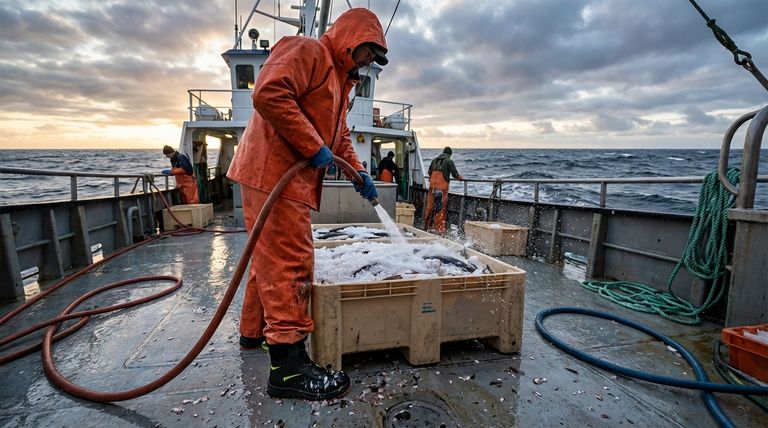
For professionals working in wet, messy, or chemically-exposed environments, PVC (Polyvinyl Chloride) boots are a foundational piece of personal protective equipment. Their use is widespread across industries such as custodial services, farming and agriculture, food and poultry processing, oil rigs, and commercial fishing. Essentially, any job requiring a durable, waterproof, and chemically-resistant barrier for the feet is a prime candidate for PVC footwear.
The core reason PVC boots are a staple in these industries is their unique ability to provide a completely non-porous shield against liquids and common chemicals at an exceptionally cost-effective price point.
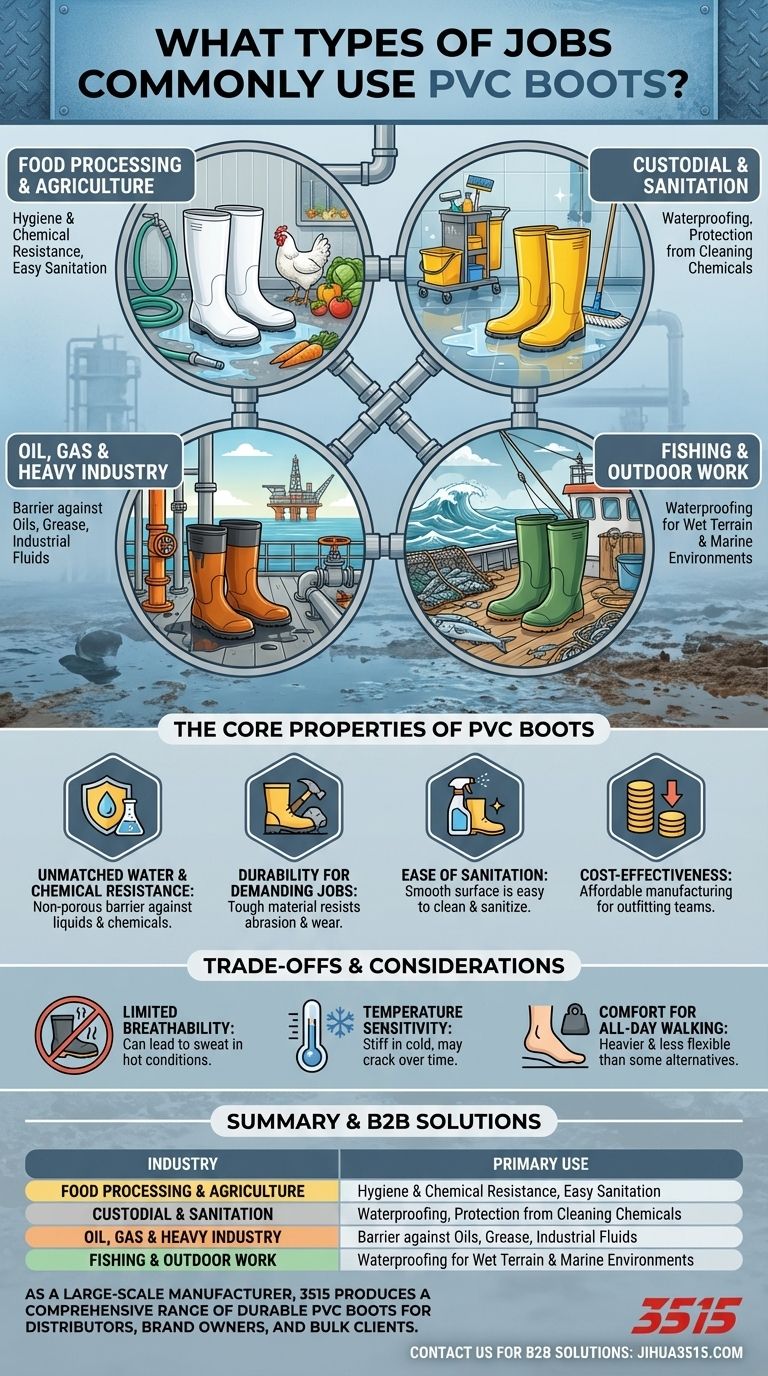
The Core Properties of PVC Boots
To understand why PVC is so prevalent, we need to look at its inherent material characteristics. These properties directly solve the daily challenges faced in demanding work environments.
Unmatched Water and Chemical Resistance
PVC is a synthetic plastic polymer. By its very nature, it is non-porous, creating an impenetrable barrier against water, mud, and a wide range of chemicals.
This makes it ideal for environments where feet are constantly exposed to liquids, from simple water to cleaning agents, organic waste, oils, and certain acids.
Durability for Demanding Jobs
PVC is a tough material that resists abrasion and wear. This ensures the boots can withstand the rigors of walking on rough surfaces, encountering debris, and frequent use in industrial settings.
Ease of Sanitation
The smooth, non-porous surface of a PVC boot is incredibly easy to clean and sanitize. This is a critical feature in industries like food processing and agriculture, where preventing cross-contamination is paramount.
Cost-Effectiveness
Compared to materials like rubber or leather, PVC is significantly less expensive to manufacture. This allows companies to outfit entire teams with effective protective footwear without incurring prohibitive costs.
A Closer Look at Key Industries
The general properties of PVC translate into specific advantages for different professional fields.
Food Processing and Agriculture
In these sectors, hygiene is non-negotiable. PVC boots can be quickly hosed down and sanitized, protecting against the spread of bacteria. They also shield workers from animal waste, fertilizers, and cleaning chemicals.
Custodial and Sanitation Work
Workers in this field are in constant contact with water and a variety of cleaning chemicals. PVC provides reliable, day-long protection to keep feet dry and safe from potential skin irritants.
Oil, Gas, and Heavy Industry
On oil rigs or in manufacturing plants, workers face exposure to grease, oils, and various industrial fluids. PVC offers a dependable barrier against these substances, which could degrade other materials like leather.
Fishing and Outdoor Work
For commercial fishermen, wildlife managers, or any professional working in wet terrain, the primary need is waterproofing. PVC boots deliver this function perfectly, keeping feet dry in streams, on boat decks, and in muddy fields.
Understanding the Trade-offs
While highly effective, PVC is not the perfect material for every situation. Objectivity requires acknowledging its limitations.
Limited Breathability
The same non-porous quality that makes PVC waterproof also means it does not breathe. In hot conditions or during strenuous activity, this can lead to significant sweat buildup and discomfort.
Temperature Sensitivity
In very cold temperatures, some PVC formulations can become stiff and rigid. This reduces flexibility and can make the boots more susceptible to cracking over time.
Comfort for All-Day Walking
PVC boots are generally heavier and less flexible than high-end rubber or leather alternatives. For jobs that require constant walking over long distances, they may not offer the same level of ergonomic support and comfort.
Making the Right Choice for Your Goal
Selecting the right boot depends entirely on the primary demands of your work environment.
- If your primary focus is hygiene and chemical resistance: PVC is an excellent and cost-effective choice, perfect for food processing, sanitation, or chemical handling.
- If your primary focus is general waterproofing for wet conditions: PVC offers a reliable and affordable solution for farming, fishing, and outdoor maintenance.
- If your primary focus is all-day comfort and performance in extreme temperatures: You may want to evaluate alternatives like rubber, which often provides better flexibility in the cold and a more comfortable fit.
Ultimately, understanding the specific properties of PVC allows you to choose protective footwear that is not just adequate, but perfectly suited to the task at hand.
Summary Table:
| Industry/Job Role | Primary Use of PVC Boots |
|---|---|
| Food Processing & Agriculture | Hygiene, chemical resistance, easy sanitation |
| Custodial & Sanitation | Waterproofing, protection from cleaning chemicals |
| Oil, Gas & Heavy Industry | Barrier against oils, grease, industrial fluids |
| Fishing & Outdoor Work | Waterproofing for wet terrain and marine environments |
As a large-scale manufacturer, 3515 produces a comprehensive range of durable PVC boots for distributors, brand owners, and bulk clients. Our production capabilities ensure you receive high-quality, cost-effective footwear tailored to the demands of your industry—from food processing to heavy industrial work. Contact us today to discuss your specific needs and discover how we can support your business with reliable protective footwear solutions.
Visual Guide
Related Products
- Premium Wholesale Waterproof Safety Boots High Performance Protection for Industrial Markets
- High-Traction Suede Tactical Boots Wholesale & Custom Manufacturing
- High Performance Fire-Retardant Waterproof Safety Boots
- Wholesale Waterproof Tactical Boots Custom Suede & High-Traction Soles
- Premium Waterproof High-Cut Industrial Safety Boots for Wholesale and Bulk Orders
People Also Ask
- What weather and chemical protections do premium boots offer? Your Complete Guide to Safety & Performance
- Why are waterproof safety boots recommended for certain work environments? Essential Protection for Wet & Hazardous Jobs
- What are the primary protective functions of industrial safety boots in oil palm plantations? Master Rough Terrain Safety
- Why are oil-resistant and anti-slip properties critical for industrial safety boots? Expert Outsole Engineering Guide
- What are the best types of shoes for different gardening conditions? Find Your Perfect Match.