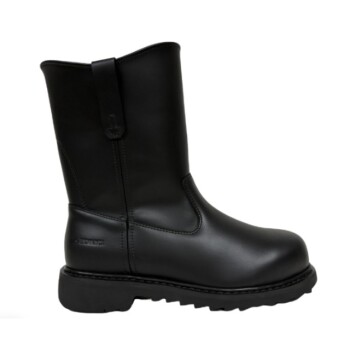
The technical evaluation of motorcycle boot safety centers on four critical pillars: impact abrasion resistance, impact cut resistance, transverse rigidity, and structural integrity. These factors are primarily governed by the international EN 13634:2017 standard, which classifies footwear into Level 1 or Level 2 performance tiers based on their ability to withstand the mechanical stresses of a crash.
Achieving high safety ratings requires a synthesis of advanced material science and precision manufacturing. For B2B partners, these ratings are not just compliance checkboxes but a testament to a manufacturer's ability to deliver consistent, life-saving protection through state-of-the-art production.
The Framework of EN 13634:2017
Modern motorcycle boot safety is defined by the European EN 13634:2017 standard, which is the global benchmark for protective footwear. This standard subjects the boot to a battery of tests that simulate the most common and dangerous forces encountered during a motorcycle accident.
CE Certification Levels
A boot can achieve either Level 1 (the minimum required protection) or Level 2 (the superior performance tier). Manufacturers must demonstrate that their products can withstand higher thresholds of force and friction to earn the Level 2 designation, which is often preferred by professional-grade brands.
Height and Coverage Requirements
The standard also evaluates the height of the upper. Boots are tested to ensure they provide adequate coverage for the ankle and lower leg, preventing skin exposure during a slide.
Critical Technical Evaluation Metrics
Safety ratings are determined by how well the boot's construction manages kinetic energy and physical trauma. Professional-grade manufacturing facilities utilize specialized equipment to verify these metrics during the OEM/ODM process.
Impact Abrasion Resistance
This test measures how long the boot material can slide against a high-grit abrasive surface before wearing through. Level 2 certification requires significantly higher resistance times, demanding premium materials and robust construction.
Impact Cut Resistance
Testing involves a weighted blade dropped onto the boot to simulate contact with sharp objects like footpegs or debris. The boot must prevent the blade from penetrating the inner lining to ensure the rider’s foot remains shielded from lacerations.
Transverse Rigidity
This metric evaluates the boot's ability to resist being crushed. A machine applies force across the width of the boot; a higher rating indicates a stronger sole and chassis capable of protecting the foot from compression injuries if the motorcycle falls on the rider.
Torsional Stiffness and Ankle Protection
To prevent fractures caused by twisting, high-performance boots integrate molded ankle protectors and internal bracing. These elements provide the necessary stiffness to limit unnatural movement while maintaining enough flexibility for gear shifting.
Advanced Manufacturing and Material Synergy
Consistency in safety ratings is only possible through a robust supply chain and state-of-the-art equipment. Since 1951, the evolution of protective footwear has shifted toward integrating complex, multi-layered material systems.
Energy-Absorbing Components
Safety ratings are enhanced by the inclusion of load-spreading padding and composite materials. These components dissipate the force of an impact, reducing the "peak force" transmitted to the rider's bones.
Weatherproofing and Climate Control
While not always a "safety" metric in the mechanical sense, features like Gore-Tex membranes and ventilation systems are evaluated for performance. They prevent rider fatigue and loss of control by ensuring comfort in extreme weather conditions.
Understanding the Trade-offs
In the pursuit of maximum safety ratings, certain design trade-offs must be managed. Balancing protection with ergonomics is the hallmark of a sophisticated manufacturer.
Rigidity vs. Walkability
A Level 2 boot with maximum transverse rigidity offers the best protection but may feel stiff and difficult to walk in. Distributors must choose a balance based on whether their target end-user is a track racer or a daily commuter.
Weight vs. Durability
Heavier boots often utilize thicker leather and metal reinforcements to pass rigorous tests. However, advanced composite materials allow premium manufacturers to achieve high safety ratings while keeping the boot lightweight, though this typically increases production costs.
Selecting the Right Specification for Your Portfolio
Choosing the correct safety profile is essential for maintaining brand reputation and ensuring market fit. Your manufacturing partner should provide the scalability and certification expertise to meet these diverse needs.
- If your primary focus is Professional Racing: Prioritize Level 2 ratings across all categories, focusing on maximum transverse rigidity and integrated ankle bracing.
- If your primary focus is Touring and Adventure: Seek a balance of Level 1 or 2 protection with integrated waterproofing technologies and enhanced comfort features for long-distance wear.
- If your primary focus is Urban/Commuter Markets: Focus on Level 1 compliance with a heavy emphasis on "stealth" safety features that allow the boot to look like casual footwear while meeting CE standards.
By aligning your product line with these technical safety factors, you ensure a high-performance offering backed by decades of manufacturing excellence and global certification standards.
Summary Table:
| Evaluation Metric | Technical Focus | Safety Objective |
|---|---|---|
| Abrasion Resistance | Material durability during slides | Prevents friction-related skin injuries |
| Impact Cut Resistance | Resistance to sharp debris/parts | Protects the foot from deep lacerations |
| Transverse Rigidity | Lateral crush resistance | Prevents compression injuries from bike weight |
| Structural Integrity | Boot height and seam strength | Ensures the boot stays intact during impact |
Partner with a Manufacturing Leader in Safety Excellence
Ensure your product line meets the highest international safety standards with a partner who understands technical precision. As a large-scale manufacturer serving distributors and brand owners, 3515 offers comprehensive production capabilities for all footwear types, anchored by our flagship Safety Shoes series.
Since 1951, we have combined rich heritage with state-of-the-art equipment to provide:
- Premium OEM/ODM Capabilities: Tailored specifications for racing, touring, or urban markets.
- Robust Supply Chain: Consistent large-volume delivery and massive production scale.
- Certified Quality: Rigorous adherence to international safety benchmarks.
From tactical boots and outdoor shoes to training sneakers and formal footwear, 3515 delivers the durability your customers demand.
Contact us today to discuss your bulk requirements and custom manufacturing needs.
Related Products
- Heavy-Duty Goodyear Welted Pull-On Safety Rigger Boot
- Wholesale Tactical Boots High-Traction & Reflective for Bulk & Brand Orders
- High Performance Fire-Retardant Waterproof Safety Boots
- Wholesale High-Traction Camo Boots - Custom Manufacturer for Brands
- Wholesale Waterproof Tactical Boots Custom Suede & High-Traction Soles
People Also Ask
- What are the key elements of quality boot construction? Ensure Longevity & Performance
- Are Goodyear welted boots worth it? The Ultimate Guide to Lifelong Footwear
- What is a Goodyear welt on a boot? The Secret to Durable, Repairable Footwear
- What makes Goodyear Welt boots suitable for harsh environments? Unmatched Durability & Repairability
- What additional high-quality materials are used in Goodyear Welt boots? A Guide to Advanced Components