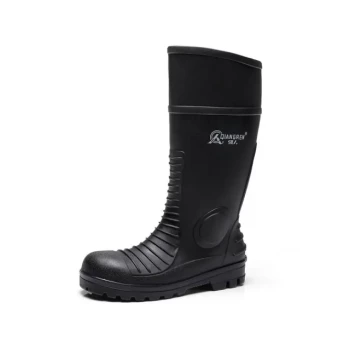
Safety footwear for extreme underground mining (35°C to 48°C) must prioritize dual-layer thermal protection. It requires superior heat resistance to block external thermal fluxes from rock strata and machinery, alongside advanced moisture-wicking materials to manage the wearer’s physiological health in high humidity.
To maintain safety and operational continuity in extreme heat, footwear must function as a thermal regulator, preventing external heat penetration while actively evacuating internal moisture to protect the miner's physiological state.
The Critical Importance of Thermal Regulation
Blocking External Thermal Flux
In environments reaching 48°C, the footwear acts as a vital barrier against conductive and radiant heat emanating from the surrounding rock and heavy machinery.
The materials must possess high-performance heat-resistant properties to ensure the sole and upper do not degrade or transfer dangerous levels of heat to the foot.
Managing Internal Physiological Health
Extreme temperatures combined with high humidity create a significant risk of heat-related illness and skin maceration due to excessive sweating.
Footwear must utilize moisture-wicking linings that move sweat away from the skin rapidly, helping to regulate the body's core temperature and maintain foot integrity.
Essential Physical Protection Requirements
Impact and Compression Resistance
Underground mining faces involve constant risks from falling heavy objects and the crushing forces of hydraulic supports.
Standard requirements include steel or composite toe protection and often metatarsal guards to shield the delicate bones on the top of the foot.
Puncture and Slip Resistance
The floor of an underground mine is frequently littered with sharp rock fragments and may be wet or muddy.
Footwear must feature puncture-resistant soles to prevent injury from sharp debris and high-traction, slip-resistant outsoles to ensure stability in treacherous tunnel conditions.
Understanding the Trade-offs
Protection vs. Breathability
Heavy-duty materials required for crush and puncture resistance often act as insulators, which can trap heat inside the boot.
The challenge lies in balancing robust physical shielding with the need for airflow and moisture evacuation to prevent overheating.
Durability vs. Weight
While thick, high-density rubbers and leathers offer the best heat resistance, they can significantly increase the weight of the boot.
Increased weight leads to higher metabolic expenditure, which in turn increases the wearer's body temperature, potentially compounding the risks of the hot environment.
Implementing the Right Protection Strategy
Choosing the correct footwear depends on the specific hazards of the mining face and the duration of the shift.
- If your primary focus is thermal stress management: Prioritize boots with certified high-temperature ratings and advanced synthetic moisture-wicking inner linings.
- If your primary focus is mechanical hazard protection: Opt for boots with integrated metatarsal guards and reinforced steel midsoles, ensuring they still meet minimum heat-resistance standards.
- If your primary focus is traction in wet tunnels: Select specialized deep-lug outsoles made from heat-stable rubber compounds that maintain grip even as temperatures rise.
By viewing safety footwear as a specialized tool for thermal regulation rather than just a physical barrier, you ensure both the health of the miner and the efficiency of the operation.
Summary Table:
| Requirement Category | Key Specifications | Mining Benefit |
|---|---|---|
| Thermal Protection | Heat-resistant soles & uppers | Blocks external heat flux from rock & machinery |
| Moisture Management | Advanced moisture-wicking linings | Reduces heat-related illness & skin maceration |
| Physical Shielding | Steel/Composite toe & Metatarsal guards | Protects against falling objects & crushing forces |
| Sole Integrity | Puncture-resistant & Deep-lug outsoles | Prevents injury from sharp debris & ensures traction |
Partner with 3515 for High-Performance Mining Footwear
Operating in extreme underground temperatures requires more than just a standard boot; it requires a specialized thermal regulation tool. As a large-scale manufacturer serving global distributors and brand owners, 3515 offers comprehensive production capabilities for all footwear types, anchored by our flagship Safety Shoes series.
Our extensive portfolio covers work and tactical boots, outdoor shoes, training shoes, and sneakers, as well as Dress & Formal shoes to meet your diverse bulk requirements. We provide the durability, heat resistance, and moisture management your customers need to stay safe in the world's most demanding environments.
Ready to elevate your safety footwear line? Contact us today to discuss your bulk manufacturing needs.
References
- Adam Wróblewski, Anna Janicka. CFD Analysis of the Forced Airflow and Temperature Distribution in the Air-Conditioned Operator’s Cabin of the Stationary Rock Breaker in Underground Mine under Increasing Heat Flux. DOI: 10.3390/en16093814
This article is also based on technical information from 3515 Knowledge Base .
Related Products
- Premium Grain Leather Safety Boots for Bulk Supply
- Heavy-Duty Waterproof Nubuck Safety Boots Safety Shoes for Bulk Supply
- Premium Wheat Nubuck Safety Shoes for Bulk Distribution
- Safety Footwear Wholesale Manufacturer for Custom OEM/ODM Production
- Durable Leather Safety Boots for Wholesale & Custom OEM Manufacturing
People Also Ask
- What are the consequences of not wearing safety boots? Protect Your Finances and Career
- What primary protective functions do professional safety boots provide in urban solid waste recovery and waste picking processes? Discover Dual-Layer Protection.
- Why is ankle and arch support important in safety footwear? Prevent Injury & Fatigue
- What makes durable safety boots? The Ultimate Guide to Long-Lasting Work Footwear
- What are the risks of using ordinary rubber boots in forest clearing? Why professional safety boots are essential