
The most reliable signs that your boots require professional repair are significant wear on the soles, any form of loose or broken stitching, and visible structural damage. These issues go beyond cosmetic scuffs and indicate that the core integrity of the boot is compromised, often in ways that simple home fixes cannot address.
The decision to seek professional repair hinges on a single question: is the boot's fundamental structure or weather resistance at risk? If the answer is yes, an expert cobbler is necessary to preserve your investment and ensure continued performance.
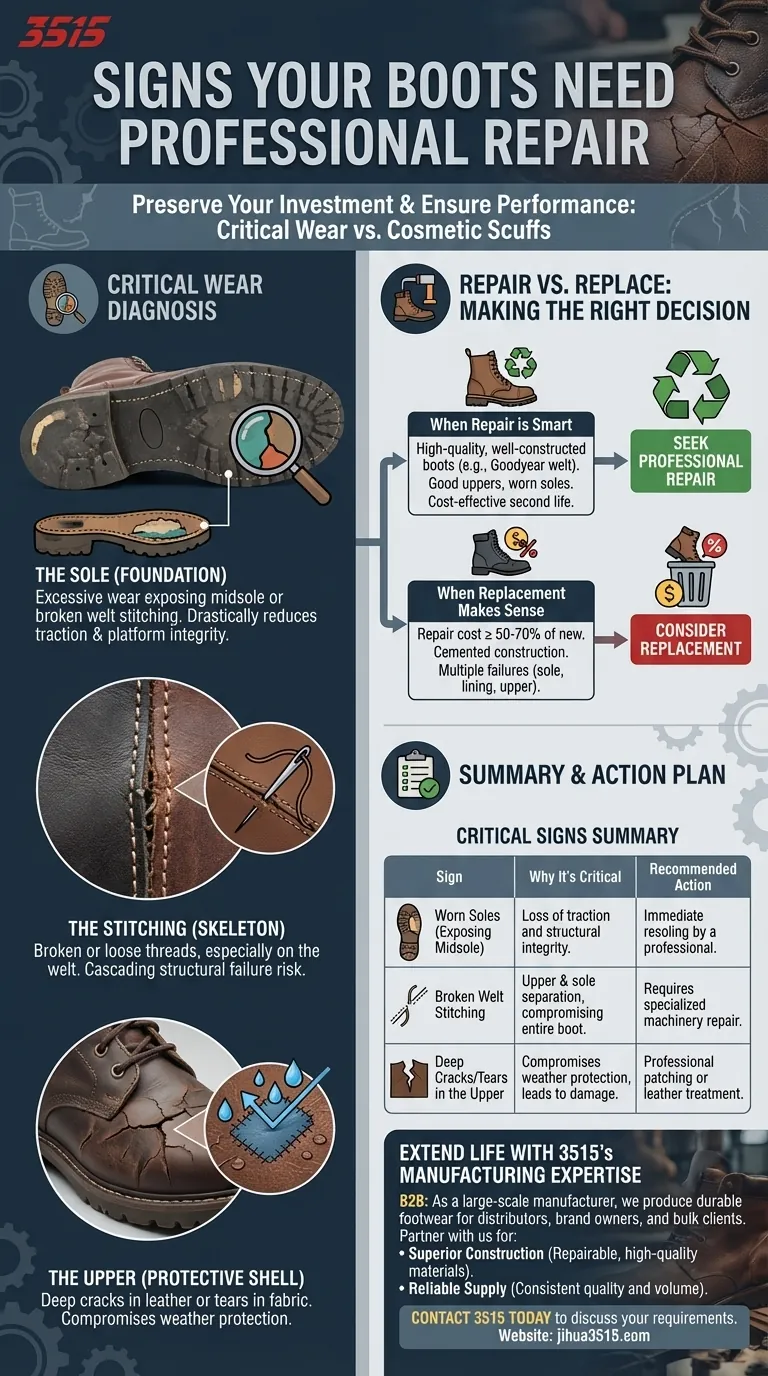
Diagnosing Critical Wear: Beyond Surface Scuffs
Understanding the difference between cosmetic wear and functional failure is key. Professionals are needed when a core component responsible for support, protection, or durability begins to fail.
The Sole: Your Foundation
The sole is the boot's direct interface with the ground and is designed to wear down over time. However, when wear becomes excessive or uneven, it compromises the entire platform of the boot.
Look for soles that are worn smooth, especially if the tread pattern is gone, as this drastically reduces traction. More importantly, if you see the midsole (the layer beneath the outsole) or the welt stitching, repair is overdue.
The Stitching: Holding It All Together
Stitching is the skeleton that holds the different pieces of leather or fabric together. A single broken or loose thread can be the start of a cascading failure.
Pay close attention to the welt, the strip of leather where the upper connects to the sole. Broken stitches here are a critical structural problem that only a professional can properly fix, often requiring specialized machinery.
The Upper: The Protective Shell
The upper is the part of the boot that covers your foot. While scuffs are normal, deep cracks in leather or tears in fabric are serious.
These issues compromise the boot's ability to protect your feet from the elements and can lead to water damage. A cobbler can often patch tears or treat severely cracked leather to restore its integrity.
Understanding the Trade-offs: Repair vs. Replace
Not all damage warrants a professional repair. The decision is a balance between the cost of the repair, the original quality of the boot, and the extent of the damage.
When Repair is the Smart Choice
Repair is almost always worthwhile for high-quality, well-constructed boots, particularly those with a Goodyear welt. This construction method is specifically designed to allow for easy resoling.
If the uppers are still in excellent condition but the sole is worn out, resoling is a highly cost-effective way to give your boots a second life. A good repair can often use materials superior to the original.
When Replacement Makes More Sense
If the cost of the repair approaches or exceeds 50-70% of the cost of a new pair, replacement is often the more logical path. This is especially true for boots of cemented construction, which are not designed to be easily taken apart and repaired.
Furthermore, if multiple critical areas are failing simultaneously—for example, the sole is gone, the lining is torn, and the upper is deeply cracked—the boot may have simply reached the end of its functional life.
Making the Right Decision for Your Boots
Use the condition of your boots to guide your next step. Your goal will determine the best course of action.
- If your primary focus is preserving a high-quality investment: You should seek professional repair as soon as you notice worn soles or any broken welt stitching to prevent further damage.
- If your primary focus is cost-effectiveness: Compare the price of a full resole or structural repair against the cost of a new pair of similar-quality boots.
- If your primary focus is safety and performance: Any separation between the sole and the upper or a complete loss of tread requires immediate professional attention.
Understanding these key failure points empowers you to make a sound decision, extending the life of your favorite boots.
Summary Table:
| Sign | Why It's Critical | Recommended Action |
|---|---|---|
| Worn Soles (Exposing Midsole) | Loss of traction and structural integrity. | Immediate resoling by a professional. |
| Broken Welt Stitching | The upper and sole can separate, compromising the entire boot. | Requires specialized machinery to repair. |
| Deep Cracks/Tears in the Upper | Compromises weather protection and can lead to further damage. | Professional patching or leather treatment. |
Extend the life of your footwear with 3515's manufacturing expertise.
As a large-scale manufacturer, we produce a comprehensive range of durable footwear for distributors, brand owners, and bulk clients. Our production capabilities encompass all types of boots designed for longevity and performance.
Partner with us for:
- Superior Construction: Boots built with repairability in mind, using high-quality materials.
- Reliable Supply: Consistent quality and volume for your business needs.
Contact 3515 today to discuss your footwear manufacturing requirements and ensure your customers get boots worth repairing.
Visual Guide
Related Products
- Wholesale Durable Safety Boots | Custom Steel Toe & Puncture-Resistant Manufacturing
- Premium Wholesale Tactical Style Safety Shoes Boots with Quick Lacing
- Durable Goodyear Welt Leather Work Boots for Wholesale & Private Label
- Premium Wholesale Waterproof Safety Boots High Performance Protection for Industrial Markets
- Durable Leather Work Boots for Wholesale & Custom Manufacturing
People Also Ask
- What are the key features of safety boots? Essential Protection for Hazardous Workplaces
- How should safety boots be cleaned to avoid damage? A Gentle Guide to Preserve Your Boots
- Why is proper storage important for safety boots? Preserve Protection and Extend Lifespan
- What makes durable safety boots? The Ultimate Guide to Long-Lasting Work Footwear
- What are the risks of using ordinary rubber boots in forest clearing? Why professional safety boots are essential



















