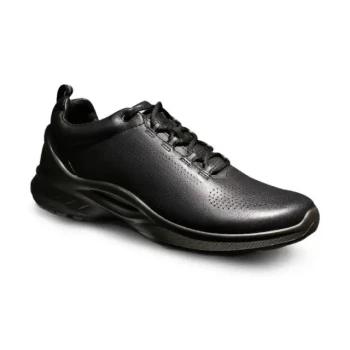
To properly choose walking shoes for wide feet, you must look beyond standard sizing and focus on three core features: a shoe offered in designated wide-width options (like 2E or 4E), an anatomically shaped toe box that allows your toes to splay naturally, and sufficient cushioning to support your foot's structure. Simply buying a larger size will lead to a poor fit in length and heel, undermining both comfort and support.
The central challenge for wide feet isn't just finding a bigger shoe, but finding the right shaped shoe. A proper fit respects your foot's natural anatomy, providing stability and comfort by matching its width and contour, rather than forcing it into a narrow design.
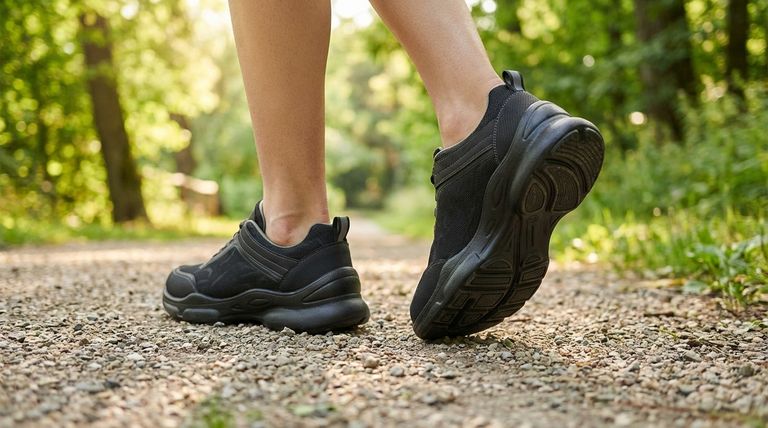
The Anatomy of a Proper Fit for Wide Feet
Finding the right shoe involves understanding the key structural elements that accommodate a wider foot. Standard shoes are often built on a narrow last, which is the mold that gives a shoe its shape, causing discomfort and potential foot problems.
Beyond the Label: True Width vs. Sizing Up
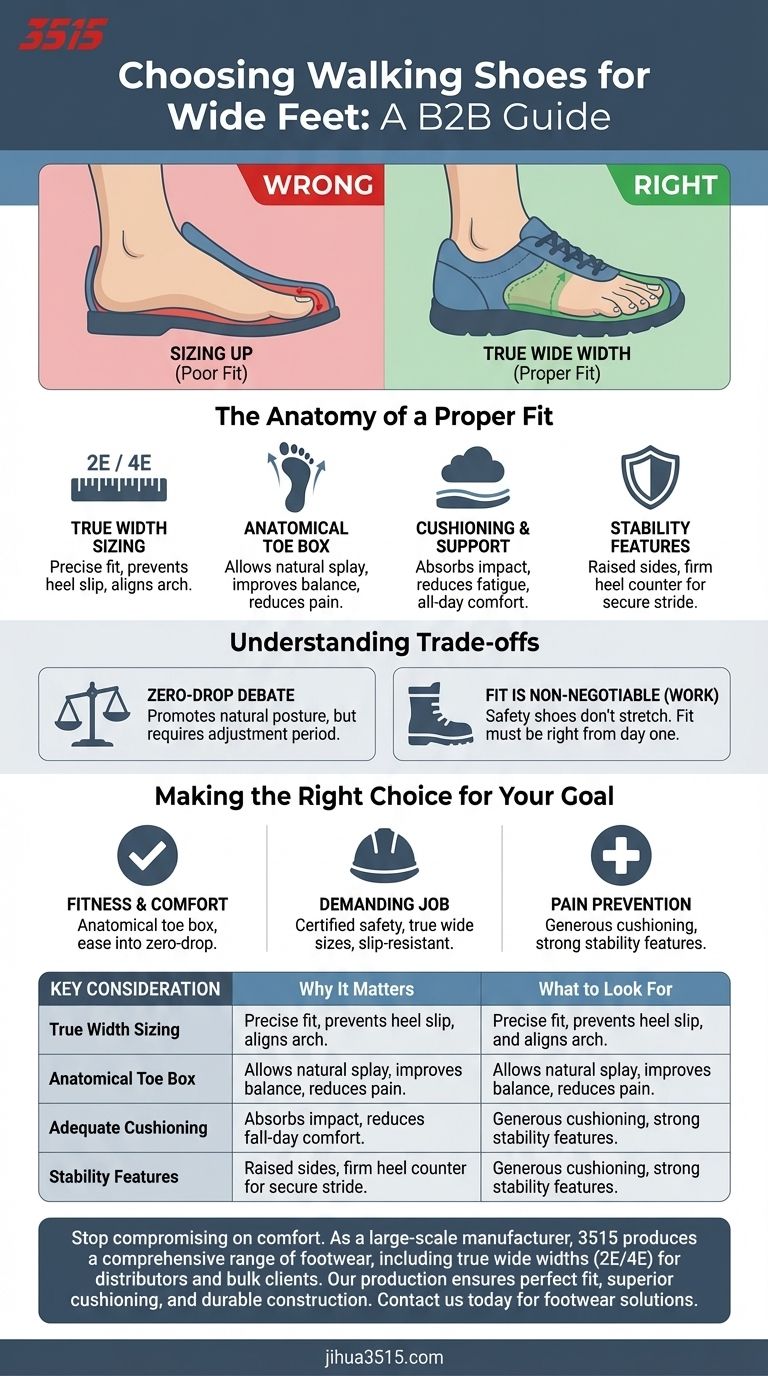
The most common mistake is choosing a longer shoe size to gain more width. This compromises the fit, causing your heel to slip and the shoe's arch support and flex point to be misaligned with your foot.
Instead, look for shoes that offer specific width sizing, often designated with letters like "D" (standard), "2E" (wide), and "4E" (extra wide). This ensures the entire shoe, from heel to toe, is scaled correctly for a wider foot.
The Critical Role of the Toe Box
A cramped toe box is the primary source of pain for those with wide feet. It can lead to bunions, hammertoes, and general discomfort.
Look for an anatomically correct or "foot-shaped" toe box. This design is wider at the forefoot, allowing your toes to spread out naturally as you walk, which improves balance and reduces pressure.
Cushioning and Support for All-Day Comfort
Walking places consistent stress on your feet. Ample cushioning is essential to absorb impact and reduce fatigue, especially since wider feet can alter pressure distribution across the sole.
A well-cushioned midsole, combined with a supportive insole, provides the foundation for all-day comfort. This is crucial whether you are walking for fitness or standing for long hours at work.
Stability Features for a Secure Stride
Many people with wide feet find their foot can "spill over" the edge of the sole in a standard shoe. This creates instability and increases the risk of rolling an ankle.
Features like raised sides or a supportive "heel counter" help lock your foot into place. This ensures your foot stays centered over the shoe's supportive platform, providing a more stable and secure stride.
Understanding the Trade-offs
No single shoe is perfect for every person or situation. Understanding the key design choices and their implications will help you select the best option for your specific needs.
The Zero-Drop Debate
Some walking shoes feature a "zero heel-to-toe drop," meaning the heel and forefoot are at the same height, mimicking a natural, barefoot stride.
While this can promote better posture and a more natural gait, it also places more strain on the Achilles tendon and calf muscles. If you are new to zero-drop shoes, they require a gradual adjustment period to avoid injury.
Fit is Non-Negotiable, Especially for Work
Unlike casual shoes, work or safety shoes often use rigid materials and will not "break in" or stretch over time. An improper fit on day one will remain an improper fit.
If you require safety features, ensure they don't compromise the fit. For example, a protective toecap should provide protection without cramping your toes. Always prioritize a shoe that fits correctly from the moment you try it on.
Making the Right Choice for Your Goal
Your ideal shoe depends entirely on how you plan to use it. By aligning the shoe's features with your primary activity, you can ensure optimal performance and comfort.
- If your primary focus is natural comfort and fitness: Prioritize a shoe with an anatomical toe box and consider a zero-drop design, but be sure to ease into it.
- If your primary focus is all-day support at a demanding job: Seek out certified safety shoes available in true wide sizes (2E, 4E) with slip-resistant soles.
- If your primary focus is preventing foot fatigue and pain: Emphasize a combination of generous cushioning and strong stability features, like a firm heel counter and supportive sides.
Ultimately, finding the right walking shoe for wide feet means refusing to compromise on a fit that honors the natural shape of your foot.
Summary Table:
| Key Consideration | Why It Matters | What to Look For |
|---|---|---|
| True Width Sizing | Prevents heel slippage and misaligned arch support from sizing up. | Look for specific width designations like 2E (Wide) or 4E (Extra Wide). |
| Anatomical Toe Box | Allows toes to splay naturally, reducing pain and improving balance. | A "foot-shaped" design that is wider at the forefoot. |
| Adequate Cushioning | Absorbs impact and reduces foot fatigue during long walks or standing. | A well-cushioned midsole and supportive insole. |
| Stability Features | Prevents the foot from spilling over the sole, enhancing security. | Raised sides and a firm heel counter to lock the foot in place. |
Stop compromising on comfort. As a large-scale manufacturer, 3515 produces a comprehensive range of footwear, including walking shoes in true wide widths (2E/4E) designed for the unique needs of distributors, brand owners, and bulk clients. Our production capabilities ensure a perfect fit, superior cushioning, and durable construction for all-day support. Contact us today to discuss your specific requirements and discover how we can provide the right footwear solutions for your customers.
Visual Guide
Related Products
- Durable Leather High-Ankle Tactical Boots for Wholesale & Custom Manufacturing
- Durable Rubber Sole Outdoor Shoes Wholesale & Custom Manufacturing
- Durable High-Ankle Tactical Boots Wholesale Manufacturer for Custom & Bulk Orders
- Wholesale Durable Camouflage Canvas Shoes with High-Traction Cleated Rubber Sole
- Wholesale Durable Camo Canvas Shoes with High-Traction Rubber Soles
People Also Ask
- How do military uniforms and tactical boots impact the prediction of thermal risk? Essential Safety Insights
- How does the material of tactical boots affect their performance? Choose the Right Material for Your Mission
- Why is sequential analysis utilized to evaluate tactical boots? Master Dynamic Boot Development and Ergonomic Performance
- How do tactical boots differ from regular boots? Performance, Durability & Design Explained
- What are the primary differences between tactical boots and combat boots? Choose the Right Boot for Your Mission