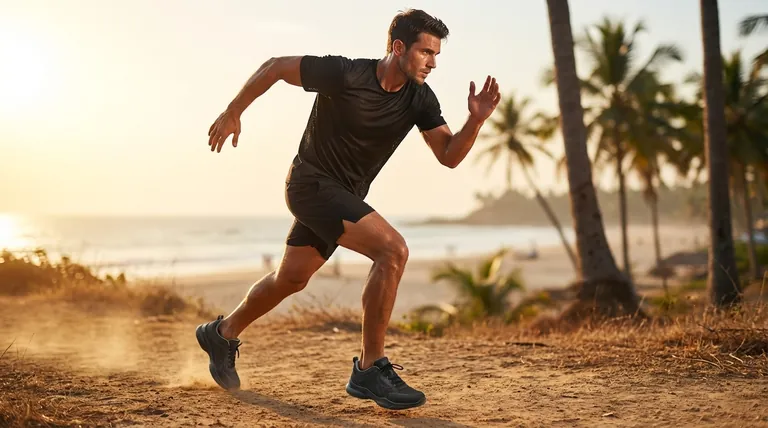
For athletic activities in warm climates, the best materials are synthetic fabrics like nylon and polyester, especially when constructed as a mesh. These materials excel because they are engineered to manage sweat and heat through superior breathability, moisture-wicking capabilities, and quick-drying properties, keeping you comfortable and performing optimally.
The most critical factor isn't a single "best" material, but rather a fabric's ability to pull moisture away from your skin and allow it to evaporate quickly. In warm climates, managing sweat is the key to managing your body temperature.
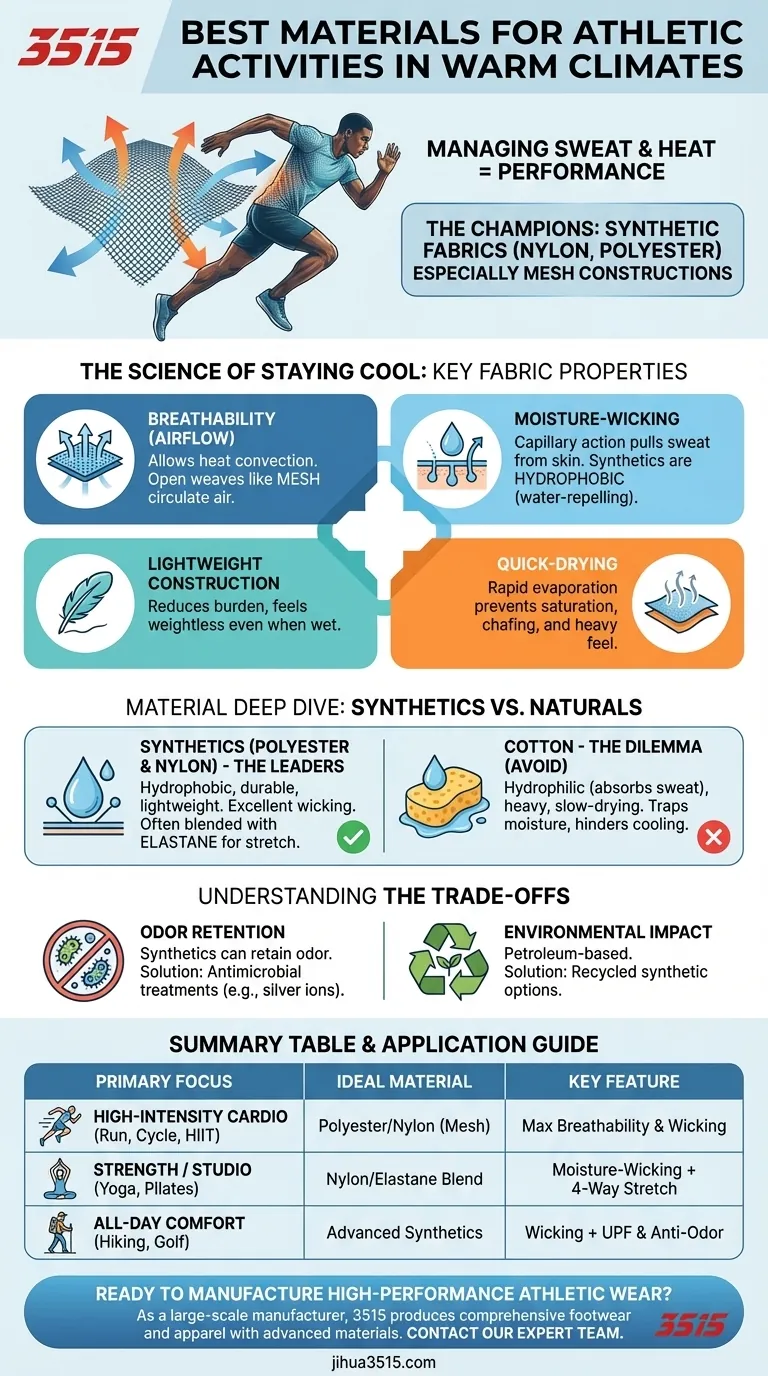
The Science of Staying Cool: Key Fabric Properties
To understand why certain materials are superior, you must first understand the core principles that govern performance fabrics in hot conditions. It's less about the specific polymer and more about how these properties work together.
Breathability (Airflow)
Breathability refers to a fabric's ability to allow air to pass through it. This airflow is crucial for convection, the process of heat moving away from your body.
Fabrics with an open or loose weave, like mesh, are specifically designed to maximize this effect. They act like vents, constantly circulating air to help cool your skin.
Moisture-Wicking
This is perhaps the most important property. Moisture-wicking is the active process of pulling sweat from the surface of your skin to the outer layer of the fabric.
This is achieved through capillary action. Synthetic fibers are generally hydrophobic (water-repelling), so they resist absorbing moisture and instead push it outwards, away from your body.
Lightweight Construction
Heavy fabrics become a significant burden, especially when saturated with sweat. Lightweight materials reduce physical strain and improve overall comfort.
Nylon and polyester can be woven into extremely fine, light threads, creating garments that feel almost weightless and don't cling uncomfortably when wet.
Quick-Drying
A direct result of moisture-wicking is the ability to dry quickly. Once sweat is transported to the fabric's surface, the increased airflow can evaporate it rapidly.
This prevents the fabric from becoming saturated, which would otherwise lead to chafing, a heavy feel, and a drop in performance.
Material Deep Dive: Synthetics vs. Naturals
The choice of fiber is the foundation for all the properties mentioned above. The fundamental differences between synthetic and natural fibers dictate their performance in the heat.
The Synthetic Champions: Polyester and Nylon
Polyester and nylon are the undisputed leaders in warm-weather athletic wear. Their hydrophobic nature makes them exceptional at wicking moisture rather than absorbing it.
They are also highly durable, lightweight, and can be engineered into various textures and weaves, such as mesh, to enhance airflow.
The Role of Elastane (Spandex/Lycra)
You will almost always find polyester or nylon blended with a small amount of elastane. This material provides stretch and shape retention, allowing for a full range of motion without restricting movement.
The Natural Fiber Dilemma: The Case of Cotton
Cotton is a classic example of what not to wear for intense activity in the heat. As a hydrophilic (water-absorbing) fiber, it acts like a sponge.
It soaks up sweat, becomes heavy, clings to the skin, and takes a very long time to dry. This traps moisture against your body, which can surprisingly make you feel colder and clammy once you stop moving, and significantly hinders the cooling process during exercise.
Understanding the Trade-offs
No material is perfect. Acknowledging the downsides is key to making an informed decision that aligns with your priorities.
Odor Retention in Synthetics
The primary drawback of synthetic fabrics is their tendency to retain odor-causing bacteria more than natural fibers. The structure of the fibers can be a breeding ground for microbes.
To combat this, many modern performance garments include an antimicrobial treatment (often using silver ions) to inhibit bacterial growth and reduce odor.
The "Feel" Factor
Some people simply prefer the soft, natural feel of cotton against their skin for low-intensity situations. While synthetics have improved dramatically, some can have a "slick" or "plastic-y" feel that not everyone enjoys.
Environmental Impact
Polyester and nylon are derived from petroleum. For environmentally conscious consumers, this is a significant trade-off. However, many brands now offer options made from recycled synthetics, which helps mitigate this concern.
How to Apply This to Your Activity
Your specific needs will dictate the ideal material choice. Use your primary goal as your guide.
- If your primary focus is high-intensity cardio (running, cycling, HIIT): Prioritize garments made almost entirely of polyester or nylon, ideally with a mesh construction in high-sweat zones.
- If your primary focus is strength training or studio classes (yoga, Pilates): A nylon/elastane blend offers the perfect combination of moisture-wicking and four-way stretch for unrestricted movement.
- If your primary focus is all-day comfort during light activity (hiking, golf): Look for advanced synthetic fabrics with added features like UPF sun protection and anti-odor technology.
Ultimately, choosing the right material is about equipping your body to regulate its temperature effectively, allowing you to perform better and stay safer in the heat.
Summary Table:
| Key Fabric Property | Why It Matters in Warm Climates | Best Materials |
|---|---|---|
| Moisture-Wicking | Pulls sweat away from skin to cool you down | Polyester, Nylon |
| Breathability | Allows air to circulate and release heat | Mesh constructions |
| Quick-Drying | Prevents heavy, clingy fabric and chafing | Synthetics (avoid Cotton) |
| Lightweight | Reduces physical strain and improves comfort | Fine synthetic weaves |
Ready to manufacture high-performance athletic wear for warm climates?
As a large-scale manufacturer, 3515 produces a comprehensive range of footwear and apparel for distributors, brand owners, and bulk clients. Our production capabilities encompass all types of performance shoes, boots, and technical garments designed with the advanced moisture-wicking and breathable materials discussed in this article.
We can help you create products that keep athletes cool, dry, and performing at their best. Contact our expert team today to discuss your manufacturing needs and bring your high-performance line to life.
Visual Guide
Related Products
- Athletic Safety Shoes with Dial Closure & Steel Toe for Wholesale & Custom Manufacturing
- Wholesale Breathable Training Shoes Custom Athletic Footwear Manufacturer
- Wholesale Breathable Athletic Sneakers - Custom Lightweight Cushioned Footwear Manufacturer
- Premium KPU Athletic Safety Shoes for Wholesale
- Wholesale Lightweight Cushioned Athletic Sneakers for Custom Bulk Production
People Also Ask
- What are the primary protective functions of safety shoes with steel toes in the automotive repair industry?
- In what ways do high-performance Athletic Shoes support stability and proprioception? Enhance Your Movement Precision
- Why are athletic shoes recommended for walking? The Key to Joint Protection and Injury Prevention
- What is the importance of grip in athletic footwear? Prevent Lower Limb Injuries with Optimal Slip Resistance
- How do specialized lightweight foam midsole materials contribute to the performance and safety of athletic shoes?