
At its core, the difference between non-slip athletic shoes and regular athletic shoes is engineered into the outsole. While regular athletic shoes balance comfort, support, and durability, non-slip versions add a critical layer of specialized technology focused exclusively on maximizing grip. This is achieved through unique rubber compounds and intricate, multidirectional tread patterns designed to increase friction on slippery or unpredictable surfaces.
The fundamental distinction is not just about having treads, but about purpose-built engineering. Non-slip athletic shoes employ specific sole materials and patterns designed to provide superior traction for activities where stability is paramount, whereas regular athletic shoes often prioritize cushioning or durability for more predictable environments.
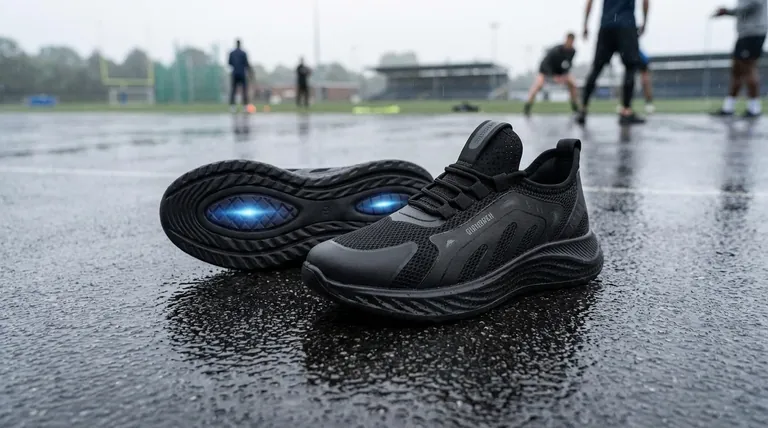
Deconstructing the "Non-Slip" Advantage
The term "non-slip" refers to a system of features working together. The most significant innovations are found in the part of the shoe that meets the ground.
The Outsole Material
The primary material used is a high-grade, often softer rubber compound. This formulation is engineered to create more friction against surfaces, effectively "sticking" better than the harder, more durable rubber found on many standard running shoes.
The Tread Pattern's Role
The design carved into the outsole is not arbitrary. Non-slip athletic shoes feature multidirectional or hexagonal tread patterns designed for optimal grip.
These intricate patterns create multiple edges to grab a surface from any angle. They also serve to channel water and debris away from the contact points, maintaining a secure connection on wet asphalt, gym floors, or trails.
Stability Beyond the Sole
True stability also comes from how the shoe holds your foot. Many non-slip designs incorporate features like cushioned insoles and roomy toe boxes.
These elements ensure your foot remains stable and comfortable inside the shoe, preventing internal sliding that can compromise balance during quick movements. Some models also feature water-resistant uppers to keep feet dry, further enhancing stability and comfort.
Understanding the Trade-offs
Choosing a shoe with enhanced grip involves considering its specific design purpose. A specialized tool is not always the best for every general task.
Durability vs. Grip
The softer rubber compounds that provide excellent grip can sometimes wear down faster than the harder rubber used in shoes built for high-mileage road running. The focus on friction can come at the cost of long-term durability on abrasive surfaces like pavement.
Specialization vs. Versatility
A shoe with deep lugs designed for a muddy trail will provide exceptional grip there but may feel awkward or unstable on a smooth basketball court. Conversely, a court shoe's grip pattern is less effective on loose dirt. Regular athletic shoes are often designed for more general, all-around use.
Making the Right Choice for Your Activity
Selecting the right shoe depends entirely on the demands of your environment and sport.
- If your primary focus is trail running or outdoor sports: Choose a non-slip athletic shoe with deep, aggressive, and multidirectional tread patterns for reliable grip on dirt, mud, and uneven terrain.
- If your primary focus is indoor court sports like basketball or tennis: Look for non-slip shoes with herringbone or hexagonal patterns designed to maximize surface contact and grip during sharp lateral movements.
- If your primary focus is general fitness or road running in dry conditions: A regular athletic shoe is often the ideal choice, prioritizing the right balance of cushioning, support, and durability for that specific activity.
Ultimately, choosing the right athletic shoe is about matching its engineered purpose to your performance needs.
Summary Table:
| Feature | Non-Slip Athletic Shoes | Regular Athletic Shoes |
|---|---|---|
| Primary Focus | Maximizing grip and stability on slippery surfaces | Balancing comfort, support, and durability for general use |
| Outsole Material | Softer, high-friction rubber compound | Harder, more durable rubber |
| Tread Pattern | Multidirectional, hexagonal for water/debris dispersion | Varies by activity (e.g., running, cross-training) |
| Best For | Wet floors, trails, court sports requiring lateral grip | Road running, general fitness in predictable conditions |
Need high-performance non-slip athletic shoes for your customers?
As a large-scale manufacturer, 3515 produces a comprehensive range of footwear for distributors, brand owners, and bulk clients. Our production capabilities encompass all types of shoes and boots, including specialized non-slip athletic footwear engineered for superior traction and durability.
We can help you source the perfect footwear to meet your market's specific demands.
Contact our team today to discuss your production needs and get a quote!
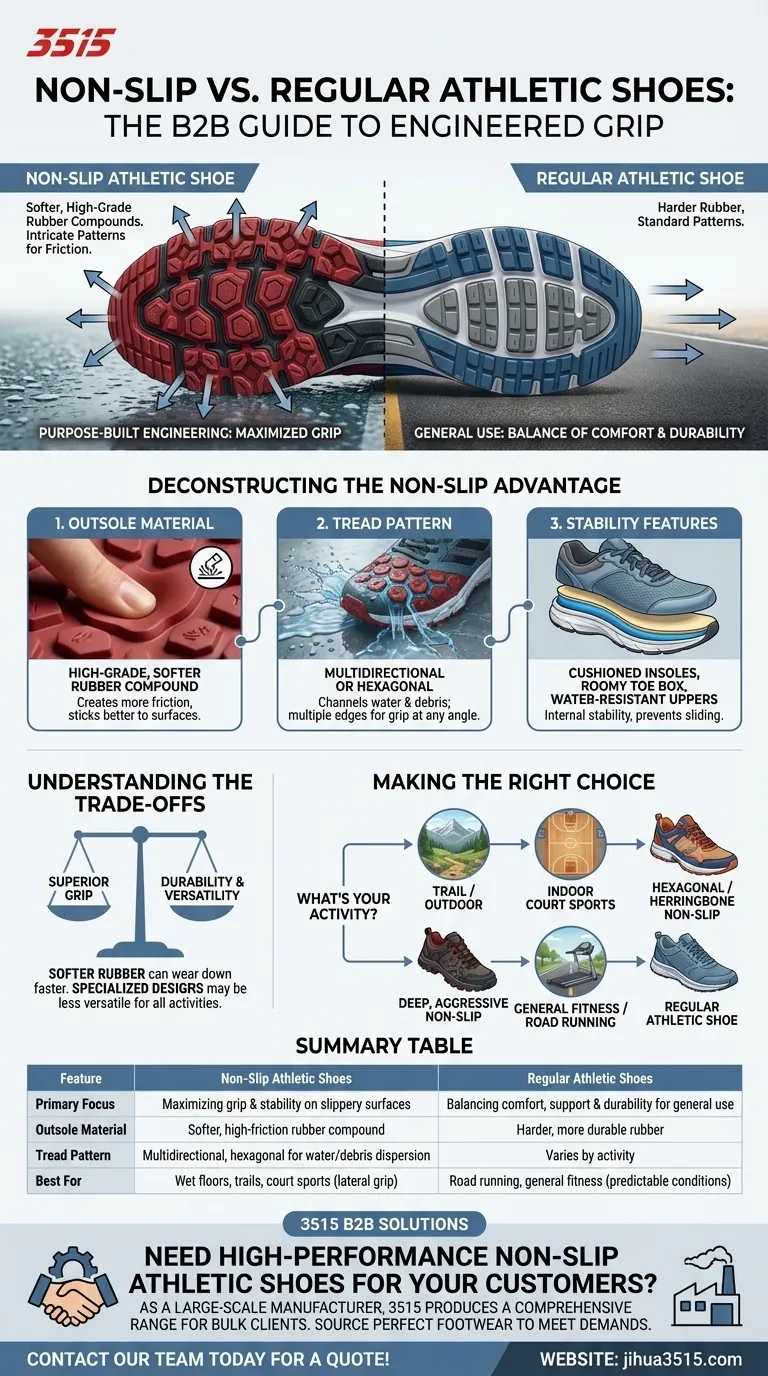
Visual Guide
Related Products
- Advanced KPU Athletic Safety Shoe with Steel Toe Cap Anti-Slip Rotary Lacing System
- Premium Suede Sport Safety Shoes for Wholesale & Bulk Orders
- Wholesale Lightweight Cushioned Athletic Sneakers for Custom Bulk Production
- Wholesale Durable & Breathable Training Shoes for Custom Brands
- Wholesale Breathable Training Shoes Custom Athletic Footwear Manufacturer
People Also Ask
- What are the key differences between steel toe and composite toe caps? Choose the Right Safety for Your Job
- What impact do steel toe caps have on toe skin health? Prevent Friction and Pressure in Your Safety Shoes
- What are the primary protective functions of safety shoes with steel toes in the automotive repair industry?
- What type of safety shoe is recommended for workers exposed to heavy machinery? Steel Toe Boots for Ultimate Protection
- How does defining specific friction interface models in FEA assist in predicting safety shoe toe cap failure modes?



















