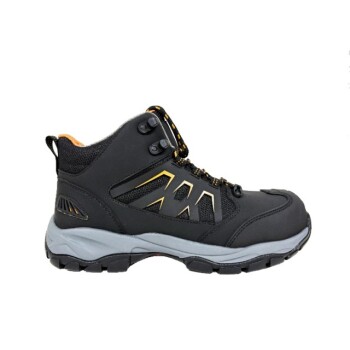
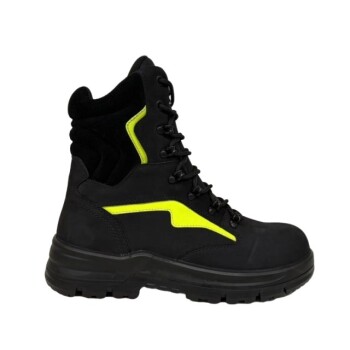
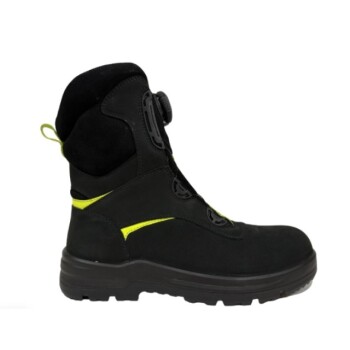
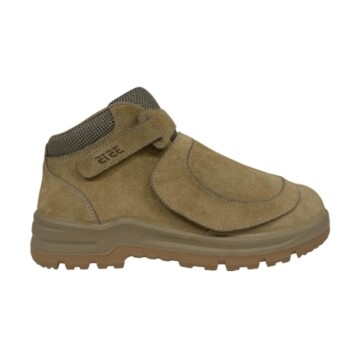
Specialized protective footwear serves a dual purpose in rice paddies: it acts as an impermeable barrier against toxic chemicals and provides essential stability on hazardous terrain. By isolating the feet from pesticide-laden water and soil, these boots prevent dangerous dermal absorption while simultaneously reducing the risk of mechanical injuries caused by slipping.
In the waterlogged environment of a rice paddy, standard footwear is insufficient. The critical value of specialized tall boots lies in their ability to block the pathway of pesticide absorption through submerged skin while providing the traction necessary to navigate slippery, uneven mud safely.
The Critical Barrier Against Chemical Exposure
Preventing Dermal Absorption
Rice paddies present a unique risk because pesticides accumulate in the standing water, mud, and surface runoff.
Without protection, the skin on the feet and legs remains in constant contact with this chemical mixture. Specialized boots create a sealed environment that prevents this contaminated water from making direct contact with the skin, effectively stopping absorption.
Utilizing Chemically Inert Materials
Not all waterproof materials offer safety; the footwear must be composed of chemically inert materials, such as specific rubbers.
These materials do not degrade or saturate when exposed to agricultural chemicals. This ensures that the boots function as a true blockade rather than a sponge, maintaining their protective integrity throughout the application process.
Navigating Hazardous Terrain
Preventing Mechanical Injuries
Beyond chemical risks, the physical environment of a paddy is treacherous.
Slippery mud and concealed underwater obstacles make falls a common workplace hazard. Professional slip-resistant designs are necessary to provide traction, significantly lowering the probability of mechanical injuries such as falls or twisted ankles.
Resistance to Punctures and Abrasions
The agricultural environment is harsh and abrasive.
Specialized boots—often referred to as closed rubber boots—are designed to withstand physical wear. They provide resistance against punctures and abrasions that would compromise lighter footwear, ensuring the chemical barrier remains unbroken even in rough conditions.
Understanding the Limitations
Coverage Gaps
While tall boots protect the feet and lower calves, they cannot offer complete protection in isolation.
Because splashes occur and vegetation is wet, rely on boots alone leaves the upper legs vulnerable. For comprehensive safety, boots must be paired with chemical-resistant trousers to ensure no skin is exposed between the boot top and the hem of the pants.
The "Closed" Environment
The same seal that keeps chemicals out also traps heat and moisture inside.
While this is necessary for protection, users must be aware that "closed" rubber boots reduce breathability. This is a necessary trade-off to ensure the absolute exclusion of pesticide-laden fluids.
Making the Right Choice for Your Goal
To ensure maximum safety during pesticide application, select footwear based on the specific hazards of your terrain.
- If your primary focus is preventing chemical toxicity: Prioritize chemically inert materials and tall boot shafts that integrate seamlessly with protective trousers to eliminate skin exposure.
- If your primary focus is physical stability: Look for professional slip-resistant soles and reinforced structures to prevent falls on slick, submerged soil.
True protection in a rice paddy requires a solution that addresses the invisible chemical threat as effectively as the visible physical one.
Summary Table:
| Feature | Primary Function | Protective Benefit |
|---|---|---|
| Chemically Inert Rubber | Blocks pesticide penetration | Prevents dermal toxicity and material degradation |
| Tall Boot Shaft | Increases coverage area | Protects lower legs from contaminated splashes |
| Slip-Resistant Soles | Enhances traction | Prevents falls and mechanical injuries in slippery mud |
| Puncture Resistance | Durable outer shell | Maintains barrier integrity against sharp underwater debris |
Secure Your Workforce with Professional Protective Footwear
As a large-scale manufacturer serving distributors and brand owners, 3515 offers comprehensive production capabilities for all footwear types, anchored by our flagship Safety Shoes series. We understand the rigorous demands of agricultural and industrial environments, providing high-quality, chemically inert, and slip-resistant solutions that safeguard workers.
Our extensive portfolio covers work and tactical boots, outdoor shoes, training shoes, and sneakers, as well as Dress & Formal shoes to meet your diverse bulk requirements. Partner with 3515 to leverage our expertise in durable construction and advanced safety standards.
Contact Us Today to Discuss Your Bulk Requirements
References
- Joss Bryan, Anderias Umbu Roga. Relationship between Behavior and Work Accident in Rice Farmers using Pesticides in Oebobo Village, Batu Putih District. DOI: 10.14710/ajlm.2022.16715
This article is also based on technical information from 3515 Knowledge Base .
Related Products
- Wholesale Leather Safety Boots with Customizable Protective Toe
- Premium Grain Leather Safety Boots for Bulk Supply
- Wholesale Customizable Safety Boots Durable & Protective Footwear Manufacturing
- Premium Sport Style Safety Boots for Bulk Orders
- Premium Wholesale Waterproof Safety Boots High Performance Protection for Industrial Markets
People Also Ask
- How do safety boots provide toe protection? A Guide to Steel vs. Composite Caps
- What workplace hazards do safety toe boots protect against? Comprehensive Protection Guide
- What are the OSHA and ASTM standards for safety toe boots? Ensure Your Footwear is Fully Compliant
- What do the symbols M, F, I, and C represent on safety toe boots? Decode ASTM F2413 for Maximum Protection
- What are the different types of safety toe boots available? Choose the Right Protection for Your Job