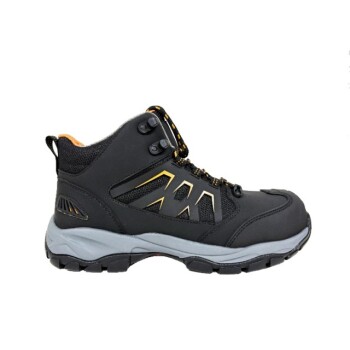
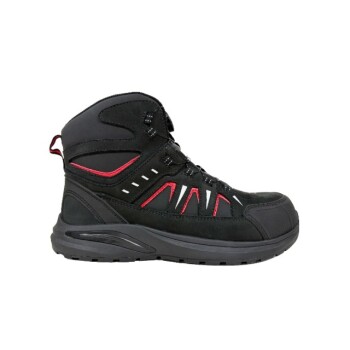
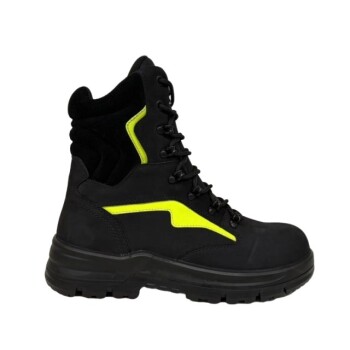
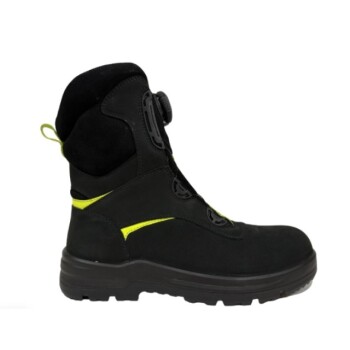
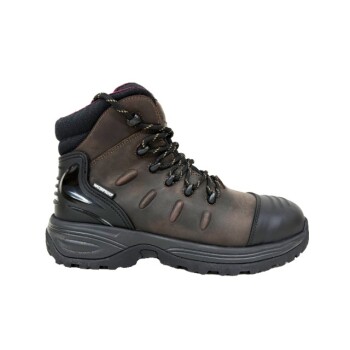
At its core, a safety toe boot is designed to protect you from impact and compression, but the material used for that protection varies significantly. The three primary types of safety toe boots are steel toe, composite toe, and alloy toe, each offering a distinct combination of protection, weight, and environmental suitability.
Choosing the right safety toe isn't about finding the "strongest" option, as all certified boots must meet the same minimum safety standards. The real decision hinges on which material best suits the specific hazards and requirements of your work environment.
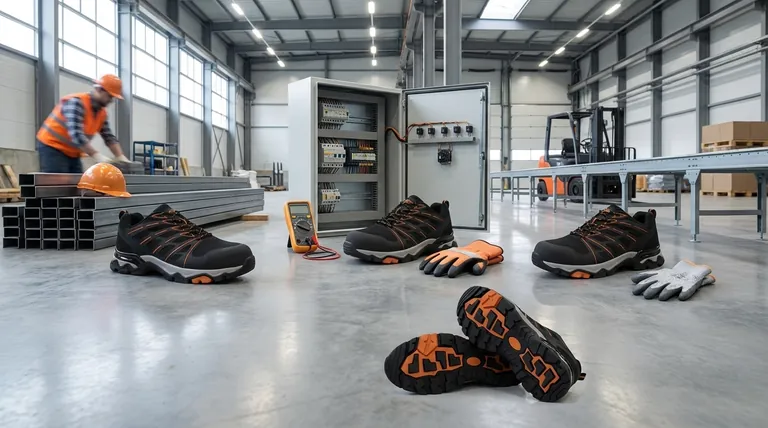
What "Safety Toe" Really Means: The ASTM Standard
Before comparing materials, it's crucial to understand the baseline protection they all must provide. To be rated as a safety toe, footwear must meet standards set by ASTM International for impact and compression resistance.
Impact Resistance (I/75)
A safety toe must protect the wearer's foot by maintaining a minimum interior clearance after a 75 foot-pound impact. This simulates a heavy object being dropped on the foot.
Compression Resistance (C/75)
The toe cap must also maintain that same minimum clearance when subjected to a 2,500-pound compressive force. This tests the boot's ability to withstand a slow crushing or rolling force.
A Breakdown of Safety Toe Materials
With the safety standard as a baseline, the choice of material comes down to its secondary characteristics.
Steel Toes: The Classic Standard
Steel is the traditional material for safety toes, known for its exceptional strength and durability.
Because of its strength, a steel toe cap can be made relatively thin, resulting in a less bulky boot profile compared to some composite alternatives.
Composite Toes: The Modern Alternative
Composite toes are made from non-metallic materials like carbon fiber, plastic, or Kevlar.
Their primary advantage is that they are much lighter than steel and do not conduct electricity, heat, or cold. This makes them ideal for electricians or those working in extreme temperatures.
Alloy Toes: The Lightweight Metal Option
Alloy toes are crafted from lightweight metals such as aluminum or titanium.
They provide the impact and compression resistance of a metal toe cap but are significantly lighter than steel, often by 30-50%. This reduces foot fatigue over a long workday.
Understanding the Trade-offs
Each material comes with a unique set of pros and cons that make it better suited for certain jobs.
Protection vs. Weight
While all meet the same minimum standard, steel is often associated with the highest level of rugged protection. However, this comes at the cost of being the heaviest option. Both composite and alloy toes offer significant weight savings.
Environmental Factors: Electricity and Temperature
This is where composite toes have a clear advantage. Steel and alloy are conductors, making them unsuitable for certain electrical hazard environments. They also readily transfer heat and cold, which can be uncomfortable in extreme weather.
Workplace Constraints: Metal Detectors
If your job requires passing through metal detectors, composite toes are the only practical choice. Both steel and alloy will trigger security screening, causing daily delays and inconvenience.
A Note on Metatarsal Guards
You may also encounter boots with metatarsal guards. This is an additional piece of safety equipment, not a type of toe cap. It's a rigid shield that covers the top of your foot (the metatarsal bones) to protect against heavy falling objects.
How to Choose the Right Boot for Your Job
Your daily tasks and work environment are the ultimate guide to selecting the correct safety toe.
- If your primary focus is heavy industry or construction: Steel toe offers proven, heavy-duty protection in a less bulky profile.
- If you work with electrical hazards or in extreme temperatures: Composite toe is the non-conductive, insulating choice for safety and comfort.
- If you need metal-grade protection but want to reduce weight and fatigue: Alloy toe provides a lighter-weight alternative to traditional steel.
- If you frequently pass through security checkpoints: Composite toe boots will save you time and hassle by not triggering metal detectors.
Ultimately, understanding these material differences empowers you to select footwear that protects you effectively without compromising on comfort or job-specific needs.
Summary Table:
| Type | Key Material | Primary Advantages | Ideal For |
|---|---|---|---|
| Steel Toe | Steel | High strength, durable, less bulky profile | Heavy industry, construction |
| Composite Toe | Carbon fiber, Kevlar, Plastic | Lightweight, non-conductive, metal detector safe | Electrical work, extreme temperatures, security sites |
| Alloy Toe | Aluminum, Titanium | Metal protection, 30-50% lighter than steel | Long shifts, reducing foot fatigue |
Need the Perfect Safety Boot for Your Team?
As a large-scale manufacturer, 3515 produces a comprehensive range of certified safety footwear for distributors, brand owners, and bulk clients. Our production capabilities encompass all types of safety toe boots and boots, ensuring you get the right combination of protection, comfort, and durability.
Let us help you equip your workforce with the best.
Contact us today for a consultation to discuss your specific needs and volume requirements.
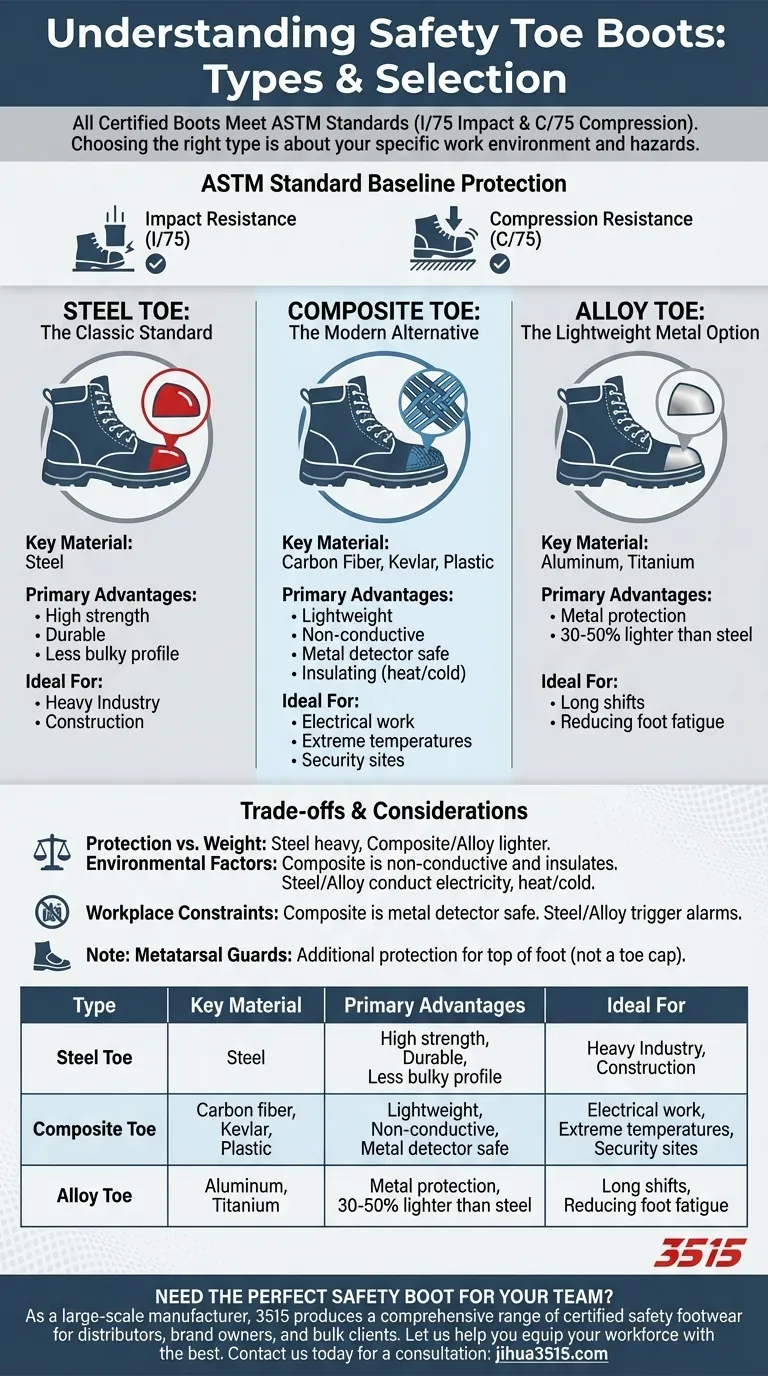
Visual Guide
Related Products
- Puncture-Resistant Velcro Safety Boots for Wholesale & Custom Manufacturing
- Durable Steel Toe Safety Boots Wholesale & Custom Manufacturing
- Wholesale Leather Safety Boots with Customizable Protective Toe
- Wholesale Durable Breathable Safety Boots Custom OEM Manufacturer
- Customizable Anti-Smash Safety Boots for Wholesale & Private Label Manufacturing
People Also Ask
- Why are industrial safety boots with steel toes necessary for machine operators? Essential Foot Protection for Safety
- What are the characteristics of steel toe safety boots? Maximum Protection, Key Trade-offs
- Is it true that steel toes can cause toes to get cut off? Debunking the Dangerous Myth
- What are the primary safety functions of safety boots with steel-toe designs? Essential Protection for Industry
- What do the symbols M, F, I, and C represent on safety toe boots? Decode ASTM F2413 for Maximum Protection