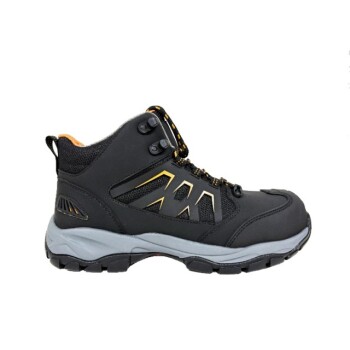
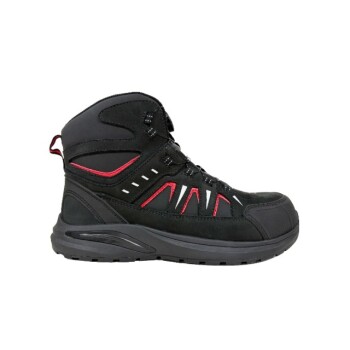
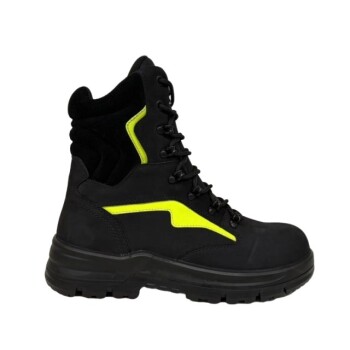
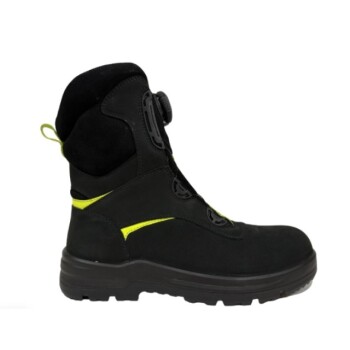
At a glance, the symbols on a safety toe boot's tag define its specific protective features according to a national standard. M and F designate the boot is built for a Male or Female foot, while I indicates its resistance to Impact and C indicates its resistance to Compression.
These markings are not arbitrary; they are part of the ASTM F2413 standard, a specific code that tells you exactly how much force the boot’s protective toe cap can withstand. Understanding this code is the key to ensuring you have the right protection for your specific work environment.
Decoding the ASTM F2413 Standard
The letters and numbers you see on a safety boot's tongue or tag are a shorthand for its official safety certification. This system ensures that a boot claiming to be "protective" has met a verifiable, standardized level of performance.
The Basics: M, F, I, and C
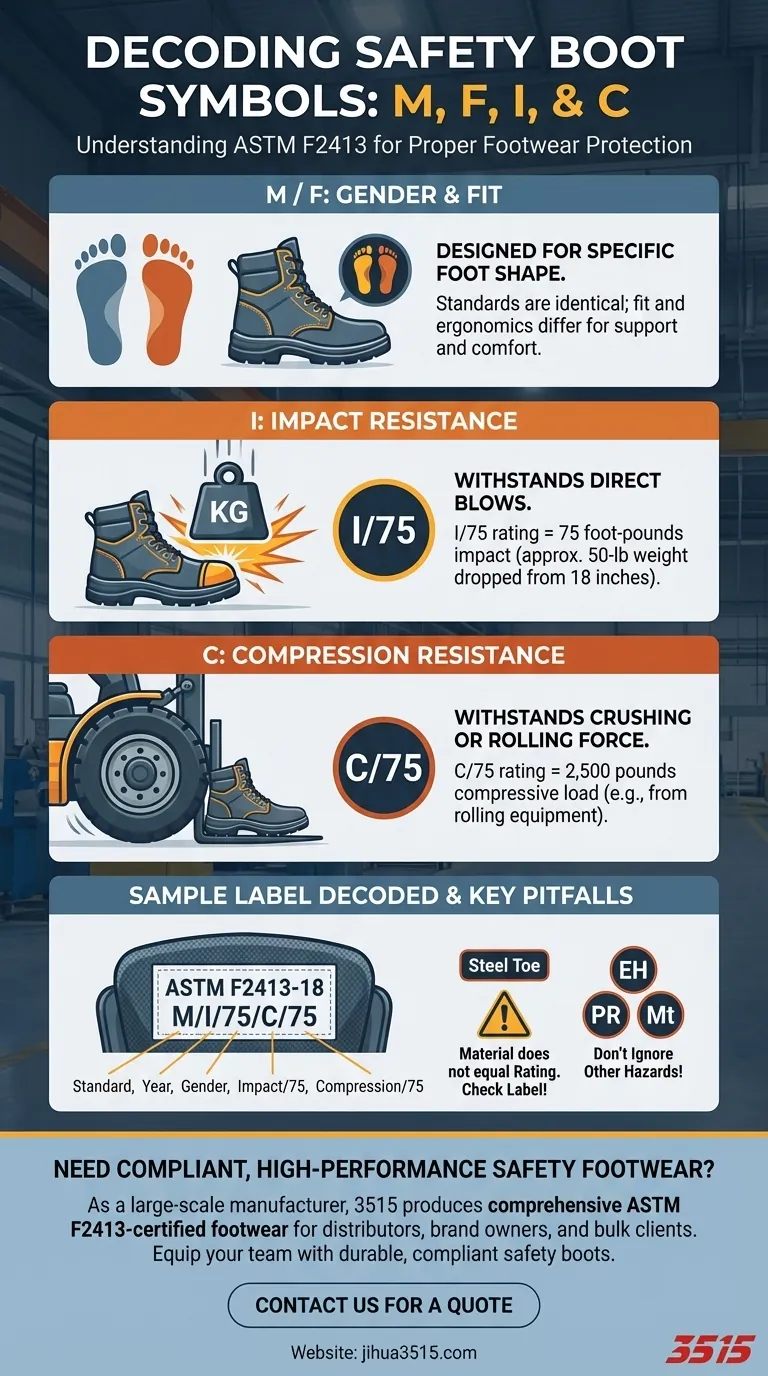
- M / F (Gender): This simply indicates whether the boot was constructed on a last (a foot-shaped model) designed for a male or female foot. The safety standards are the same, but the fit and ergonomics are different.
- I (Impact): This rating measures the toe cap's ability to protect your foot from a direct blow. It signifies the boot has been tested by dropping a weight onto the toe from a specific height.
- C (Compression): This rating measures the toe cap's ability to protect your foot from a crushing or rolling force. It's tested by applying a heavy, steady pressure to the toe area.
Understanding the Numbers: 75 or 50?
You will almost always see a number, typically 75, after the I and C ratings (e.g., I/75, C/75). This number is the most critical part of the rating.
- An I/75 rating means the safety toe can withstand an impact of 75 foot-pounds. This is equivalent to dropping a 50-pound weight from a height of about 18 inches.
- A C/75 rating means the safety toe can withstand a compressive load of 2,500 pounds before it will crack or break. This is the force you might experience if a forklift or heavy cart were to roll over your foot.
While a "50" rating exists, the "75" rating is the highest standard for safety toe footwear and is what you will encounter on virtually all modern, compliant safety boots.
Putting It All Together: A Sample Label
A typical full rating line on a boot tag might look like this: ASTM F2413-18 M/I/75/C/75.
- ASTM F2413: The name of the performance standard.
- 18: The year the standard was updated (in this case, 2018).
- M: Made for a male foot.
- I/75: Meets the highest standard for impact resistance.
- C/75: Meets the highest standard for compression resistance.
Common Pitfalls and Misconceptions
Simply buying a "steel toe boot" is not enough. The specific ratings are what guarantee your safety and compliance with workplace rules.
Assuming All Safety Toes are Equal
The term "steel toe" is often used generically, but the protective cap can be made of steel, aluminum, or composite materials. Regardless of the material, if a boot is sold as protective footwear in the US, it must meet the ASTM I/75 and C/75 standards. The label is your proof.
Ignoring Other Hazard Ratings
Impact and compression are just two potential hazards. The ASTM standard includes codes for many other protections, and you may see additional markings on the tag, such as:
- EH: Electrical Hazard resistance.
- PR: Puncture Resistance for the sole.
- Mt: Metatarsal protection for the top of the foot.
Overlooking the Importance of Fit (M/F)
While the protective ratings for men's and women's boots are identical, the fit is not. A boot designed for the user's gender will provide better support and comfort, reducing fatigue and the risk of slips, trips, and falls.
Making the Right Choice for Your Goal
Use the boot's certified rating to ensure it matches the risks of your job site.
- If your primary focus is general construction or warehouse work: The I/75 and C/75 ratings should be your non-negotiable baseline for protection against falling objects and rolling equipment.
- If your primary focus is working around heavy machinery or vehicles: Pay special attention to the C/75 rating, as it directly addresses the risk of crushing injuries from high-mass objects.
- If your primary focus is ensuring workplace compliance: Always check your employer's PPE requirements and verify the boot's ASTM label matches those requirements exactly.
Choosing the right safety boot begins with understanding the language written on its tag.
Summary Table:
| Symbol | Meaning | Key Detail |
|---|---|---|
| M / F | Gender (Male/Female) | Indicates the boot's last is designed for a specific foot shape. Safety standards are identical. |
| I/75 | Impact Resistance | Withstands an impact of 75 foot-pounds (e.g., a 50-lb weight dropped from 18 inches). |
| C/75 | Compression Resistance | Withstands a compressive load of 2,500 pounds (e.g., from a rolling forklift). |
Need compliant, high-performance safety footwear for your team?
As a large-scale manufacturer, 3515 produces a comprehensive range of ASTM F2413-certified footwear for distributors, brand owners, and bulk clients. Our production capabilities encompass all types of safety shoes and boots, ensuring your workforce has the right protection for their specific hazards.
Let us help you equip your team with durable, compliant safety boots.
Visual Guide
Related Products
- Puncture-Resistant Velcro Safety Boots for Wholesale & Custom Manufacturing
- Durable Steel Toe Safety Boots Wholesale & Custom Manufacturing
- Wholesale Leather Safety Boots with Customizable Protective Toe
- Wholesale Durable Breathable Safety Boots Custom OEM Manufacturer
- Customizable Anti-Smash Safety Boots for Wholesale & Private Label Manufacturing
People Also Ask
- Why are industrial safety boots with steel toes necessary for machine operators? Essential Foot Protection for Safety
- What are the characteristics of steel toe safety boots? Maximum Protection, Key Trade-offs
- Is it true that steel toes can cause toes to get cut off? Debunking the Dangerous Myth
- What are the primary safety functions of safety boots with steel-toe designs? Essential Protection for Industry
- What are the different types of safety toe boots available? Choose the Right Protection for Your Job