
At their core, Wellington boots are a specialized tool for protection in wet, muddy, and hazardous environments. Their primary uses range from demanding professional settings like agriculture, fishing, and industrial work to practical recreational activities such as gardening, and simply navigating inclement weather.
The defining feature of a Wellington boot is its impermeable, high-shaft, slip-on construction. This simple, robust design is precisely what makes it an indispensable tool for keeping feet dry and protected, from the farm field to the factory floor.
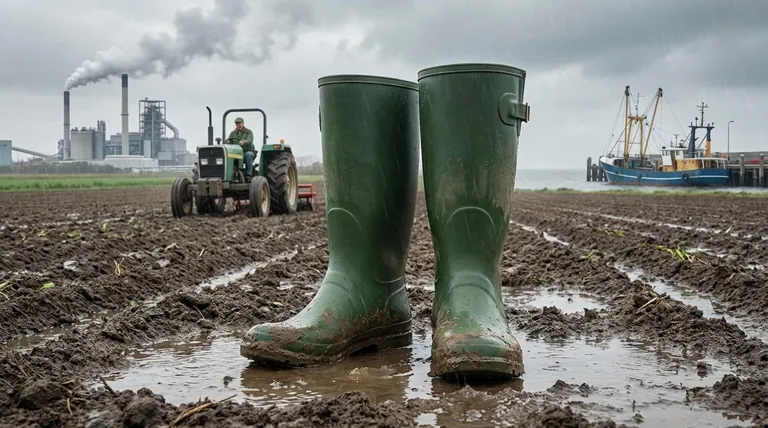
The Anatomy of a Wellington Boot
To understand the uses of Wellington boots, you must first understand their fundamental design principles. Each feature serves a distinct, practical purpose that makes them uniquely suited for challenging conditions.
Impermeable by Design
Wellington boots are traditionally made from high-quality rubber or modern synthetics like neoprene. This creates a fully waterproof barrier, capable of surviving complete submersion without letting moisture penetrate.
The High-Shaft Advantage
The tall shaft is a key characteristic, providing coverage that extends up the lower leg. This design protects not just the foot but also the ankle and shin from deep mud, standing water, chemical splashes, and debris.
Slip-On Simplicity
The lack of laces is intentional. This slip-on style eliminates a key failure point for waterproofing and removes a place for mud and contaminants to collect, making the boots exceptionally easy to clean and sanitize.
A Foundation of Safety
The sole is engineered for performance in slick environments. High-quality Wellies feature deep tread patterns and slip-resistant materials to ensure stable traction on wet concrete, muddy ground, or boat decks.
Primary Uses in Professional Settings
In professional environments, Wellington boots are not a matter of style but of safety and necessity. Specialized versions are built to meet specific industry demands.
Agriculture and Farming
For farmers, the boot's ability to protect against mud, water, and animal waste is essential for hygiene and comfort during long workdays. Their durability and ease of cleaning are critical in these settings.
Industrial and Construction Sites
Safety-rated Wellington boots are a form of personal protective equipment (PPE). They are often reinforced with steel toes for impact protection, puncture-resistant midsoles, and are made from compounds that resist chemicals, oils, and acids.
Fishing and Marine Work
For fishing crews and marine workers, the combination of a waterproof exterior and a high-traction, non-slip sole is vital for safety on constantly wet and moving boat decks.
Versatility in Everyday Life
Beyond the workplace, the same features that make Wellington boots effective for industry make them highly practical for a variety of recreational and daily tasks.
Gardening and Landscaping
Gardeners rely on Wellies to keep their feet clean and dry while working in soil and wet grass. The durable construction protects from sharp tools or thorns, and they can be hosed off easily after use.
Inclement Weather and Outdoor Pursuits
For rainy days, snowy conditions, or muddy music festivals, Wellington boots provide simple and effective protection. Insulated versions add warmth, making them a practical choice for winter weather.
Understanding the Trade-offs
While highly effective for their intended purpose, the design of a Wellington boot presents a few inherent trade-offs you must consider.
Limited Breathability
The same rubber construction that makes the boots waterproof also makes them non-breathable. In warm or dry conditions, this can lead to sweaty and uncomfortable feet over long periods of wear.
Ankle Support and Fit
The slip-on design, while convenient, offers less ankle support than a tightly-laced work boot. This can be a disadvantage when navigating highly uneven or treacherous terrain.
Temperature Regulation
A standard, non-insulated Wellington boot offers poor temperature regulation and can become very cold in winter weather. For cold environments, choosing a model with built-in neoprene or thermal insulation is essential.
Making the Right Choice for Your Needs
Selecting the correct Wellington boot depends entirely on your intended environment and the specific challenges you will face.
- If your primary focus is industrial safety: Prioritize certified boots with steel toes, slip-resistant soles, and materials rated for chemical exposure.
- If your primary focus is agriculture or farming: Look for durable rubber construction, deep treads for mud, and a design that is easy to sanitize.
- If your primary focus is general recreational use: A standard, comfortable rubber boot with good traction will meet your needs for gardening or rainy days.
- If your primary focus is cold weather: Seek out models specifically designed with neoprene or other thermal insulation for warmth.
Ultimately, the Wellington boot endures as a classic piece of footwear because it provides a direct and effective solution to the fundamental problem of keeping your feet clean, dry, and safe.
Summary Table:
| Use Case | Key Features | Primary Benefit |
|---|---|---|
| Agriculture & Farming | Durable rubber, deep treads, easy to clean | Protection from mud, water, and animal waste |
| Industrial & Construction | Steel toe, slip-resistant sole, chemical-resistant | Safety and protection from hazards |
| Fishing & Marine Work | Fully waterproof, non-slip sole | Safety on wet, slippery decks |
| Gardening & Everyday Use | Waterproof, easy to clean, good traction | Keep feet dry and clean in wet conditions |
Need High-Performance Wellington Boots for Your Business?
As a large-scale manufacturer, 3515 produces a comprehensive range of durable and safety-compliant footwear for distributors, brand owners, and bulk clients. Whether you need specialized boots for industrial safety, agriculture, or general retail, our production capabilities cover all types of Wellington boots to meet your specific market demands.
Contact us today to discuss your requirements and benefit from our manufacturing expertise!
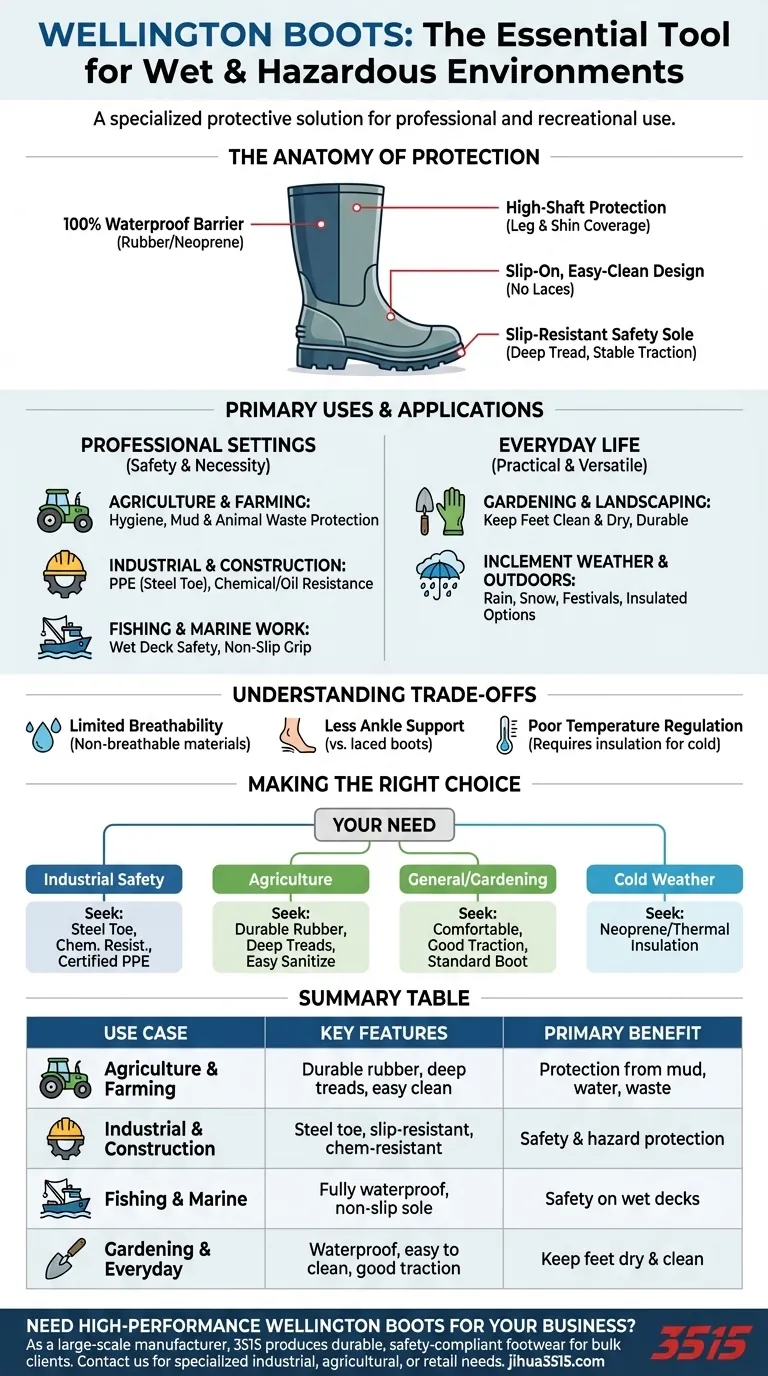
Visual Guide
Related Products
- Durable Waterproof Rain Boots | Custom Manufacturer for Wholesale & Brands
- Durable Goodyear Welt Leather Work Boots for Wholesale & Private Label
- Wholesale Durable Leather Work Boots | 8-Inch Goodyear Welt Manufacturer
- High-Traction Suede Tactical Boots Wholesale & Custom Manufacturing
- Durable Leather Tactical Boots Wholesale & Custom Manufacturing for Brands
People Also Ask
- What are the main materials for waterproof rain boots? Choose the Right Material for Durability & Comfort
- What is the overall recommendation for choosing rain boot materials? A Guide to Rubber vs. PVC
- How does boot height affect waterproofing? Choose the Right Height for Ultimate Protection
- Why are rain boots more flexible and comfortable than snow boots? The Key Differences Explained
- What are the best types of shoes for different gardening conditions? Find Your Perfect Match.



















