
The primary materials used in women's wellies are rubber, neoprene, and PVC. These materials are chosen for their specific performance characteristics, with the ultimate goal of providing a boot that is waterproof, durable, and suited to its intended environment, whether that's a garden, a festival, or a demanding worksite.
The ideal material for a welly isn't a one-size-fits-all answer. The choice is a deliberate trade-off between absolute waterproofing, insulation, flexibility, and durability, directly tied to how you plan to use the boots.
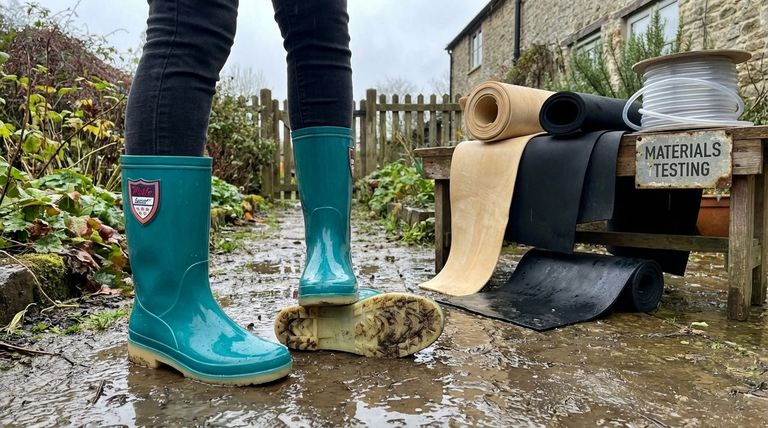
Deconstructing the Welly: Key Materials Explained
A welly is more than just a single piece of material. Understanding its core components—the upper, lining, and outsole—is crucial to grasping why different materials are used.
The Upper: Your First Line of Defense
The upper is the main body of the boot and provides the primary protection from the elements.
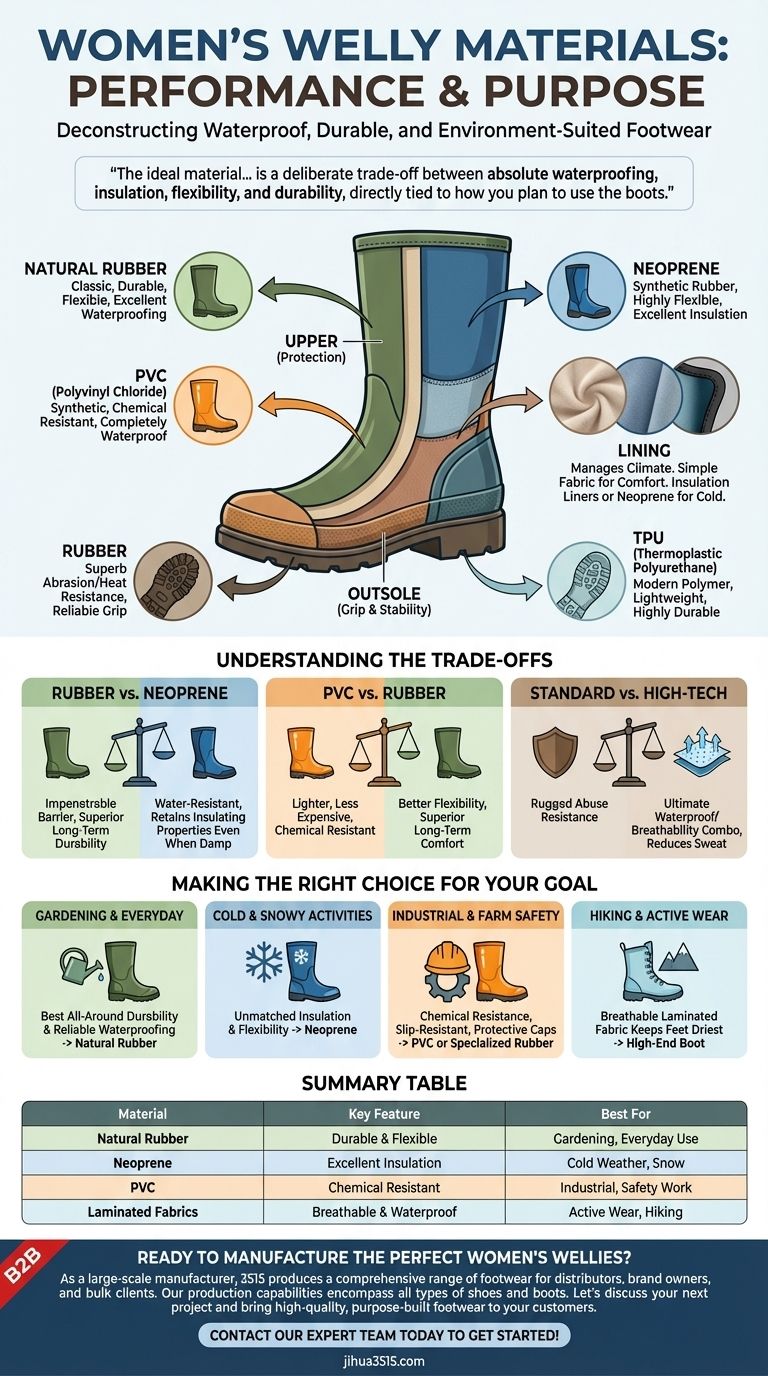
- Natural Rubber: This is the classic, traditional material for wellies. It is highly durable, flexible, and offers excellent natural waterproofing and wear resistance.
- PVC (Polyvinyl Chloride): A synthetic plastic alternative to rubber. It is completely waterproof and often chosen for safety wellies due to its high resistance to chemicals, acids, and alkalis.
- Neoprene: This is a type of synthetic rubber best known for its use in wetsuits. It offers great flexibility and, most importantly, excellent insulation, keeping your feet warm even if some moisture gets in.
The Lining: For Comfort and Insulation
While the upper keeps water out, the lining manages the climate inside the boot.
- Many wellies feature a simple fabric lining for basic comfort.
- For colder conditions, boots may include insulation liners or be constructed with neoprene uppers, which serve as both the structure and the insulating layer.
The Outsole: Grip, Stability, and Durability
The outsole is the part that hits the ground, making its material composition critical for safety and longevity.
- Rubber: The most common outsole material due to its superb abrasion resistance, heat resistance, and reliable grip on slippery surfaces.
- TPU (Thermoplastic Polyurethane): A more modern polymer that is lighter than rubber but still highly durable. It offers excellent resistance to splitting and abrasion.
Understanding the Trade-offs
Choosing the right welly means balancing competing material benefits. No single material is perfect for every situation.
Rubber vs. Neoprene
Rubber provides an impenetrable waterproof barrier and superior long-term durability against scuffs and tears. Neoprene, while highly water-resistant, can absorb some moisture over time but retains its insulating properties, making it far warmer in cold and wet conditions.
PVC vs. Rubber
PVC is often lighter and less expensive than rubber, with exceptional resistance to chemical exposure. However, high-quality rubber generally offers better flexibility (reducing the risk of cracking in the cold) and superior comfort for long-term wear.
Standard Materials vs. High-Tech Laminates
Some high-end boots use layered, laminated materials like Gore-Tex. These provide the ultimate combination of waterproofing and breathability, reducing sweat buildup. The trade-off is typically higher cost and potentially lower resistance to the kind of rugged abuse that a thick rubber boot can withstand.
Making the Right Choice for Your Goal
Select your boot based on its primary purpose to ensure you get the performance you need.
- If your primary focus is casual gardening and everyday wet weather: A classic natural rubber boot offers the best all-around durability and reliable waterproofing.
- If your primary focus is warmth during cold or snowy activities: Neoprene is the superior choice for its unmatched insulation and flexibility.
- If your primary focus is safety in an industrial or farm environment: Look for safety-rated wellies made from PVC or specialized rubber with slip-resistant outsoles and protective toe caps.
- If your primary focus is comfort during long hikes or active wear: A high-end boot with a breathable laminated fabric will keep your feet driest from both rain and sweat.
Understanding these core materials empowers you to choose a welly that is a true tool for your needs.
Summary Table:
| Material | Key Feature | Best For |
|---|---|---|
| Natural Rubber | Durable & Flexible | Gardening, Everyday Use |
| Neoprene | Excellent Insulation | Cold Weather, Snow |
| PVC | Chemical Resistant | Industrial, Safety Work |
| Laminated Fabrics | Breathable & Waterproof | Active Wear, Hiking |
Ready to manufacture the perfect women's wellies?
As a large-scale manufacturer, 3515 produces a comprehensive range of footwear for distributors, brand owners, and bulk clients. Our production capabilities encompass all types of shoes and boots, ensuring you get the right combination of materials, durability, and style for your market.
Let's discuss your next project and bring high-quality, purpose-built footwear to your customers.
Contact our expert team today to get started!
Visual Guide
Related Products
- Wholesale Women's Leather Derby Shoes Custom Factory Production
- Wholesale Classic Leather Lace-Up Ankle Boots for Brand Manufacturing
- Durable Waterproof Rain Boots | Custom Manufacturer for Wholesale & Brands
People Also Ask
- How do Derby shoes fit into business casual attire? Master the Perfect Balance of Professional Style
- What are the features and appropriate occasions for wearing derby shoes? A Guide to Versatile Style
- What is the main difference between Derby Shoes and Oxford Shoes? It's All in the Lacing.
- What historical figure is associated with the Derby shoe? The Earl of Derby's Comfort Revolution
- How do Derby shoes differ from Oxford shoes? A Guide to Formality, Fit & Style


