
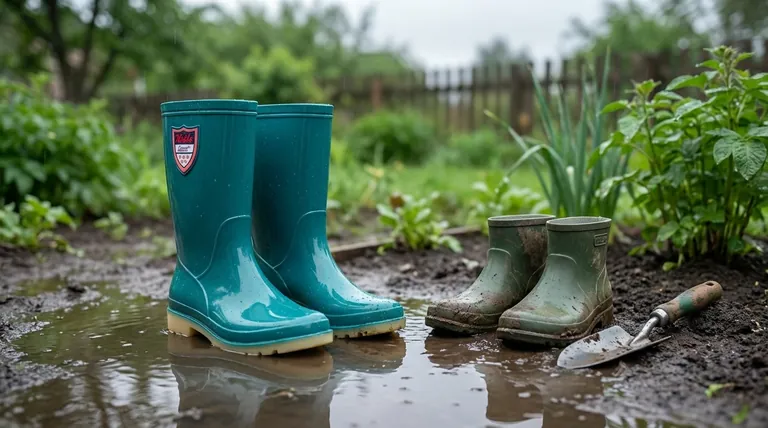
As a general rule, garden boots are significantly shorter than rain boots. This fundamental design difference stems from their intended purposes. Garden boots typically rise only to the ankle, prioritizing flexibility for active work, while rain boots extend to the mid-calf or higher to provide maximum protection from deep water and mud.
The core difference isn't arbitrary; it's a deliberate engineering trade-off. Garden boots sacrifice height for mobility, while rain boots sacrifice mobility for superior water protection.
The Fundamental Difference: Mobility vs. Protection
The height of a boot is its most critical feature, directly dictating what it's good at—and what it isn't. This choice creates two distinct tools for different tasks.
Garden Boots: Designed for Activity
Garden boots are built for the dynamic movements of gardening. Their ankle-height design allows for maximum flexibility when you bend, kneel, and walk frequently.
A taller shaft would dig into your calf and restrict movement, making prolonged work uncomfortable. The focus here is on comfort and agility during active use.
Rain Boots: Designed for Coverage
Rain boots are engineered for a single primary purpose: keeping your feet and lower legs completely dry. Their mid-calf or higher construction creates a barrier against deep puddles, heavy downpours, and thick mud.
This added height is essential for navigating wet environments where an ankle-high boot would be easily overwhelmed. Protection, not flexibility, is the main priority.
How Height Influences Material and Comfort
The functional differences in height have a ripple effect on other aspects of boot design, including the materials used and overall ease of use.
Material and Flexibility
Garden boots are often made from more flexible materials like neoprene or soft rubber to complement their shorter stature and enhance comfort for a working foot.
Taller rain boots are typically made from a more structured rubber to ensure they stay upright and maintain their protective shape.
Ease of Use
The shorter height of garden boots makes them inherently easier to slip on and off. This is a practical advantage for quick trips into the garden from the house.
Understanding the Trade-offs
Choosing between these boots means understanding what you are giving up. Neither boot is perfect for every situation.
The Limitation of Garden Boots
The obvious trade-off for a garden boot's mobility is its lack of protection. They are unsuitable for walking through standing water or in very muddy conditions, as water and debris will easily come over the top.
The Downside of Rain Boots
The primary drawback of a rain boot is its cumbersome nature. The tall, often rigid shaft can feel restrictive and clunky during activities that require a lot of bending, making them less ideal for intensive tasks like planting or weeding.
Making the Right Choice for Your Task
Selecting the correct boot is a matter of aligning the tool with your specific environment and activity.
- If your primary focus is active gardening: A low-cut garden boot is the superior choice for its flexibility and comfort while kneeling and moving.
- If your primary focus is navigating wet, muddy conditions: A tall rain boot is essential for its unmatched protection against water and mud.
- If you need a single, all-purpose boot for light yard work and occasional rain: A shorter, mid-calf rain boot can offer a reasonable compromise between protection and mobility.
Ultimately, choosing the right boot height is about matching your footwear to the demands of your environment.
Summary Table:
| Feature | Garden Boots | Rain Boots |
|---|---|---|
| Typical Height | Ankle-high | Mid-calf or higher |
| Primary Purpose | Flexibility for active work | Maximum water/mud protection |
| Best For | Gardening, kneeling, bending | Heavy rain, deep puddles, muddy paths |
| Key Trade-off | Less leg protection | Less mobility and flexibility |
Need the Perfect Boot for Your Business?
As a large-scale manufacturer, 3515 produces a comprehensive range of footwear for distributors, brand owners, and bulk clients. Whether you need flexible garden boots for active consumers or protective rain boots for wet-weather markets, our production capabilities encompass all types of shoes and boots to meet your specific needs.
Contact our team today to discuss your footwear requirements and discover how we can support your business with high-quality, purpose-built products.
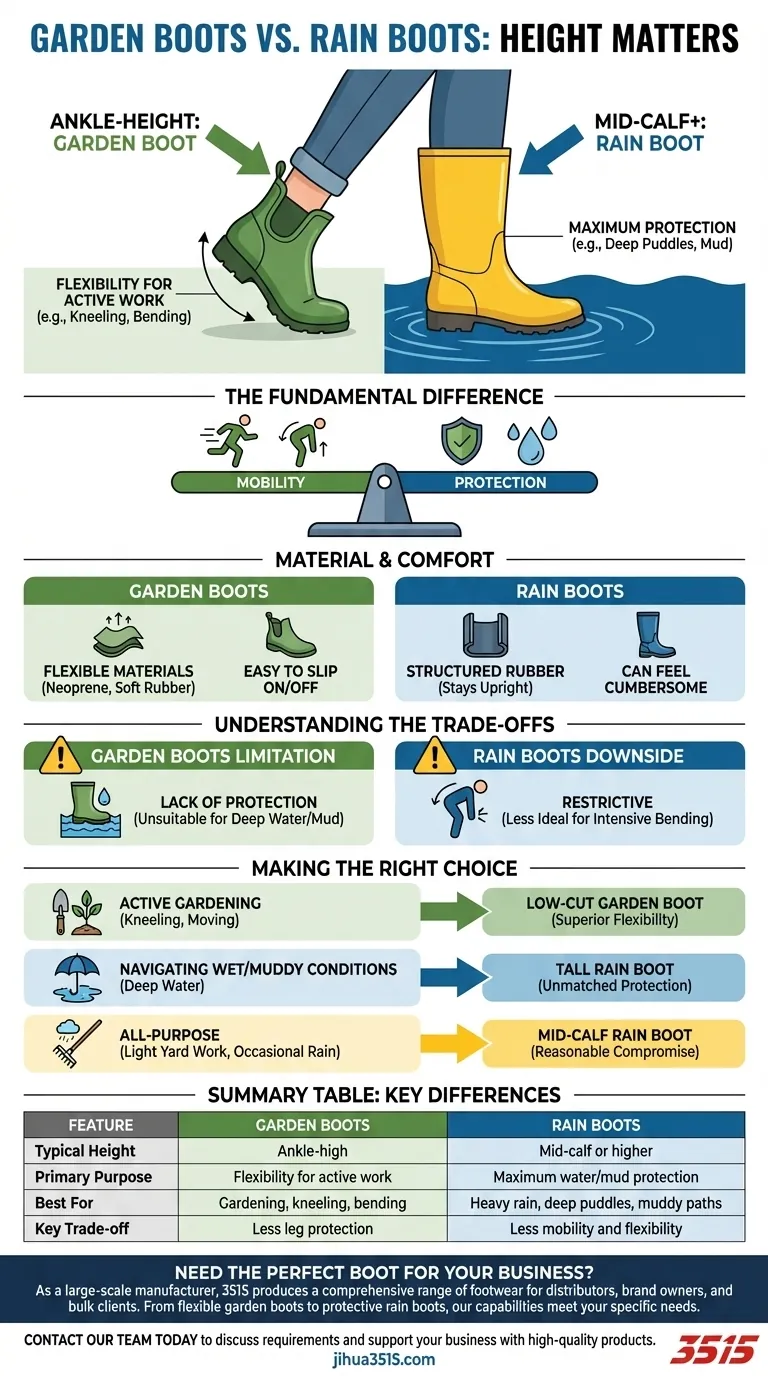
Visual Guide
Related Products
- Durable Rubber Sole Outdoor Shoes Wholesale & Custom Manufacturing
- Factory Direct Wholesale Rain Boots Durable Waterproof & Fully Customizable
- Durable Waterproof Rain Boots | Custom Manufacturer for Wholesale & Brands
- Wholesale Waterproof Tactical Boots Custom Suede & High-Traction Soles
- Wholesale High-Traction Camo Boots - Custom Manufacturer for Brands
People Also Ask
- What is the function of the sole in outdoor shoes? Find the Perfect Grip and Support
- What role do outdoor shoes and sneakers play in navigating external terrains? Engineered Stability for Every Surface
- How is AI utilized in the design of outdoor and safety footwear? Harnessing Big Data for Market-Driven Shoe Innovation
- Why is durability important when selecting outdoor shoes? A Guide to Safety & Long-Term Value
- What are the key components of outdoor shoes that affect comfort and sturdiness? A Guide to Durable, High-Performance Footwear


















