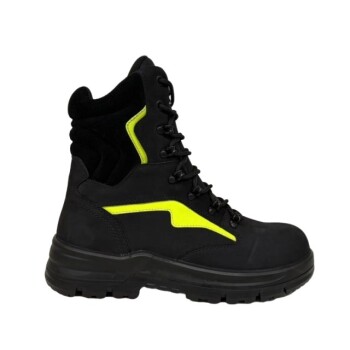
Professional protective footwear serves as a critical stabilization system that prevents injury through essential arch support, impact cushioning, and advanced traction. It acts as the primary interface between the body and the ground, effectively dispersing reaction forces to keep the ankle joint stable and physical exertion within safe limits.
While improper gear is a primary risk factor for injury, ergonomically designed footwear acts as a fundamental safeguard. It creates a stable dynamic platform that optimizes weight distribution, protecting not just the feet, but the entire musculoskeletal structure.
The Biomechanics of Protection
Dispersing Ground Reaction Forces
Every time your foot strikes the ground, it generates reaction forces that travel up the leg. Professional footwear utilizes impact cushioning to absorb and spread these forces evenly.
By managing this energy transfer, the footwear prevents localized stress points that often lead to acute injuries.
Stabilizing the Ankle Joint
Traction and structural support are vital for maintaining joint alignment. Professional footwear provides the grip and rigidity necessary to stabilize the ankle during movement.
This stability is a fundamental requirement for keeping exercise mechanics within a safe range, preventing sprains and strains.
Essential Arch Support
The arch of the foot is the body's natural shock absorber. Protective footwear reinforces this structure with ergonomic support.
This ensures the foot does not collapse under load, maintaining proper alignment for the knees and hips above it.
Impact on Heavy Loading and Lumbar Health
Creating a Stable Dynamic Platform
During manual material handling—specifically with loads exceeding 5kg—the stability of your footing is paramount. Professional footwear provides a consistent, stable base.
This stability helps manage the body's center of gravity, preventing the swaying or shifting that occurs on unstable ground.
Reducing Compensatory Movements
When your feet are unstable, your lower back often compensates to keep you upright. This forces the lumbar spine into unnatural movements to maintain balance.
By stabilizing the foot, protective footwear eliminates the need for these compensatory adjustments.
Preventing Chronic Lumbar Disease
The cumulative effect of poor posture and compensatory movement is a major contributor to chronic back issues. Optimizing weight distribution through proper footwear is a critical intervention.
This significantly lowers the risk of lumbar diseases associated with the repetitive stress of manual labor.
Understanding the Trade-offs
Equipment vs. Biomechanics
While protective footwear is a fundamental requirement for safety, it cannot correct fundamentally poor movement patterns. It mitigates risk but does not eliminate the need for proper form.
Relying solely on footwear without addressing body mechanics can still result in injury.
The Risk of "Improper" Footwear
The absence of professional features is not merely a lack of comfort; it is an active hazard. Improper footwear is identified as a primary risk factor for exercise-related harms.
Using standard or worn-out shoes for specialized activities compromises the body's ability to handle physical stress effectively.
Making the Right Choice for Your Goal
To select the right protective gear, you must identify the specific demands of your activity.
- If your primary focus is High-Impact Exercise: Prioritize footwear with superior impact cushioning and arch support to effectively disperse ground reaction forces and protect the ankle.
- If your primary focus is Manual Lifting (Loads >5kg): Prioritize footwear that provides a stable dynamic platform to secure your center of gravity and minimize strain on the lumbar spine.
Invest in the right foundation, because safe physical activity begins from the ground up.
Summary Table:
| Feature | Protective Function | Musculoskeletal Benefit |
|---|---|---|
| Impact Cushioning | Disperses Ground Reaction Forces | Reduces localized stress and prevents acute joint injuries. |
| Structural Support | Stabilizes the Ankle Joint | Maintains alignment and prevents sprains during movement. |
| Ergonomic Arch Support | Reinforces Natural Foot Structure | Prevents foot collapse and aligns the knees and hips. |
| Stable Dynamic Platform | Secures Center of Gravity | Minimizes compensatory lumbar movements and back strain. |
| Advanced Traction | Ensures Consistent Grip | Reduces risk of slips and unstable weight distribution. |
Secure Your Workforce with Industry-Leading Footwear Solutions
At 3515, we understand that worker safety starts with a stable foundation. As a large-scale manufacturer serving distributors and brand owners worldwide, we provide comprehensive production capabilities designed to mitigate injury risks and enhance performance.
Our flagship Safety Shoes series is engineered with advanced biomechanical support to prevent chronic musculoskeletal issues and acute injuries. Whether you need specialized work and tactical boots, rugged outdoor shoes, or versatile sneakers and training shoes, 3515 delivers the bulk requirements and quality assurance your brand demands.
Ready to elevate your product line with footwear that prioritizes health and safety?
Contact 3515 today to discuss your manufacturing needs!
References
- Chittaranjan Andrade. Physical Exercise and Health, 1. DOI: 10.4088/jcp.23f15099
This article is also based on technical information from 3515 Knowledge Base .
Related Products
- Premium Suede Sport Safety Shoes for Wholesale & Bulk Orders
- Wholesale Customizable Safety Boots Durable & Protective Footwear Manufacturing
- Premium Waterproof Nubuck Safety Boots for Wholesale
- Wholesale Anti-Smash & Puncture-Proof Safety Shoes Custom Manufacturing for Brands
- Premium Safety Shoes with Rotating Buckle Safety Sneakers
People Also Ask
- What industries have specific OSHA footwear requirements? Ensure Compliance & Protect Your Workforce
- What are the primary functions of professional safety shoes? Maximize Safety in Water Supply Confined Spaces
- What role do specialized safety shoes play in preventing falls? Engineering Stability in Industrial Environments
- What core functions do professional safety shoes serve? Enhance Construction & Industrial Safety Standards
- Why are customized foot sensors or professional safety shoes incorporated into biomechanical testing? Precision Insights