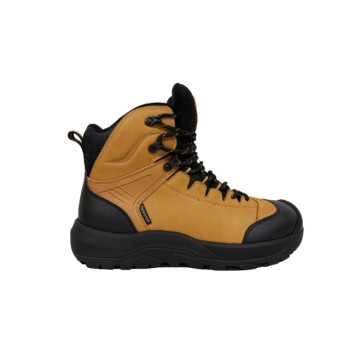
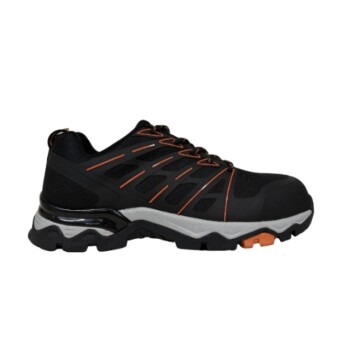
Insulated protective shoes function as a critical isolation device for the human body in high-voltage environments. By utilizing non-conductive materials, they physically sever the electrical connection between your feet and the ground, ensuring that if you encounter equipment leakage or a live wire, your body does not become the conduit for the current.
Core Takeaway: The necessity of insulated footwear lies in its ability to act as a definitive physical barrier against electric shock. By cutting off the current's path to the ground, these shoes prevent the user from completing an electrical circuit, effectively neutralizing the risk of life-threatening shocks, burns, and unconsciousness in industrial settings.
The Physics of Protection
Severing the Path to Ground
Electricity naturally seeks the path of least resistance to the ground. In an industrial setting, if a worker touches a live wire or a machine with current leakage, the current attempts to travel through the body to the floor.
The Body as a Conductor
Without protection, the human body acts as an efficient conductor, completing the circuit. This flow of electricity causes shock, internal burns, and cardiac arrest.
The Role of Non-Conductive Materials
Insulated shoes are constructed with high-resistivity materials such as rubber, specific plastics, or composite fibers. These materials possess high electrical resistance, effectively "blocking" the exit point of the current at the feet.
Critical Safety Functions in Industrial Zones
Defense Against Hidden Leakage
In areas with dense electrical equipment or exposed cables, leakage currents are not always visible or audible. Insulated shoes provide a passive, constant layer of defense against these invisible hazards.
Preventing Secondary Trauma
Electric shock often causes muscles to seize or the victim to lose consciousness. By preventing the initial shock, these shoes also prevent secondary injuries, such as falling into machinery or off platforms.
Multi-Hazard Defense
Beyond electrical safety, these shoes often integrate barriers against thermal injuries and punctures. This is vital in manufacturing, where electrical hazards often coexist with high heat sources and sharp debris.
Understanding the Trade-offs
Insulation vs. Static Dissipation
It is critical not to confuse Insulated (EH) footwear with Static Dissipative (SD) footwear. Insulated shoes block flow to protect the wearer from high voltage. SD shoes allow a controlled amount of flow to protect sensitive electronics from static buildup; they offer significantly less protection against high-voltage shocks.
Environmental Compromise
The insulating properties of protective shoes are not absolute. If the outsoles become wet, contaminated with conductive materials (like metal shavings), or excessively worn, their resistance can drop drastically, rendering the protection ineffective.
Making the Right Choice for Your Goal
To ensure safety, you must align your footwear specifications with the specific nature of the electrical hazard present in your work area.
- If your primary focus is High Voltage/Live Circuits: Prioritize EH-rated (Electrical Hazard) footwear with strictly non-conductive outsoles to isolate the body from the ground.
- If your primary focus is Sensitive Electronics/Explosive Atmospheres: Select Static Dissipative (SD) footwear, which allows static electricity to discharge safely into the floor, but be aware this offers lower protection against high-voltage shocks.
- If your primary focus is Mechanical Protection: Ensure the shoe includes a composite toe rather than exposed metal, providing impact resistance without compromising the electrical insulation.
True safety is achieved only when the protective barrier is unbroken and matched precisely to the voltage risks of your environment.
Summary Table:
| Feature | Insulated (EH) Footwear | Static Dissipative (SD) Footwear |
|---|---|---|
| Primary Function | Blocks electrical flow to ground | Safely discharges static buildup |
| Best For | High-voltage / Live circuit risks | Sensitive electronics / Explosives |
| Material Type | Non-conductive (Rubber/Composites) | Controlled conductive materials |
| Key Benefit | Prevents life-threatening shocks | Protects equipment from static |
| Limitation | Effectiveness drops if wet/worn | Lower protection against high voltage |
Secure Your Workforce with Certified Safety Footwear from 3515
As a leading large-scale manufacturer serving global distributors and brand owners, 3515 delivers high-performance protective solutions tailored for high-risk environments. Our flagship Safety Shoes series is engineered to provide the definitive physical barrier required for electrical safety, ensuring your team is protected against shocks, burns, and mechanical hazards.
From EH-rated work boots to tactical, outdoor, and formal safety footwear, we offer comprehensive production capabilities to meet your bulk requirements with precision and durability. Partner with us to enhance your product portfolio and ensure the highest safety standards for your clients.
Ready to upgrade your inventory? Contact us today to discuss your bulk needs and custom specifications.
References
- Happy Nihayatul Afroh, Fransisca Tiur Basaria. Reducing Environmental and Health Risks in Construction Projects Through Hazard Identification and Risk Assessment. DOI: 10.1051/e3sconf/202338801028
This article is also based on technical information from 3515 Knowledge Base .
Related Products
- Premium Insulated Safety Boots and Shoes for Wholesale & Bulk Orders
- Premium Suede Sport Safety Shoes for Wholesale & Bulk Orders
- Premium Lightweight Safety Shoes for Wholesale & Bulk Orders
- Wholesale Safety Footwear Manufacturer for Bulk & Custom OEM Orders
- Custom Safety Shoe Manufacturer for Wholesale & OEM Brands
People Also Ask
- What are the recommended insulation ratings for mild winter conditions? A Guide for Active & Stationary Workers
- How does insulation thickness correlate with temperature ranges? A Guide to Choosing the Right Warmth
- What insulation level is needed for severe cold and stationary work? 1200g or Higher is Essential
- What safety advantages do insulated boots offer beyond warmth? Dielectric Protection & Superior Grip
- How does fleece lining contribute to the warmth of insulated boots? Trapping Air for Superior Cold Protection