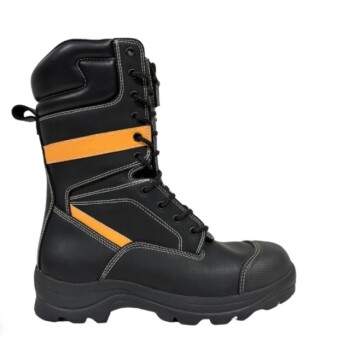
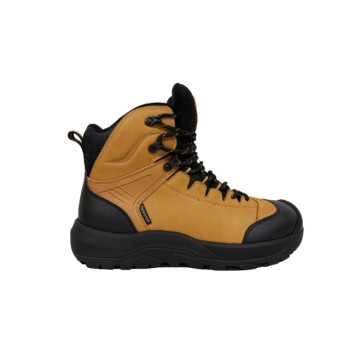
Specialized rubber composite materials serve as the critical structural backbone of fire safety footwear, designed specifically to operate where standard materials would fail. Their primary role is to provide high-temperature resistance and superior puncture protection, ensuring the shoe maintains its physical integrity to protect the wearer from thermal burns, molten metal splashes, and sharp debris.
The Core Reality: While upper materials like leather or textiles dictate comfort and breathability, the rubber composite components provide the non-negotiable structural stability required to prevent footwear failure under extreme thermal loads.
The Protective Mechanics of Rubber Composites
Withstanding Extreme Thermal Loads
The most immediate threat in a fire scenario is heat that can melt or deform standard footwear. Specialized rubber composites are engineered to resist these high temperatures.
By maintaining structural stability, these materials ensure the shoe does not collapse or lose its shape, which could trap the foot or expose it to direct heat.
Defense Against Physical Penetration
Firegrounds are littered with unseen hazards, such as nails, glass, and jagged metal. Rubber composites act as a hardened shield against these threats.
They provide superior puncture protection, preventing sharp objects from piercing the sole and injuring the foot during operations.
Shielding Against Molten Hazards
Beyond ambient heat, firefighters face the risk of direct contact with superheated substances.
These composites form a barrier against molten metal splashes, preventing burn-through injuries that would occur with less resilient materials.
Understanding the Trade-offs
The Weight vs. Protection Balance
While rubber composites offer maximum safety, they contribute to the overall weight of the boot.
Supplementary materials like leather offer durability but are heavy, whereas synthetic textiles and Nubuck leather are lighter and more flexible. However, prioritizing lighter materials can sometimes compromise the absolute level of protection offered by heavier, composite-reinforced options.
Environmental Suitability
No single material is perfect for every condition.
While rubber composites handle the heat, the surrounding materials must be chosen based on climate. Lighter, breathable materials reduce fatigue in summer, while waterproof membranes and heavier leather are better suited for winter conditions, though they may trap heat.
Making the Right Choice for Your Goal
Selecting the right footwear involves balancing the protective capabilities of rubber composites with the ergonomic needs of the user.
- If your primary focus is maximum operational safety: Prioritize footwear featuring robust rubber composites and durable leather to ensure resistance against molten metal, punctures, and extreme heat.
- If your primary focus is agility and reduced fatigue: Look for hybrid designs that utilize lighter synthetic textiles or Nubuck leather in low-risk zones, while retaining the rubber composite sole for essential base protection.
- If your primary focus is seasonal adaptability: Select breathable synthetic blends for summer operations to manage heat stress, and reserve heavy-duty, waterproof leather options for winter environments.
True safety is achieved when the material selection matches the specific demands of the hazard zone.
Summary Table:
| Feature | Role of Rubber Composites | Benefit to Wearer |
|---|---|---|
| Thermal Resistance | Withstands extreme heat & molten metal | Prevents material melting and thermal burns |
| Structural Integrity | Maintains shape under thermal loads | Ensures boot stability during critical operations |
| Puncture Protection | Acts as a hardened physical shield | Prevents injury from nails, glass, and debris |
| Material Synergy | Works with leather/textiles | Balances heavy-duty safety with ergonomics |
Partner with 3515 for High-Performance Safety Footwear
As a large-scale manufacturer serving distributors and brand owners, 3515 offers comprehensive production capabilities for all footwear types, anchored by our flagship Safety Shoes series. Our advanced use of specialized rubber composites ensures that your products meet the highest standards for fire safety and industrial protection.
Our extensive portfolio covers work and tactical boots, outdoor shoes, training shoes, and sneakers, as well as Dress & Formal shoes to meet your diverse bulk requirements. Let us enhance your product line with our proven manufacturing expertise—Contact us today to discuss your bulk needs!
References
- Marianna Tomašková, Jozef Krajňák. Features and Sustainable Design of Firefighting Safety Footwear for Fire Extinguishing and Rescue Operations. DOI: 10.3390/su152015108
This article is also based on technical information from 3515 Knowledge Base .
Related Products
- Premium Flame-Retardant Waterproof Safety Boots and Shoes
- High Performance Fire-Retardant Waterproof Safety Boots
- Wholesale Anti-Smash & Puncture-Proof Safety Shoes Custom Manufacturing for Brands
- Premium Lightweight Safety Shoes for Wholesale & Bulk Orders
- Heavy-Duty Waterproof Nubuck Safety Boots Safety Shoes for Bulk Supply
People Also Ask
- Why are waterproof safety boots recommended for certain work environments? Essential Protection for Wet & Hazardous Jobs
- What materials are commonly used in waterproof boots? The Complete Guide to Durable, Breathable Protection
- How does boot construction affect waterproofing? The Science Behind Truly Dry Feet
- What should you look for to ensure boots are fully waterproof? The Essential 2-Part System
- What is the advantage of one-piece construction in waterproof boots? Unbeatable Seamless Protection