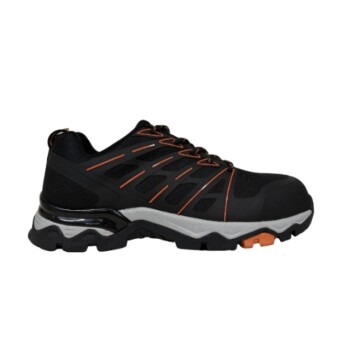
Personal Protective Equipment (PPE) serves as the critical interface between the operator and the heavy equipment used to transport concrete products. Specifically, high-traction safety shoes provide the necessary ground grip to prevent slips on uneven surfaces, while protective gloves act to stabilize the grip on trolley handles and minimize hand fatigue, ensuring the operator maintains full control during movement.
While mechanical aids bear the weight of the concrete, PPE acts as the final line of defense for the human operator. It ensures that the physical act of guiding heavy loads remains stable, controlled, and sustainable over long shifts.
The Mechanics of Control and Stability
Stability from the Ground Up
When maneuvering heavy concrete products, the operator serves as the anchor for the transport trolley. High-traction safety shoes are essential in this environment, particularly when the terrain is industrial or uneven.
By providing superior grip, these shoes prevent slips that could lead to loss of control over the heavy load. This traction is the foundation of safe manual handling, ensuring the operator can apply force without losing their footing.
Enhancing Grip and Endurance
The interface between the worker's hands and the trolley handles is a common point of failure in manual handling. Protective gloves do more than just prevent cuts; they significantly enhance the stability of the grip.
Furthermore, gloves reduce the physical strain on the hands. By preventing hand fatigue, gloves allow the operator to maintain a secure hold on the machinery for longer periods, leading to safer and more precise material transport.
The Broader Operational Impact
The Final Line of Defense
PPE functions as a physical barrier that reduces the severity of accidents when unsafe behaviors or unexpected conditions occur. It does not remove the hazard itself, but it drastically mitigates the consequences of mechanical errors or slips.
Continuity and Morale
Beyond immediate physical safety, the provision of industrial-grade PPE directly influences the continuity of construction processes. By reducing injuries, organizations see a significant reduction in sick leave and personnel turnover.
When workers feel physically secure, morale and psychological safety improve. This reduction in accident-related disruptions translates to improved overall operational efficiency and lower long-term costs.
Understanding the Limitations and Trade-offs
PPE is Not a Solution to Bad Process
It is vital to understand that PPE is the last line of defense, not the first. Relying solely on shoes and gloves without addressing the underlying weight of the load or the condition of the terrain can lead to a false sense of security.
The Fit Factor
PPE is only effective if it fits the user correctly and is appropriate for the specific task. Poorly fitted gloves can actually reduce grip sensitivity, and overly heavy safety shoes can induce fatigue, counteracting the benefits of their protection.
Making the Right Choice for Your Goal
To maximize the effectiveness of your safety protocols, consider your primary operational objectives:
- If your primary focus is Immediate Physical Safety: Prioritize high-traction footwear to neutralize the risks posed by uneven industrial floors and heavy trolley loads.
- If your primary focus is Operational Efficiency: Invest in high-quality, fatigue-reducing gloves to ensure workers can maintain peak handling precision throughout their shift without exhaustion.
True safety is achieved when the right equipment meets a culture of awareness.
Summary Table:
| PPE Type | Primary Function in Handling | Key Benefit for Operator |
|---|---|---|
| Safety Shoes | High-traction ground grip | Prevents slips on uneven terrain; acts as a stable anchor. |
| Protective Gloves | Enhanced handle interface | Improves grip stability and significantly reduces hand fatigue. |
| Combined Use | Final line of defense | Mitigates consequences of mechanical errors or unexpected slips. |
| Operational Impact | Risk mitigation | Reduces sick leave, turnover, and long-term operational costs. |
Secure Your Workforce with Premium Industrial Footwear
As a large-scale manufacturer serving distributors and brand owners, 3515 offers comprehensive production capabilities for all footwear types. Our flagship Safety Shoes series is specifically engineered to provide the traction and stability required for demanding environments like concrete handling.
Our extensive portfolio also covers work and tactical boots, outdoor shoes, training shoes, sneakers, and Dress & Formal shoes to meet your diverse bulk requirements. Partner with a manufacturer that prioritizes durability and operator endurance.
Ready to elevate your product range? Contact us today to discuss your bulk manufacturing needs.
References
- Indah Pratiwi, Valeska Salsabil Kalyana. Ergonomic Risk Evaluation of Manual Material Handling in Brick Production. DOI: 10.23917/jiti.v21i1.17010
This article is also based on technical information from 3515 Knowledge Base .
Related Products
- Premium Suede Sport Safety Shoes for Wholesale & Bulk Orders
- Premium Lightweight Safety Shoes for Wholesale & Bulk Orders
- Wholesale Anti-Smash & Puncture-Proof Safety Shoes Custom Manufacturing for Brands
- Premium KPU Injection Athletic Style Safety Shoes
- Premium Safety Shoes with Rotating Buckle Safety Sneakers
People Also Ask
- What are the primary functions of professional safety shoes? Maximize Safety in Water Supply Confined Spaces
- What industries have specific OSHA footwear requirements? Ensure Compliance & Protect Your Workforce
- What role do specialized safety shoes play in preventing falls? Engineering Stability in Industrial Environments
- Why should ergonomics and comfort be prioritized when selecting safety shoes? Boost Compliance & Worker Health
- What are the main safety features of S1-S5 shoes? The 3 Essential Protections Explained